As many as 597 non-bailable arrest warrants were pending across Calcutta police’s jurisdiction as of Monday.
About a fortnight before the elections, all police units have been asked to execute the warrants at the earliest.
Calcutta police commissioner Ajay Nand on Monday asked all divisions to submit by Tuesday the names of persons against whom warrants are pending and the nature of their offences.
“The type and nature of the warrant are important to understand its possible implications during an election season. So, we have asked the police stations to categorise the accused and their offences,” an officer said.
Sources said priority will be given to the execution of pending warrants related to offences like the use and possession of arms during elections, hurling of bombs
during or before elections, intimidating voters, and political violence.
According to records with Kolkata Police, the detective department has the maximum number of non-bailable arrest warrants pending with it.
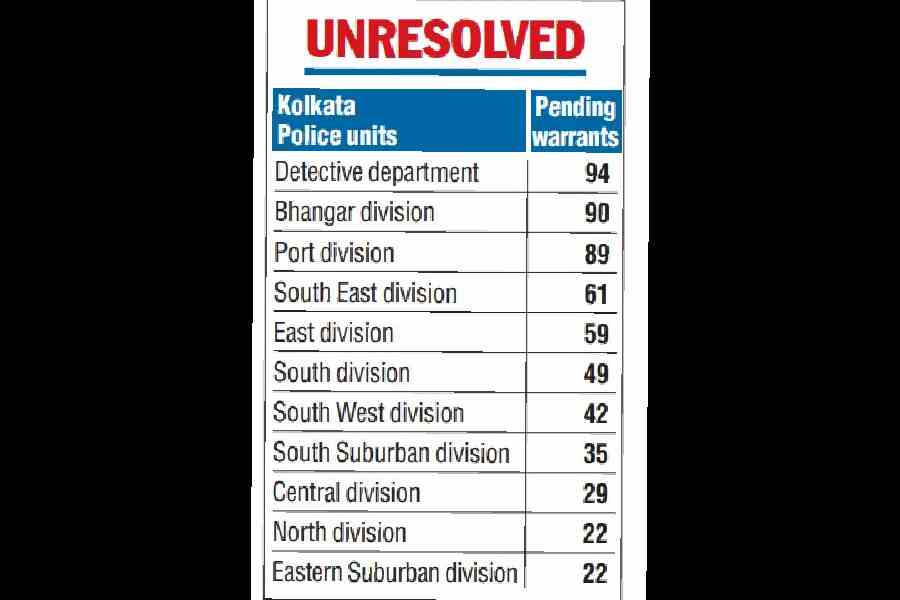
The detective department has 94 pending warrants, followed by 90 in the Bhangar division and 89 in the Port division.
An arrest warrant is issued by a court when an accused either remains absconding from the police and fails to turn up either before the police or the court despite repeated summons.
A person with a warrant against him must be arrested by the police and brought before the court that issued the warrant.
In case of a bailable arrest warrant, one can obtain bail by surrendering before the court and seeking bail.
But in case of non-bailable warrants, arrest is inevitable, the police said.
A court also issues a non-bailable arrest warrant if someone is wanted in connection with a non-bailable offence. “In a large number of cases, the warrants are old and cannot be executed because of a change in the address of the accused,” said an officer.
The idea behind executing the pending arrest warrants before the elections is to ensure that people wanted in crimes and old offences cannot create a nuisance
or influence voters in any
way.
Several officers said that this was a way to keep history sheeters behind bars to prevent them from causing any trouble during the elections.