The Bengal government has decided to legally challenge President Droupadi Murmu’s decision not to grant assent to a Bill passed by the state Assembly that proposed making the chief minister the chancellor of state-aided universities, replacing the governor, an education department official said on Tuesday.
In December, the President’s office informed Raj Bhavan that the President had declined assent to the Bill passed by the Assembly in June 2022.
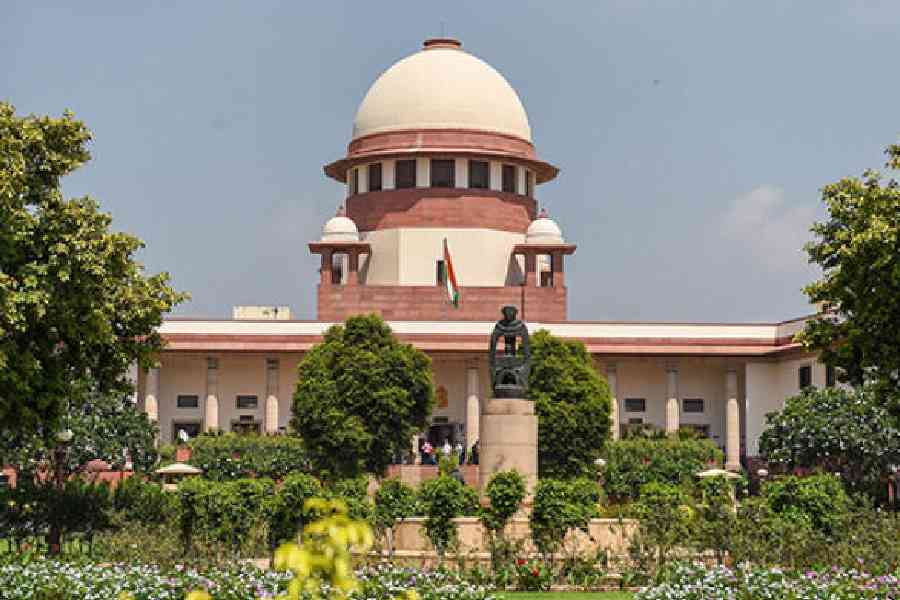
The official said the state sought legal opinion on the next course of action after the President withheld assent. “The legal opinion has just reached us. It says that the decision can be challenged. Based on that, it has been decided that the state government will soon file a petition in the Supreme Court challenging the President’s decision,” the official said.
According to the legal opinion, due process was followed when the Assembly passed the legislation seeking to make the chief minister the chancellor of state-aided universities.
“The Bill passed by the Assembly required the governor’s assent to become an Act. But the then governor, C.V. Ananda Bose, forwarded the Bill to the President. By not consenting to the Bill, the President has questioned the authority of the legislative assembly. Therefore, the decision will be challenged legally,” sources in the education department said.
The decision to move court comes amid a separate controversy over an alleged “protocol breach” during a recent programme on tribals in north Bengal. President Murmu had said that neither chief minister Mamata Banerjee nor any of her ministers received her on arrival.
The remark has since triggered a political row between the Trinamool and the BJP in poll-bound Bengal.
The West Bengal University Laws (Amendment) Bill, 2022, was tabled in the Assembly on June 11, 2022, by education minister Bratya Basu.
The Bill was passed with 167 votes in favour, while 55 BJP MLAs opposed it.
Traditionally, after a Bill is passed in the Assembly, it is sent to the governor for assent, which is required for it to become law.
If the governor — in this case, the ex officio chancellor of state-aided universities — does not wish to sign the Bill, it can either be returned to the state cabinet for reconsideration or be forwarded to the President for a decision, an education department official said. This Bill was sent to the President, who declined to grant assent.
The tussle over the role of the governor in state universities has been ongoing for several years.
In July 2023, the Bengal government moved the Supreme Court challenging the governor’s decision to appoint authorised vice-chancellors in state universities, allegedly without consulting the education department.
“In some universities like Rabindra Bharati University, Aliah University and North Bengal University, a former chief justice of Karnataka High Court, a retired IPS officer from Kerala and a former Sikkim director-general of police were appointed as authorised VCs by then chancellor Bose, in disregard of UGC norms,” an official said.
He added that the special leave petition filed by the state in 2023 prompted the apex court to clarify that only full-term VCs could be appointed, and in consultation with the chief minister.
The proposal to make the chief minister the chancellor was aimed at preventing the governor from meddling in the functioning of state universities, sources in the department said.
The friction began during the tenure of Jagdeep Dhankhar as governor between 2019 and 2022, which prompted the Bengal government to introduce the amendment Bill.