From the moment I landed at Calcutta airport two weeks ago, I sensed the preparations for the Durga Puja festival all around me. From advertisements in newspapers for Puja gifts and sales to the bustling crowds in markets running last-minute errands to the brightly coloured lights adorning the streets, I could feel the city coming alive in anticipation.
This past week, I have had the opportunity of discovering what Durga Puja is all about by going pandal-hopping for the first time with The Telegraph team and judges of the True Spirit Puja, TTIS Choto Chokhe Boro Pujo and Festival of Joy apartment complex competitions.
I was taken aback by the grand display of installation art and rejoicing that had possessed the city! It was a magical experience to witness how anonymous alleyways were transformed by the lights and colours of Durga Puja, and how nondescript streets became a showcase for the talent and creativity of local artistes and artisans.
Durga Puja has been described to me as the Rio Carnival of the eastern hemisphere, but it seems far more integral to the psyche of Calcutta. With the Metro and buses running all night, Calcutta seemed to be a city taken over by teeming crowds. By families and friends, gallivanting around town squeezed together in autorickshaws. By women, young and old, glittering in their most beautiful saris. By children, out past their bedtime, eyeing the ice cream stands and colourful balloons.
Outside the pandals, life seemed to come to a standstill, with Puja celebrations dictating the rhythm of your days from the moment you wake until you fall asleep exhausted, but happy, with the maddening beat of the dhaak still ringing in your ears.
How different this was from the world I know. In the grey streets of Belgrade, where I was born, the biggest celebration, New Year’s Eve, is a bleached-out, anaemic, muted version of an Indian festival. In the streets of The Hague, in Holland, where I grew up, the annual Queen’s Day celebrations are defined by one colour — orange — and one drink — beer.
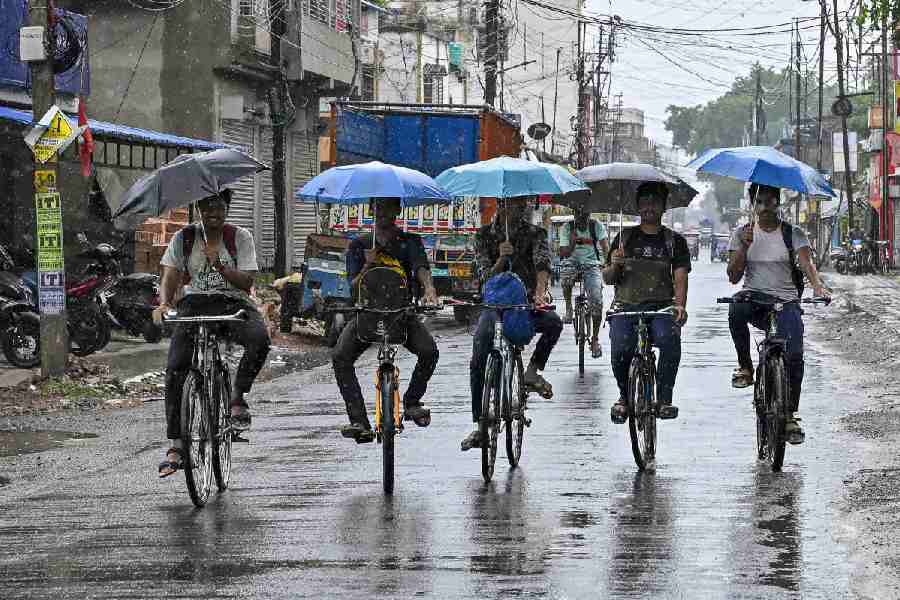
In London, where I studied, a mere drizzle kept the crowds at bay during the Queen’s Diamond Jubilee, an event which the city had not witnessed since 1897, during the reign of Queen Victoria. A stark comparison to Calcutta, where the heavy rains over the past few days barely paused the festivities.
Durga Puja, however, cannot solely be defined by the bright lights, the frenetic energy and the fabulous food. The True Spirit Puja competition, aimed to inspire Calcutta to organise inclusive, safe and meaningful pujas, made me realise the extent to which this religious and festive occasion has been harnessed as an agent for change and for raising awareness of fundamental social and environmental issues. We met our panel of judges at The Bengal Club, where we received a safety briefing from a senior member of Calcutta Police. He emphasised the need to take measures for fire safety, better crowd control and traffic circulation throughout the city to ensure a happy and secure experience for everyone.
After experiencing the chaotic, rubbish-strewn streets of London during the Notting Hill Carnival, an event which prompts the swift evacuation of local residents for the weekend, where the crowds are so dense that phone networks stop working altogether, I was surprised at the level of organisation and civic consciousness exhibited throughout Calcutta during Durga Puja.
Although I was warned that traffic would be an issue during these days, as far as my experience goes, it was no better or worse than an average day in Delhi.
No matter how big or small, each pandal I visited proved its commitment to a safe puja by providing basics such as fire extinguishers, first-aid points and drinking water, as well as a space for the elderly to sit.
What struck me the most was the intricate link between the festivities and social engagement. From planting trees to distributing uniforms and textbooks to schoolchildren to providing free medical and eye check-ups, each organising committee found unique ways to channel the energy and enthusiasm that people feel for Durga Puja into positive changes that can be felt in the community throughout the year.
Accompanying the 40 little judges of the TTIS Choto Chokhe Boro Pujo outing made me realise the extent to which the younger generations were actively involved in positive action in their city by advocating for responsible, green pujas. Neela Majumdar, from the Earth Day Network emphasised that the Choto Chokhe Boro Pujo competition was a powerful force in making Durga Puja more environment-friendly, as puja committees have been particularly responsive to the questions and demands of young inquisitive minds.
And I could see why — the young judges were a force to be reckoned with, pressing the different organising committees on vital issues, such as recycling, waste disposal and the use of chemicals in the paint. They also inquired whether the puja committees were taking lasting measures to improve the environment in their communities, by making space for gardens and planting trees.
The social awareness of these young people showed me what makes Durga Puja so unique, the fact that a religious festival and a celebration of tradition and Bengali cultural heritage can also serve as a potent platform for innovation and social change.
Visiting the various apartment complex pujas during the Festival of Joy final judging process allowed me to witness yet another facet of this festival, the extent to which Durga Puja brings people together.
In Srijan Sonargaon in Sonarpur, the first complex we visited, you could feel the involvement of the whole community — the walls of the pandal were decorated with children’s drawings from Bengali poems and stories, whilst older kids had created a ‘Team Up to Clean Up’ group to help the local community become greener, not only during the festival but throughout the year.
New Alipore Residency boasted the inclusiveness and cultural openness of their puja — although relatively few Bengali families live within their complex, Durga Puja is embraced by everyone, bringing together all the Sikh, Punjabi, Gujarati and Marwari families living in their midst.
After experiencing the different dimensions of Durga Puja I am convinced that I have come to Calcutta at the best time of year, as so many people have repeated to me, a time of year that witnesses exactly why Calutta is nicknamed the ‘city of joy’.
Vitality and teeming crowds, combining celebration with positive social action, it seems Calcuttans really live to enjoy life, and Durga Puja might be the crowning glory in their collection of revelries.