|
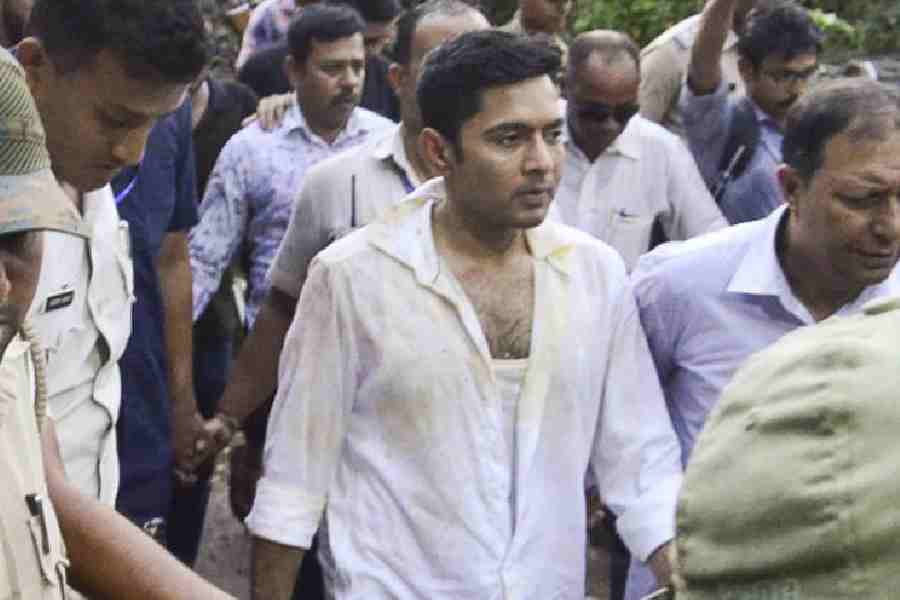
| Sukanta Chaudhuri |
Aug. 25: Sukanta Chaudhuri, the Presidency alumnus who spent a large part of his professional life teaching at Jadavpur University, has quit the mentor group meant to take his alma mater to its former glory citing a “dharma sankat” where he had to choose one over the other.
The conflicting pulls of the two institutions had dogged him from the beginning of his new assignment as part of the panel but they reached a tipping point over the past few weeks, a source said.
Chaudhuri mailed his “dharma sankat” and his inability to continue in the panel a couple of days ago.
“Sukantababu had actively participated in drawing up our third report and all his recommendations are part of it, but he is not a signatory to the document because that is when he wrote an emotional personal mail to the mentors expressing his inability to be part of the panel. We regretfully accept his decision,” mentor group chairman Sugata Bose said today.
Chaudhuri, a professor of English literature, said: “Besides Presidency, there are several other universities… like Calcutta University and JU, and I feel something should be done for these institutions as well. Giving one university all the facilities, I feel, is discrimination.”
“About a year ago, higher education minister Bratya Basu had said the report of the mentor group would help improve the other sectors of higher education. But I don’t see the same intent now.… A difference between Presidency and other state universities is appearing already,” Chaudhuri told a news conference at Santiniketan this evening.
Following the mentors’ recommendations, the state government had agreed to pay Presidency teachers more than others. The move helped bring back several bright young teachers who had left the city.
But Chaudhuri, who quit Presidency as a teacher in 1991 after an 18-year stint and moved to JU where he is still a professor emeritus, had protested. He was a signatory to the mentors’ second report, which recommended additional incentives to make Presidency attractive to teachers based elsewhere, but he was the lone dissenter.
“Yes, I have been part of the mentor group. But I have a bigger identity… especially as someone who lives in Calcutta. It’s necessary to maintain a balance…. It has always been there in (my) mind…. I have always been wondering, how much for Presidency and how much for others,” he said today. “I understand we need to focus on Presidency. But I find that nobody is sparing a thought for the other universities.”
Bose did not feel Presidency was running away with all the resources that other universities could have availed of. “Our task was to work for Presidency. If we succeed in (turning around) Presidency, it would provide a model for all higher education institutions in the state and the mentors would be proud of that.”
“We had not been extravagant at all given our mandate. What we sought was within the bounds of what was already available in the best institutions in India, not abroad, and it was essential,” Bose said.
“All the other mentors”, he added, “believe that Presidency deserves the incentives because of its rich history and tradition and to become once again an institution every one in Bengal could be proud of.”
Sources said there was pressure on Chaudhuri to voice the concerns of teachers elsewhere because of his “split loyalties”.
One JU teacher wondered why Chaudhuri had chosen to be part of the Presidency panel at all. “His heart is now with us (JU). What he has said is absolutely right.”
Chaudhuri said: “It would not be fair to use the term ‘protest’ (but) I had expressed my viewpoints on several occasions and spoken to all…. So my decision should not come as a surprise.”
Some also saw an irony in Chaudhuri’s protest against “elitism” in an academic institution. He was at one time widely believed to be opposed to the Left Front government’s policies that virtually reduced Presidency to the stature of “any other college”.