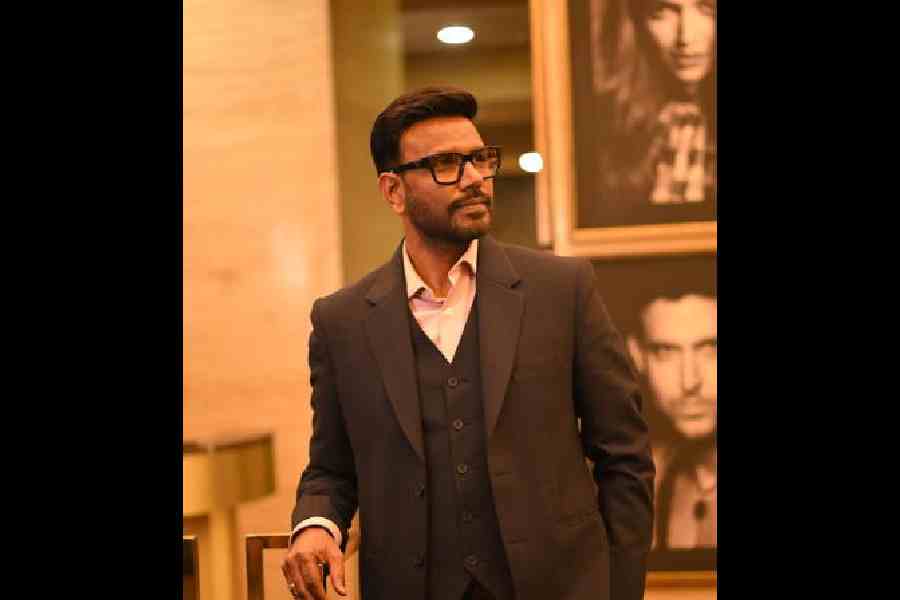
When producer-filmmaker Kan Singh Sodha speaks about Zorr, there is a sense of restless energy — the kind that comes from having lived with a project through every draft, delay and decision. The zombie horror-comedy, directed by Gourab Dutta, released after a journey that began nearly two and a half years ago, when Dutta first approached Sodha with the idea of mounting a zombie film in Bengali. “The concept was universal,” Sodha recalls. “So I thought, why don’t we make it in Hindi?” What began as a regional pitch evolved into a Hindi-language film mounted from Calcutta under his KSS Productions banner, set in Delhi and partially shot there to ground the chaos in a recognisable urban sprawl.
Zorr takes an everyday space — the office — and detonates it with the absurdity of a zombie outbreak. Colleagues who spend their days navigating petty rivalries, hierarchies and grudges suddenly find themselves locked in a fight for survival. “It’s about how to survive and how to come out of that situation,” Sodha explains. “There are differences between boss and colleagues, small fights. During the crisis, they realise life is fragile. It can go anytime. So it’s better to unite, keep differences away and fight together.” The film’s tonal gamble lies in its insistence on humour amid horror, creating a survival story that is as much about ego and reconciliation as it is about flesh-eating threats.
The zombies themselves carry a conceptual twist. In Zorr, infection amplifies inherent personality traits: the perpetually angry grow more volatile, the cheerful laugh uncontrollably, the dancer cannot stop moving. The metaphor is playful yet pointed — a suggestion that under pressure, our truest selves surface. “It’s entertainment,” Sodha says plainly. “People laugh and fear is there. That’s what we wanted. A horror comedy.” In a cinematic landscape where zombie narratives are largely imported through global streaming catalogues and where Go Goa Gone remains the most recognisable Hindi-language reference point, Zorr attempts to root the genre in familiar Indian humour and workplace politics.
The ensemble reflects that blend of worlds. Rishab Chadha stars alongside Akash Makhija and Vijay Singh, with Joy Sengupta bringing experience from Bengali and Hindi screens alike. Prantika Das plays a significant role as the girlfriend of Akash’s character, remaining a steady presence through the escalating crisis. “They worked very, very hard,” Sodha says. “For many of them, this is a big theatrical step. They gave 200 per cent.”
Shot over a brisk 15 to 20 days, with workshops conducted beforehand, the film demanded logistical precision. Sodha’s involvement extended well beyond assembling the project. He speaks of script development sessions, shot division discussions with the director of photography, post-production debates, background score choices and release strategy meetings — the invisible architecture that supports the finished film. At one stage, he revisited the edit with Dutta to refine the pacing. “I wanted it crisper,” he admits. “There are practical limitations, but I know filmmaking, so I can sit and work on it.” He adds, once, with quiet emphasis, that he sees himself as a producer-filmmaker, someone invested in creative decisions from inception to release.
Zorr marks a tonal departure from the more message-driven cinema Sodha has previously gravitated towards, including Bengali productions such as Srimati. He has also directed short films like Dadi Ka Murabba and Baalak, and intends to helm a feature of his own soon. Yet he is candid that the zombie space is not necessarily a permanent pivot. “Honestly, it’s a one-time shot,” he says. “I like strong stories that have something to say. Entertainment is necessary — without entertainment there is no cinema — but I want films where there is a takeaway.” Zorr, in his view, occupies the space of unfiltered amusement: a film where audiences can laugh, flinch and momentarily forget the world outside.
Looking ahead, Sodha is already focused on what comes next. One or two projects are in early development, with plans to go on the floor within the year. Details remain guarded, but he hints at narratives that will balance accessibility with emotional and social resonance. If Zorr tested the waters of horror comedy within an Indian office block, the future, he suggests, will return to stories that carry weight alongside wit — films built not only to distract, but to linger.