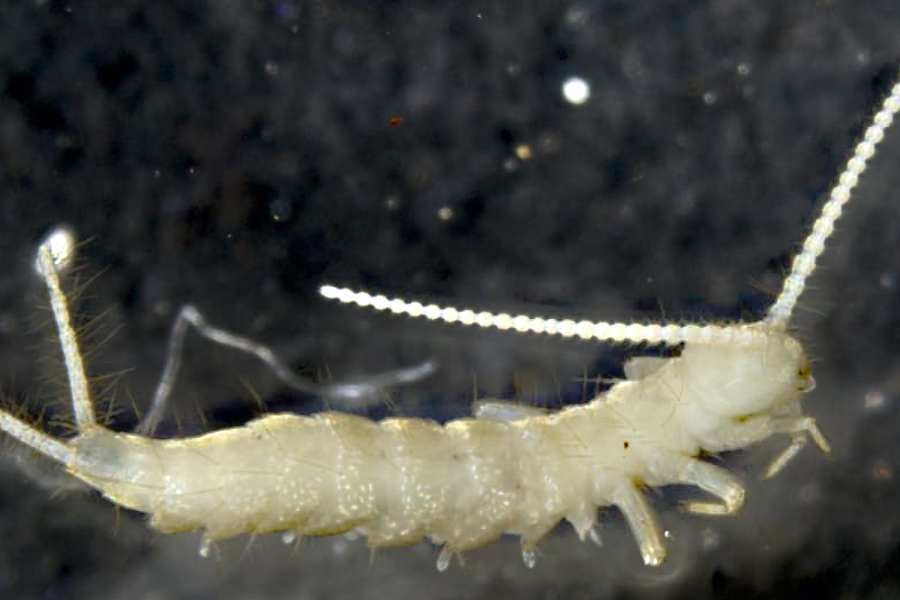
Scientists at the Zoological Survey of India have discovered a previously unknown species of the Indian Diplura, a wingless, soil-dwelling micro-arthropod, from the eastern Himalayas, marking a rare breakthrough in Indian entomological research after a half-century gap without a domestically led scientific discovery of this species.
Diplurans, or Lepidocampa sikikimensis, are blind, soil-dwelling organisms that play an essential ecological role by maintaining nutrient recycling and maintaining soil structure.
The scientists noted that the newly discovered species can be distinguished by its unique body scale pattern. bristle arrangements and distinctive appendage structures.
The findings of this Indian Diplura species marks the first time that a variation of this species has been documented by Indian researchers. Previous discoveries were all made by foreign scientists.
Zoological Survey of India (ZSI) director Dhriti Banerjee said that documenting lesser-known soil organisms is crucial for understanding evolutionary processes and biodiversity hotspots such as the Himalayas.
Published on January 7 in the international journal Zootaxa, the study led by scientist Surajit Kar identified the species through the morphological analysis of specimens from Sikkim to Kurseong demonstrating a wider distribution across the eastern Himalayan belt.
The discovery of the new species also provides an updated description of Indian soil fauna.In another first, the team was also able to generate barcode data for the Indian Lepidocampa species, providing molecular references that strengthen future biodiversity research.
The study reveals that a large extent of Indian soil biodiversity remains undiscovered, especially in the fragile Himalayan ecosystems.
"This success underscores the necessity of sustained taxonomic efforts in biodiversity hotspots," said Banerjee.