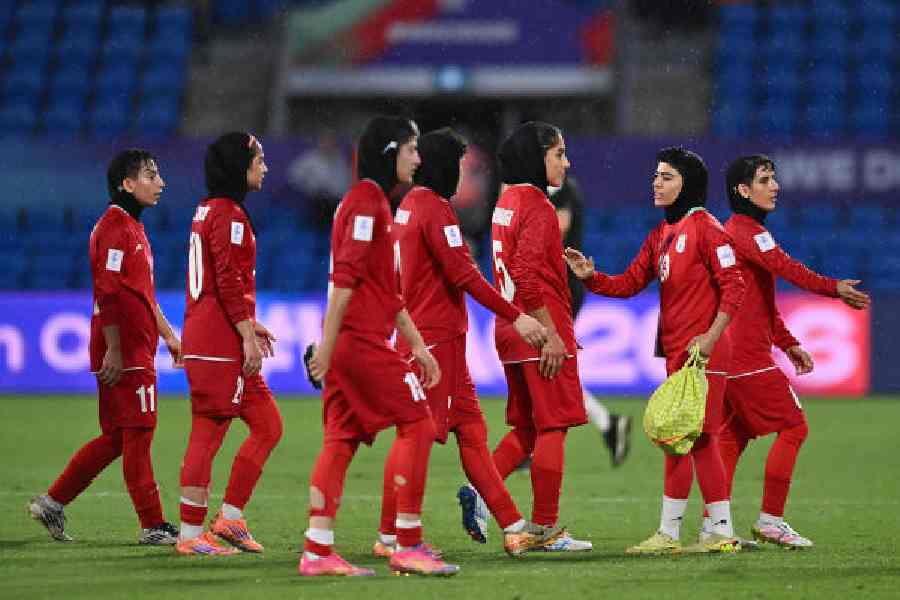
Australia has agreed to grant asylum to the Iranian women’s national football team, claimed US President Donald Trump.
Trump said he spoke to Australian Prime Minister Anthony Albanese on the matter.
In a post on Truth Social, Trump claimed that the Australian Prime Minister was “on it,” adding that the five women from the team who left their training camp to seek asylum “have already been taken care of, and the rest are on their way.”
Trump also said that some of the Iranian women’s team players felt compelled to return to their country after receiving threats against their family members if they did not go home.
This development follows an earlier post on Truth Social on Monday, in which the US president said that Australia was “making a terrible humanitarian mistake” by allowing Iran’s women’s football team to be sent back home and called on Aussie Prime Minister to give asylum to the team members.
The Iranians’ campaign in the Australia-hosted Asian Cup tournament started just as the US and Israel launched air strikes on Iran, killing the Islamic Republic’s Supreme Leader Ali Khamenei. The team was eliminated on Sunday after losing 2-0 to the Philippines.
“Australia is making a terrible humanitarian mistake by allowing the Iran National Woman’s Soccer team to be forced back to Iran, where they will most likely be killed,” Trump’s earlier post on Truth Social read. “The U.S. will take them if you won’t.”
Australia’s SBS News said that the five Iranian players who had “broken free” were under the protection of the Australian Federal Police.
Global players’ union FIFPRO said earlier on Monday there were serious concerns for the welfare of the team, as they prepared to return home after being labelled “wartime traitors” for refusing to sing their national anthem
before a game.
The players’ decision to stand in silence during Iran’s anthem before their first match against South Korea was labelled by a commentator on Islamic Republic of Iran Broadcasting as the “pinnacle of dishonour”.
The team then sang the anthem and saluted before their second match, against Australia, sparking fears among human rights campaigners that the women had been coerced by government minders. With inputs from Reuters