
BORN TO RUN By Bruce Springsteen, Simon & Schuster, Rs 799
Why did Bruce Springsteen - who turned 67 in September - dedicate seven years to writing an autobiography? His music tells the familiar story of a youthful, passionate Bob Dylan-aspirant whose dreams were almost derailed by adulthood and acute depression, a story that everyone who has listened to his albums will know. Springsteen, unlike the famously-enigmatic Dylan, has always seemed to be available to his fans, always in constant contact with them, sharing his experiences of love, grief and learning through searing, five-minute-long songs and explosive concerts. But even his fans cannot know everything about him, and his new memoir, Born To Run, is proof of this. We discover the rock legend, riding on the success of his album, The River (1980), also battling serious lows. During a road trip from New Jersey to California, Springsteen stops in Texas to watch people having fun at a small-town carnival. It is at this moment that he feels his life crumble around him: "From nowhere, a despair overcomes me. I feel an envy of these men and women and their late-summer ritual, the small pleasures that bind them and this town together... It's here, in this little river town, that my life as an observer, an actor staying cautiously and safely out of the emotional fray... reveals its cost to me."
Many successful musicians with platinum-selling albums have spoken, at various points in time, of experiencing versions of this moment. This is the truth of the music industry: it squeezes talent out of artists to the very last drop, with no concern about what this does to their emotional or mental health. Springsteen's suffering, however, was of a different kind - he was consumed by guilt over his artistic success, given the hard life his family had led. He hails from a working-class Italian-Irish family, led by an abusive, alcoholic father, that struggled to make ends meet. His guilt, coupled with the neglect he suffered at the hands of his father, led him to write some of the most intense, memorable songs of the last century, but they are also truths that he did his best to avoid dealing with.
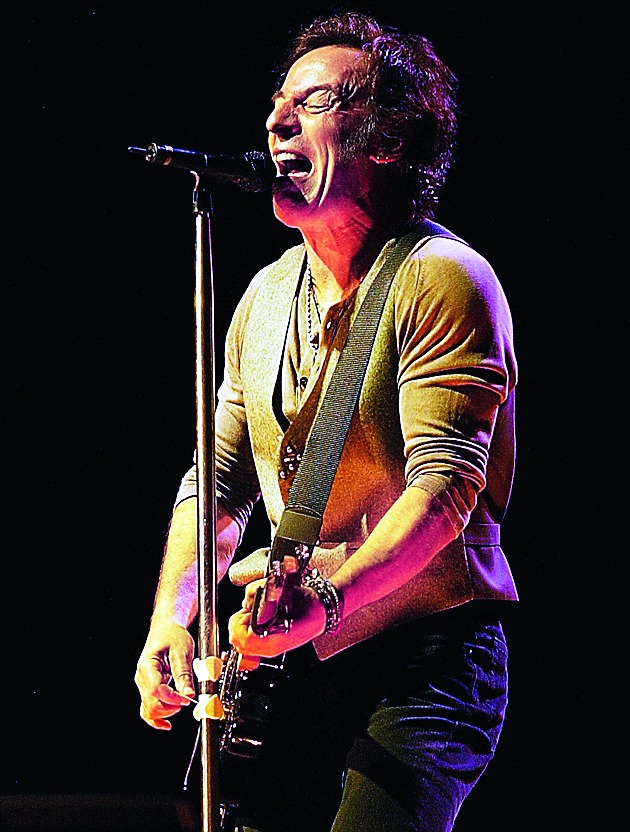
Having never attended a Springsteen show, I have had to make do with watching Bruce Springsteen & the E Street Band concerts on YouTube, each of which is a heady mix of musical excellence and physical release. Born to Run was, of course, also the name of the album that catapulted Springsteen to restless fame, and the songs from this album have almost always featured on the set lists of his concerts. These include not only "Thunder Road" and the title song, but also "Tenth Avenue Freeze-Out", "Night", "Backstreets" and so on. In these songs is the story of his wretched need to leave Freehold, the New Jersey town that moulded him, for better or for worse. In "Jungleland", the last song of the album, the fleeing lovers do not manage to get out. "They wind up wounded, not even dead..." This is also the story that the book tells: Springsteen has spent his life attempting to leave Freehold behind, but he will never be able to escape it. His formative years are shaped by a handful of nuanced, well-etched characters: the overbearing grandmother, the strong mother, the courageous sisters. But the person who had the greatest impact on what Springsteen became was the only one whose approval he could never win: his father. Doug Springsteen largely ignored his family, and his sporadic interactions with them were bitter to the point of being abusive. "When my dad looked at me, he didn't see what he needed to see. This was my crime," writes Springsteen.
A large part of the next four decades go in Springsteen trying to shed that weight - a burden he does not acknowledge till he finally seeks therapy. He breaks down during his first session with the therapist, and his confessions - things he learned about Doug and himself - serve as a running theme through the narrative of the book. There was a big chance that Springsteen would descend into mawkish sentimentality here, but he manages to keeps the tone light. His voice in this book is a magnified version of his voice on the stage; it is self-critical and piercingly honest. Springsteen willingly acknowledges that he was a passable singer and guitarist who made sure he became the lead in a band and dominated the small East Coast bar music scene. "I thought I was a phony... but I also thought I was the realest thing you'd ever seen," he writes. This vulnerability, coupled with bravado, offers a glimpse into why the man played to the point of exhaustion, testing the endurance of his band members and even his fans in four-hour long concerts. Performing live, he says, was "my lifeline to the rest of humanity in the days when those connections were tough for me to make".
His true voice appeared as the music began to flow steadily. In the beginning, he was erroneously dubbed a folk singer. However, after his record company grudgingly accepted that Springsteen was not the 'new Dylan' but a rock musician leading a bar band, his friends from Jersey came in to record with him. Thereafter, with Darkness on the Edge of Town (1978), their songwriting ventured into adult territory; Doug was the key figure in many of the songs.
The good times were not going to last, though. In the mid 1980s, his first marriage and his relationship with the E Streeters both disintegrated. His best friend, Steve Van Zandt, and Springsteen went their separate ways because Van Zandt wanted a more equal partnership. After the monster success of "Born in the U.S.A.", he tells his band members that they have reached the end of the road. Springsteen makes no bones about the fact that he wanted a family, but he also accepts that he is not emotionally equipped for the responsibility. Patti Scialfa, his second wife and longtime band member, is credited with bringing some balance into his life as they raise children together. The truth is that the emotional isolation that had aided the young Springsteen in getting through his childhood prevented him from being a good husband and father. This is familiar territory: most of us have known, or loved, adults who focus only on their work, or use it as an excuse to avert emotional responsibility. In his honesty in these passages, Springsteen does not spare himself. This is the honesty we hear in the voice of the narrator in songs such as "One Step Up", "If I Should Fall Behind" and "Brilliant Disguise".
Born To Run, however, is not about blaming anyone or exacting revenge for the sufferings of the past. It is, instead, a genuine attempt by Springsteen to give himself a chance to understand his father, and also himself. As soon as he realizes that he does not want to focus on the bitterness, he feels a load lift off his chest. The best passages are the ones where he writes about the man who affected him so deeply that he formed a band, left New Jersey, and performed ceaselessly for nights in a row, to the point of exhaustion. Springsteen describes a dream he had when Doug died. He spots his father in the sea of faces in the audience at one of his shows; he gets off the stage and crouches down next to his father, "and for a moment, we both watch the man on fire onstage".
There is no escaping the fact that Springsteen over-writes the book in many places. Too many words and exclamation marks pile upon one another, and entire sentences are in capital letters. (It is evident that there was no ghostwriter.) Eventually, though, this ceases to matter. If anything, it becomes like the run-up to the performance of one of his explosive songs. He tells stories about himself with disarming self-deprecation, and some scenes pack a real emotional punch, such as the passage concerning his terse reconciliation with his father, and the description of the way he dealt with the death of Clarence Clemons, the saxophone player who was also his friend. With Born to Run, Springsteen has confronted and called a truce with his past, and he acknowledges that, in spite of his best efforts to leave the ties of family and Freehold behind, he never escaped them, for they made him what he is - "one of the best" at what he does.