
PAKISTAN AT THE CROSSROADS: DOMESTIC DYNAMICS AND EXTERNAL PRESSURES
Edited by Christophe Jaffrelot, Random House, Rs 699
The question for a long time was "whither Pakistan?", much to the chagrin of Pakistani intellectuals who insisted that the world look "beyond the crisis state". In his study on The Future of Pakistan, Stephen P. Cohen, noted scholar and security expert, very helpfully suggested that the question that should be posed instead is "whether Pakistan" - that is, whether Pakistan would make the right choices and survive the chaos. That was in 2011. Since then, the only sensible choice Pakistan has made is to allow a sitting government end its term honourably and hand over power to the next popularly-elected dispensation. It made history by doing so. Where the other parameters of State rebuilding are concerned, it is still "at the crossroads".
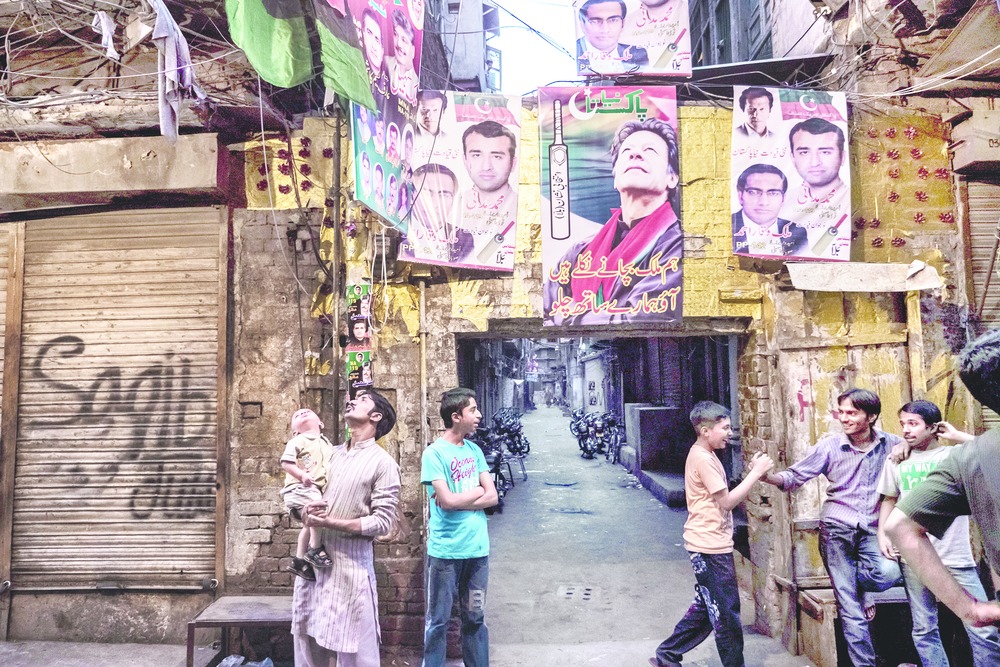
But Pakistan is not exactly a lost child, "muddling through", as many had predicted. If the picture presented by this excellent collection of essays is to be believed, Pakistan has found its bearings alright. The crux of the matter is adaptability and Pakistan seems to be adapting remarkably well to the changed environment at home and abroad. Leading the charge is that indomitable, shape-shifting monster - the Pakistan army. In a searing critique of that institution, Aqil Shah shows how the army has survived the 'democratic' takeover with its prerogatives intact. A simple structural separation from power during the Pervez Musharraf years helped its 'disengagement' from politics, but it retains its autonomy, its iron grip over defence, foreign and security policies and tutelary rights over the government. Its control over the popular media, pro-military politicians like Imran Khan and clever use of judicial activism now ensure that the army can rein in democracy whenever it becomes too stifling for it.
The other adaptation that this books points to is the one Pakistan is intent on making with respect to the changed geostrategic realities. A "client" state of the United States of America, Pakistan is serious about renegotiating that status by using its role as a "pivotal" state, that is a state which, by virtue of its location and population, is crucial to the stability of the entire region. Christophe Jaffrelot says that a decision to do so was taken by the Pakistan Parliament in 2012, when it resolved to move closer to the European Union, Russia, the Muslim world and Southeast Asian nations, especially China. The drawdown in Afghanistan, US-India rapprochement and the US's actions that it considers damaging to its sovereignty are pushing Pakistan away from America. But he also warns that Pakistan will be hedging its pivotal status to replace one patron with another.
With its "all weather friend", China, waiting in the wings with designs to bring 'Af-Pak' under a one belt-one road scheme and with as much eagerness as Pakistan to snub India, one does not need to guess too hard about who that partner is likely to be. There is Saudi Arabia as well, but given Pakistan's reluctance to destroy its ties with Iran and Saudi Arabia's unwillingness to spoil its burgeoning relation with India, that might not happen. It is also unlikely that Pakistan will let go its milch cow - the US, which, notwithstanding Pakistan's betrayals, remains in its thrall.
Jaffrelot, in a superbly written essay, explains why Pakistan has managed to defeat Barack Obama's best of intentions for the country and cuckold his administration. Obama's plans may have been to prove to Pakistan America's reliability as a partner, to build a civil society that would sustain a democratic regime in Pakistan. But his short-term goals, says Jaffrelot, were no different from those of George W. Bush - to capture Osama bin Laden, to dismantle al Qaida, for which he, ultimately, had to depend on the Pakistan army, "well-trained in the art of bargaining". Irrespective of the US Congress's ire and legislative conditions, the Obama administration ended up giving the army what it thought was "its due". With China standing rock solid behind Pakistan and its generals, this situation is not going to change. That is why, Frédéric Grare warns India that its proximity to the US might limit Pakistan's activism and give it greater security, but it is unlikely to "sustainably pacify the relationship between the two countries as long as the United States will keep considering Pakistan as much as an asset as a liability for its policy in the subcontinent."
Every country strategizes at the crossroads of the national and the international, reminds Jaffrelot, and although Pakistan, with its ramshackle economy and porous borders, is more dependent on doles and more vulnerable to outside influences than most others, it is no different. But this strategizing in Pakistan remains the monopoly of an incestuous circle of people - Mushahid Hussain numbers them at 500 - who are drawn from both the civilian and military leadership. An activist judiciary, on which many, including Pakistan's people, were pinning their hopes, needs to be an impartial arbiter in the battle among the State's institutions - Parliament versus presidency, bureaucracy versus military. But, reminds Philip Oldenburg, the judiciary has "clearly succumbed to the temptation to join in the struggle as a participant." He also tugs at the warning bells by pointing out that the Pakistan supreme court has wrested a virtual monopoly of appointing and promoting judges, that there are fears about the judiciary's use of its suo motu powers leading to a new anti-democratic claim on political power. Also that legal reform in Pakistan often does not recognize the need to improve on the legal education and sensitization of lawyers, without which there is always a fear of the recurrence of scenarios like the one where lawyers were seen showering petals on the killer of the Punjab governor, Salman Taseer.
This book is a brilliant guide to understanding Pakistan's trajectory, particularly because it does not waste too much time in explicating the "idea of Pakistan" and plunges head on into the post-2008 developments. Whatever the internal chaos, vengeance against India will give Pakistan the will to survive. There are startling nuggets of information and connections that are not always obvious - take the fact that Fata's susceptibility to terror is the result of its modernization or that Afghanistan is developing its strategic parity with Islamabad through proxy warriors much in the same way that the latter has done, or that Pakistan's ties with Iran are perhaps as intensive as those with Saudi Arabia. There are bits missing though. There is not much on the separatist struggle in Baluchistan and Sana Haroon seems to evade going too deep into Pakistan's interaction with Saudi Arabia. And what about the security dynamics in Pakistan following the advent of the Islamic State of Iraq and al-Sham in the region? Mohammad Waseem on "The operational dynamics of political parties in Pakistan" is also a disappointing read in comparison to what the rest of the book has to offer.