
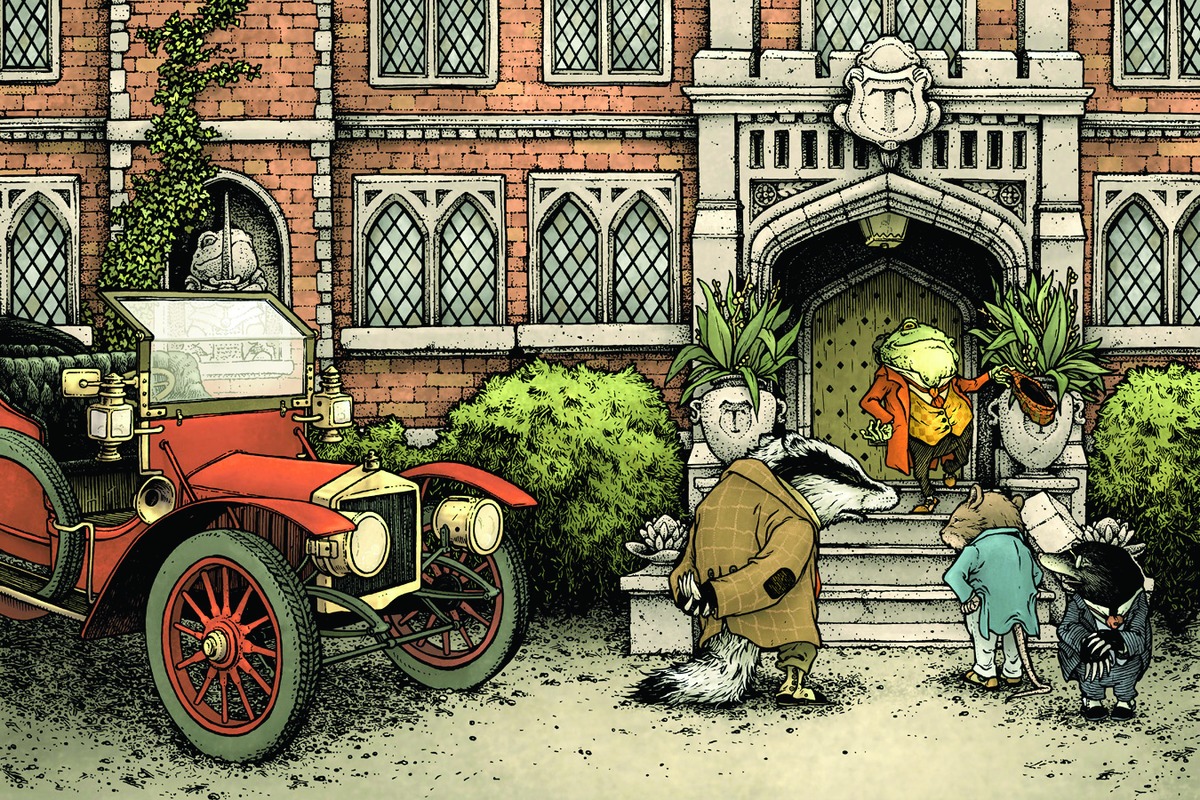

Man and beast have coexisted far better in fiction than they have in real life. In fact, a look at children's literature might show that the beasts even have the upper hand. The Scottish author, Kenneth Grahame, who died 86 years ago today, felt that "[e]very animal, by instinct, lives according to his nature... and betters the tradition of mankind. No animal is ever tempted to deny his nature." Yet, man is often tempted to impose on animals behaviour and nature that might be alien to them.
A study found that of around 1,000 children's books "more than half" "featured animals or their habitats, of which fewer than 2% depicted animals realistically". Anthropomorphizing - attributing human form or personality - animals began as far back as sixth century BCE with Aesop's Fables. Although Aesop's animals were just the means to an end - delivering a moral - he assigned to these beasts traits that they have been trying to live down ever since. The fox, for instance, became wily and the lion someone that would eat - or at least try to gobble up - all other animals be they a mouse or an ass.
His high opinion of animals notwithstanding, Grahame, too, is guilty of conferring on his animals human characteristics. Ratty, Mole and the larger-than-life Mr Toad may live on the river bank but their conversations - not to mention Mr Toad's extraordinary ability to drive a car - make them all too "human" in The Wind in the Willows. The foppish Mr Toad also shares the human scepticism about small foraging carnivores like weasels, stoats and foxes, for they are likely to "break out sometimes". In other words, these are animals who cannot be trusted to restrain their bestial nature.
Compared to this is the more sensitive anthropomorphism of writers like Beatrix Potter. Peter Rabbit and his kith and kin may have worn jackets and gone to the market but they do not lose their naturalness as rabbits. They are timid and get chased by dogs and people. This combined with Potter's delicate watercolour illustrations - closely observed from nature - makes her animals appear completely real. In fact, Grahame's tendency to over-humanize his animals quite irked Potter. She once said, "did he not describe 'Toad' as combing his hair? A mistake to fly in the face of nature - A frog may wear galoshes; but I don't hold with toads having beards or wigs!"
Grahame, through his anthropomorphizing, was trying to explore how unsettlingly fluid the boundary between animal and human nature is. Yet, reading animals as symbols of humans can reduce them, make them smaller, steal their right to be seen as subjects who have a unique, distinctive way of existing. In the posthumanist world, the lines drawn between humans and animals are seen as a self-serving construction rather than scientific reality. But equally selfish is to bestow traits on creatures that are incapable of defending themselves; their only fault being they speak a language that humans cannot understand.