 |
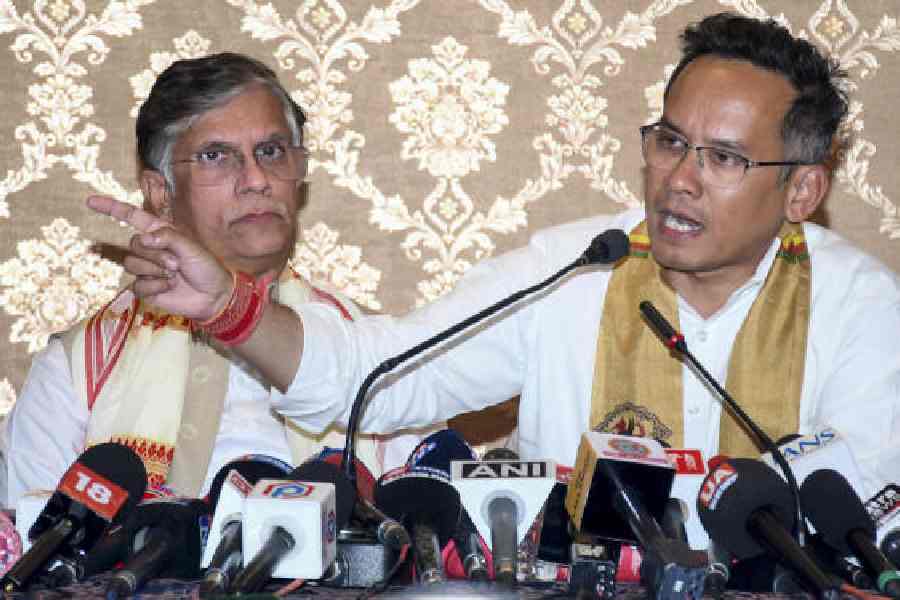
Guwahati, Sept 14 : The birth of the Asom Gana Parishad (Progressive) under the leadership of the founder president of the original AGP just months before Assembly elections are due has added a new dimension to the Assam political scenario.
On the face of it, the party that stands to gain the most from this development is the Congress because the number of parties vying for the so-called caste Assamese votes ? the AGP and BJP, for instance ? has now gone up by one. The party that could be affected the most is obviously the AGP. But these calculations could go awry, depending on what the minorities make of Mahanta?s new party. The Shahi Imam, for instance, has promised to lend a helping hand to Mahanta, as has the Left in a less categorical manner.
Under Mahanta's leadership, particularly in the AGP?s second stint in office, the minorities were favourably disposed towards the regional party, seeing in him a friend and a person who had undergone a huge image makeover since his days as the spearhead of the six-year movement against foreigners. So much so that even Abdul Muhib Majumder, the architect of the defunct IM(DT) Act, did not hesitate to join his coalition ministry, which even had the CPI in it.
For the record, the Left had not taken kindly to the anti-migrant mass movement launched by the All Assam Students? Union (AASU).
Given the fact that the minorities now seem to be disenchanted with the Congress and various groups are thinking aloud about floating a party, the Asom Gana Parishad (Progressive) could well woo them to its side. If that happens, the Congress will take a beating, while the AGP will find itself at the crossroads.
Analysts are, however, not discounting the possibility of Mahanta's strategy of splitting the AGP boomeranging on him with supporters of regionalism turning their back on him for effectively killing the ?cause of regionalism?.
The other obstacle that Mahanta faces ? and a big one at that ? is the AASU, which has all but vowed to finish off his career.
The influential student organisation is already on boycott-Mahanta mode and with elections drawing nearer, it could get more aggressive as the days go by. The AASU has already held him responsible for the erosion of regionalism and his latest political act could very well be the last straw.
Another of Mahanta?s enemies is the banned Ulfa. Allegations of ?secret killings? ? relatives of Ulfa activists were the victims ? during his second term as chief minister have been following the mercurial leader all these years.