S.K. Choudhary and P. Gupta run fair-price shops in the Upper Assam town of Jorhat. These government-licensed ration shops help in the last-mile delivery of subsidised essential items through the public distribution system.
They said their workload had increased since November 2025, when the state government started distributing sugar, dal and salt through these ration shops.
While rice was distributed for free before, a kilogram each of the other three items are being given at ₹100 a month, at least ₹40 less than the market price.
Choudhury and Gupta, who have been running ration shops for over 40 years, said around 75 per cent ration cardholders, especially women, were “visibly happy” with the BJP-helmed state government for including new food items and continuing with other welfare schemes such as Orunodoi and the Mukhyamantri Mahila Udyamita Abhiyan (MMUA), aimed at empowering women.
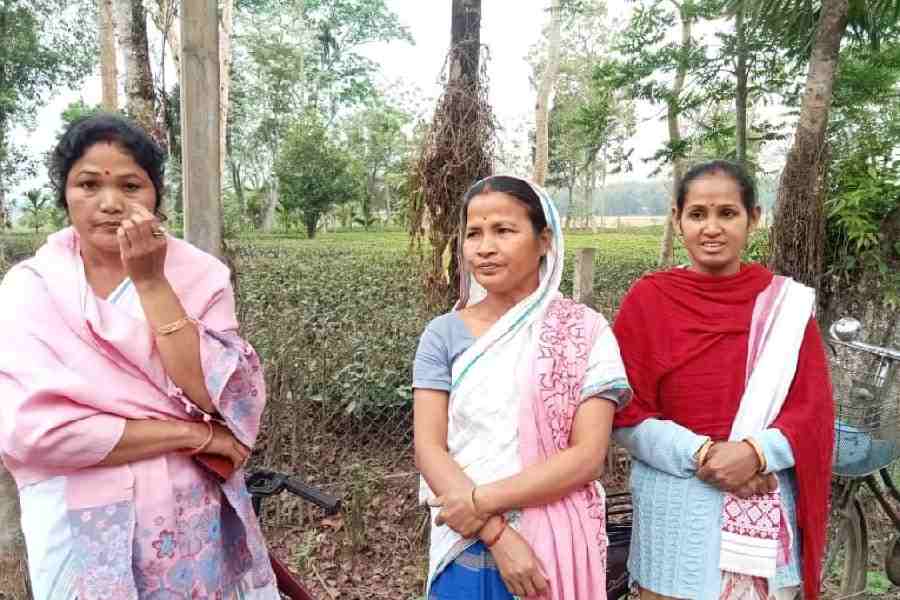
Poppy Gogoi (extreme left) says government schemes are supplementing the income of the poor
They also said that ration cardholders want the schemes to continue uninterrupted.
In the run-up to the April 9 elections, chief minister Himanta Biswa Sarma announced the distribution of mustard oil at subsidised rates and two free LPG cylinders a year among around 70 lakh ration cardholders. The ruling BJP has also promised to increase the monthly assistance under its flagship Orunodoi scheme to ₹3,000 from ₹1,250.
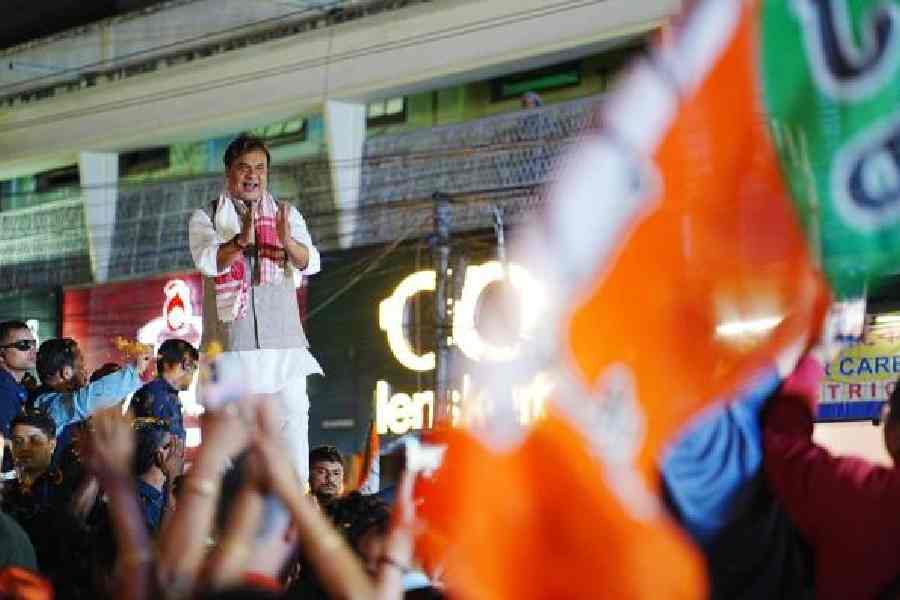
Conversations with women, youth and tea garden workers in Jorhat and Sivasagar, and reports from other districts, suggest that the slew of effectively promoted and meticulously implemented beneficiary schemes, mostly targeting women, youth and tea garden workers, have put the BJP-led ruling alliance “in an advantageous position” for the upcoming polls even though the Congress-led Opposition alliance is making a last-ditch effort to dent the beneficiary support base.
Though there is some unhappiness over the way beneficiaries are “selected”, everybody wants the schemes to continue.
The Opposition has been reiterating in its campaign meetings that the benefits will continue if it comes to power, assuring hassle-free delivery without conditions such as attending party meetings and programmes.
Beneficiaries Prajalita Barpatra, 36, of Meleng near Jorhat, and Poppy Gogoi, 47, of Ahom Gaon in Titabar, however, seem happy with the welfare schemes.
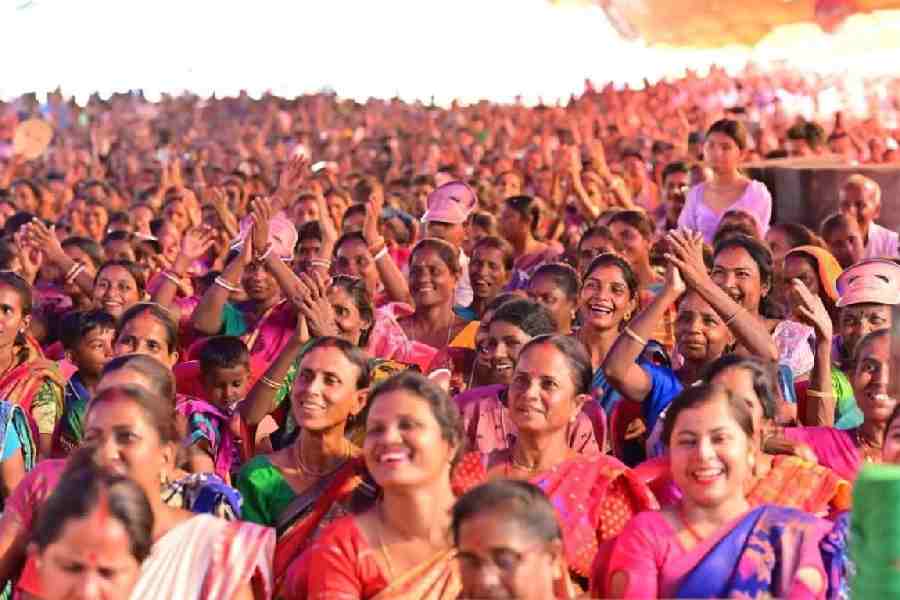
There are 2,50,54,463 voters in Assam, of which 1,25,22,593 are women. The significant participation of women in poll rallies organised by the BJP and its allies is also largely due to the effective implementation of the welfare schemes, said Rupa Tanti and Monika Bora of Mariani.
The schemes
The schemes include a monthly cash transfer of ₹1,250 under Orunodoi to women beneficiaries, ₹10,000 as the first instalment under the MMUA, and the Lakhpati Baideo (Didi) entrepreneurship support programme.
Both Orunodoi and MMUA have around 40 lakh women beneficiaries. The government has transferred over ₹8,000 crore to the beneficiaries under these schemes since September 2025.
There are also programmes for students: the Assam Mukhyamantri Nijut Moina Scheme for girls and the Assam Mukhyamantri Nijut Babu Scheme for boys. Under these, eligible girls and boys get monthly assistance between ₹1,000 and ₹2,500 for 10 months.
Titabar resident Poppy Gogoi said the beneficiary schemes were supplementing the income of poor households, helping them “buy small things like hair clips, milk products, hire tuition for their children” with the ₹1,250 monthly assistance under Orunodoi. Students also don’t have to depend on parents for “routine expenses”. Prajalita Barpatra, who lives 40km away, also said the assistance was a huge help for people like them.
Jorhat-based Barnali Saikia Bora, in her 60s, said the government schemes were empowering women and students.
“The women beneficiaries’ respect in the household has gone up as she is now seen as contributing to the family’s income. The dropout rate of girls has decreased. The schemes could be a game-changer in the polls,” she said.
Ahead of the polls, the government also hiked the daily wage of tea garden workers by ₹30, launched distribution of land pattas to permanent garden workers and distributed a ₹5,000 one-time grant through direct-benefit transfer to “honour and acknowledge” their contribution to the tea industry, one of the state’s main economic mainstays.
Over 6 lakh tea garden workers have benefited. In January, the government also expanded job reservation by 3 per cent for tea garden candidates in Grade I and Grade II jobs.
Horen Goowala, 55, the first college principal from the tea community who still lives in the garden near Mariani in Jorhat district, said the financial assistance, free admission for students and job reservation for the tea community “is working in favour of the ruling alliance”.
“There were welfare schemes in the past too but the current government has taken it to a different level by constantly engaging with the beneficiaries. Then there is the visible improvement in infrastructure. There is no denying that these factors have put the ruling alliance in an advantageous position in the polls,” he said.
At the same time, Goowala said the young and educated members of the tea communities would, however, look at the candidate, their vision and public conduct before casting their votes.
Rupam Tanti, another tea community member, said they were happy with what the government was doing, but had not given up on their demand for Scheduled Tribe status and the ₹361 daily wage promised in 2016. To counter resentment, the BJP has promised to increase the daily wage of tea garden workers to ₹500 in their poll manifesto.
- Assam votes on April 9