
Every parent wants their child to succeed. We want them to find purpose in their work, meaning in their relationships and confidence in themselves. Those aspirations have remained remarkably constant across generations.
What has changed is the world in which our children are growing up.
Today's young people are more connected, more informed and more exposed to opportunities than any generation before them. Through a device in their pocket, they can access information, ideas and experiences from across the world in an instant.
Yet, alongside these opportunities, many are carrying a burden previous generations never experienced at this scale: the pressure of constant comparison.
Paradoxically, at a time when young people have access to more knowledge, resources and opportunities than ever before, many are reporting higher levels of stress, anxiety and emotional exhaustion.
The data reflects this growing concern. According to UNICEF India, 11 per cent of student’s report experiencing anxiety and 43 per cent report frequent mood swings. Studies suggest that between seven and 10 per cent of Indian adolescents live with diagnosable mental health conditions, while globally, the World Health Organization estimates that one in seven adolescents experiences a mental health disorder.
These numbers tell an important story. The challenge facing young people today is not simply academic pressure or career uncertainty. It is the growing belief that their worth is determined by how they compare with others.
Success has become increasingly visible. Academic achievements, university admissions, internships, promotions, entrepreneurial ventures, relationships and even personal milestones are now displayed, shared and measured in public view. Progress is no longer judged only by how far one has come, but by whether one appears to be keeping pace with everyone else.
As a result, many young people feel they are running a race that never truly ends.
The issue is not ambition. Ambition remains a powerful driver of growth and achievement. The problem arises when ambition becomes tied to anxiety rather than purpose. Many young people today feel pressure to excel across every dimension of life at once. They are expected to perform academically, build employability skills, develop leadership credentials, maintain social connections, look a certain way and prepare for an uncertain future. Even leisure increasingly comes with expectations of productivity.
Perhaps the most concerning aspect of this pressure is the emergence of invisible deadlines.
There is a growing perception that there is a right age for every achievement and securing admission to a top university, building an impressive profile, finding career success, achieving financial independence or reaching personal milestones. When life unfolds differently, many young people begin to feel they are falling behind, even when they are progressing perfectly well.
A young professional in his mid-twenties may be doing well at work, steadily building skills and experience. Yet a glance at LinkedIn can make him feel behind. Someone has been promoted faster. Someone has launched a start-up. Someone else is posting about buying a home. Instead of recognising his own progress, he begins measuring his life against milestones that were never his to begin with.
The pressure often comes not from reality, but from the belief that everyone else is somehow ahead. Life's milestones, once viewed as individual journeys, are increasingly being treated as timelines. This has contributed to the rise of what many mental health professionals describe as high-functioning anxiety. It often remains hidden because the young people experiencing it appear successful, organised and accomplished. They meet deadlines, perform well in examinations and excel at work.
Yet beneath the surface, many struggle with perfectionism, self-doubt, overthinking and a persistent feeling that nothing they do is ever enough. Achievement brings temporary relief, but rarely lasting satisfaction because another benchmark is already waiting to be reached.
Social media has amplified this experience. Comparison has always existed, but previous generations compared themselves with classmates, neighbours or relatives. Today's young people compare themselves with hundreds, sometimes thousands, of people every day.
The challenge is that social media rarely reflects everyday reality. It presents carefully curated highlights and the promotion without the setbacks, the achievement without the struggle, the success without the uncertainty.
Repeated exposure to these snapshots can create the illusion that everyone else is progressing faster, succeeding earlier and living more fulfilling lives. Over time, this can quietly erode self-confidence and create a persistent sense of inadequacy.
Many young people are no longer asking, "What do I want from life?"
Instead, they are asking, "Am I keeping up?"
Consider two students receiving university admission offers. One is delighted to have secured a place at a university she genuinely wants to attend. Yet within minutes of opening social media, she sees posts celebrating admissions to institutions perceived to be more prestigious. What should have been a moment of pride suddenly becomes a moment of self-doubt. Her achievement has not changed, but her perception of it has.
This is increasingly the reality many young people are navigating.
As parents, educators and society at large, we often focus on helping young people become more resilient. Resilience is important. Life will always involve setbacks, uncertainty and challenges. But resilience alone cannot be the answer. We must also examine the environments we are creating around our children.
If every conversation about success revolves around rankings, outcomes and achievements, we should not be surprised when young people begin to believe that their value is tied to performance. If every milestone becomes a deadline, achievement can start to feel more stressful than fulfilling.
Perhaps it is time to redefine what success means.
The future will not belong only to those who achieve the highest scores, secure the most prestigious opportunities or move the fastest. It will belong to those who can adapt to change, navigate uncertainty, recover from setbacks, continue learning and build meaningful relationships.
In a world changing faster than ever before, adaptability may matter as much as intelligence. Emotional resilience may matter as much as achievement. The ability to grow may matter more than the ability to compete.
Our children do not need to win every race. They need the confidence to follow their own path, the courage to learn from failure and the resilience to keep moving forward when life does not unfold according to plan. If there is one lesson we must teach the next generation, it is that life is not a competition against everyone else.
The goal is not to raise children who spend their lives chasing someone else's timeline. It is to raise young people who understand their values, trust their abilities and have the confidence to chart their own course. In a world obsessed with keeping up, perhaps what our children need most is the freedom to grow at their own pace.
Because ultimately, success is not defined by how quickly we arrive. It is defined by our ability to learn, adapt, recover from setbacks and continue moving forward. Those are the qualities that will matter long after the rankings, comparisons and milestones have faded.
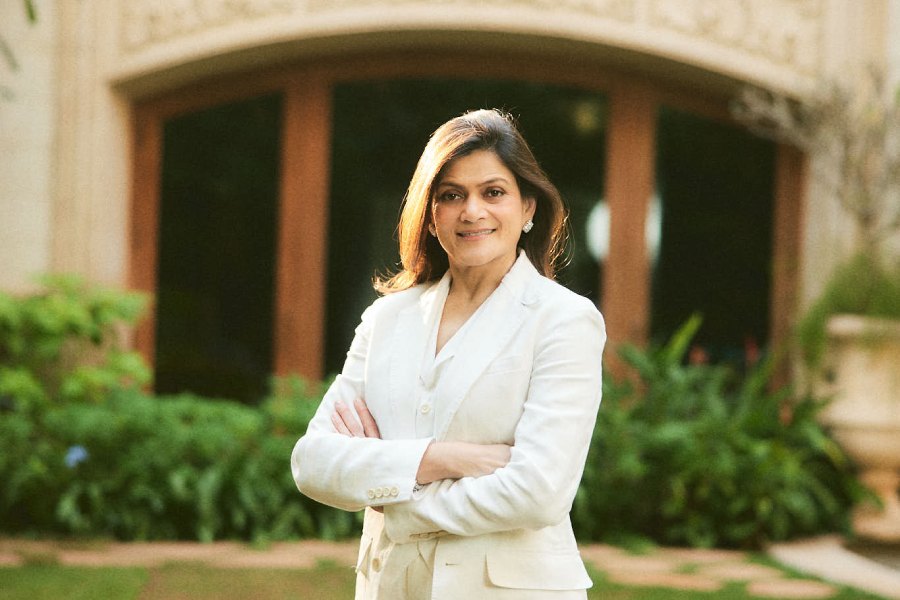
Neerja Birla is founder and chairperson, Aditya Birla Education Trust and the visionary behind Mpower.