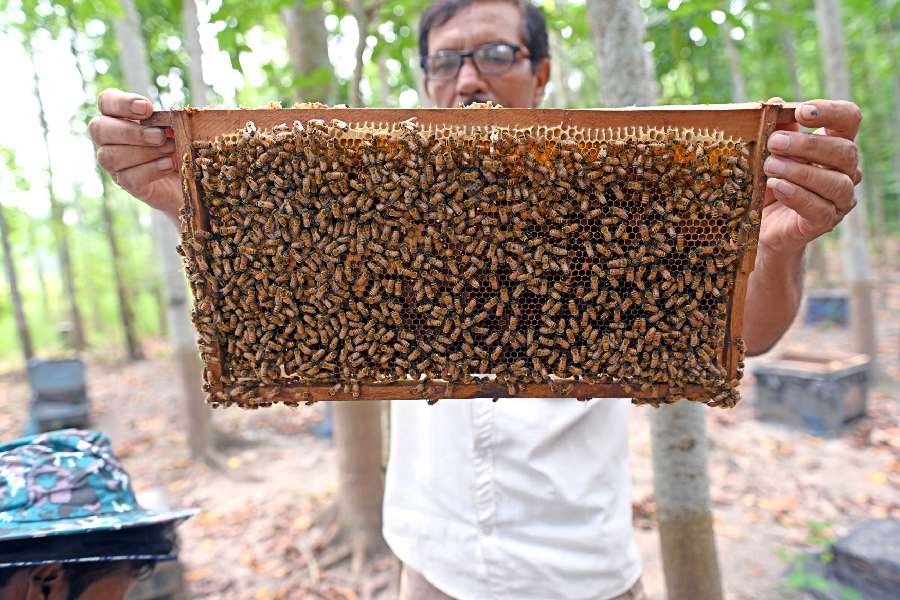
Bees fall in a lukewarm zone of interest for the general public — where we know that they are important but not quite how much.
On World Bee Day recently, some 20 farmers, all working closely with honey bees, gathered in a garage in Kumra Kashipur, Habra, to discuss their livelihood, their welfare and how their organisation, Madhukranti Bee Welfare Society (MBWS), works for the farmers, and the bees.
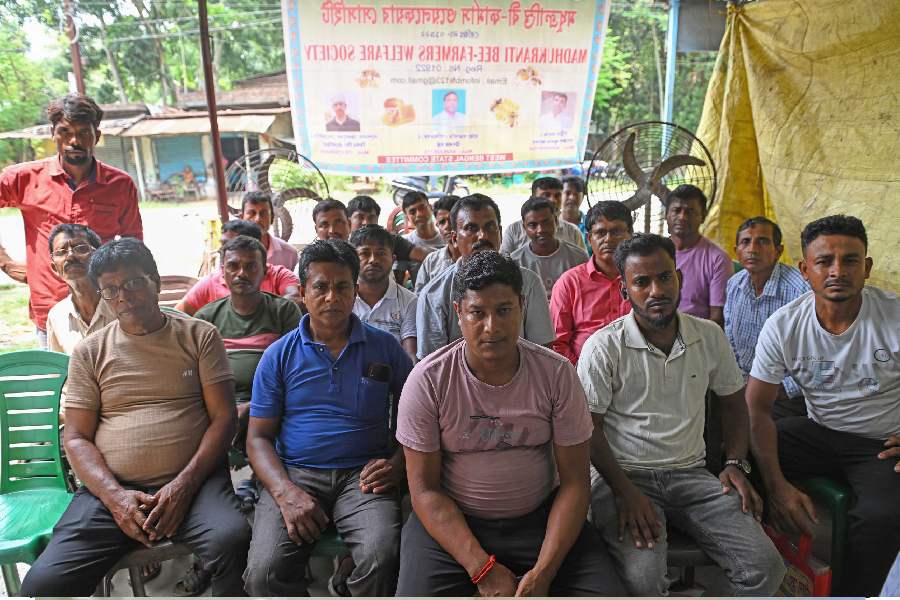
Bee farmers gather in Habra
Utpal Dutta is the regional secretary for MBWS. A short, strong-jawed man, he is ever positive, of very few words and introspective of his general work and surroundings.
“We have to fight tigers, snakes, bears and elephants to collect honey. Be it the Sundarbans or in Uttarakhand. But all our efforts turn to nought when we see multinational companies selling fake honey and we are left at the periphery to fend for ourselves,” said Dutta.
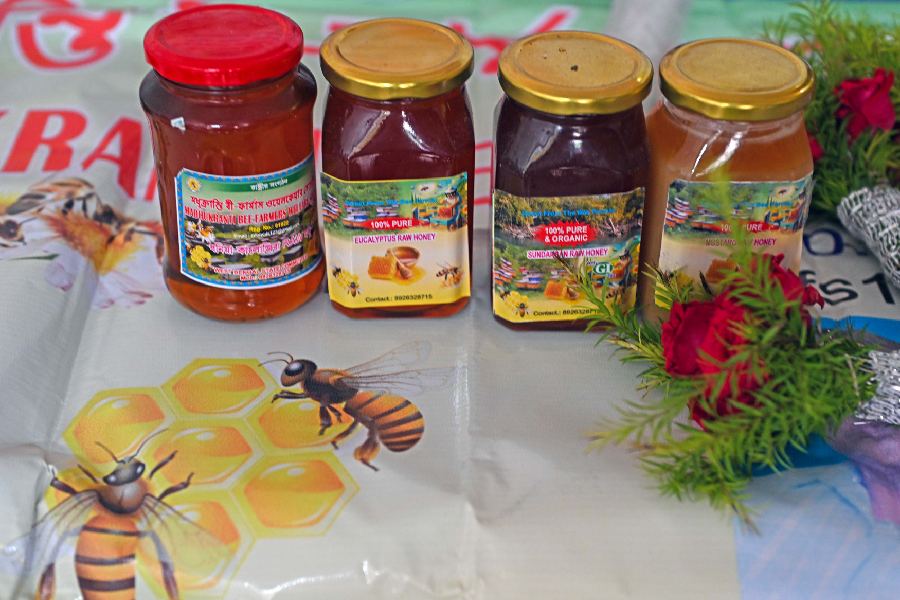
Varieties of honey are displayed, including from eucalyptus, til and and sundari trees from the Sundarbans
This year, one of the members of MBWS lost his honey collection haul to bears and elephants at Corbett National Park.
Bee farmers build wooden boxes with wooden slides similar to old film cameras. Four to five slides make up one box, with a little opening in the bottom of the box acting as a gateway for the bees.
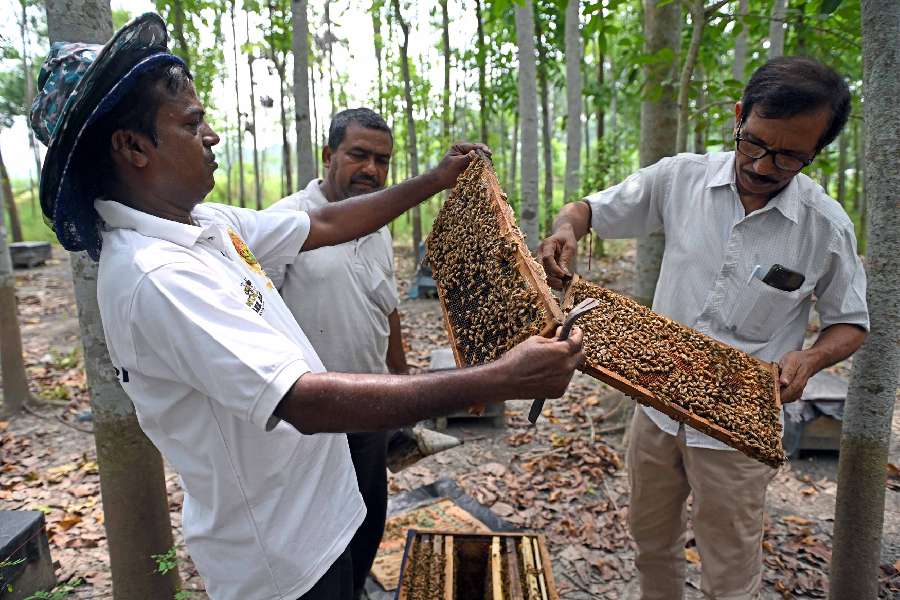
(L-R) Utpal Dutta, Niranjan Roy, and Abdul Hamid
“These are all Apis mallifera bees that were brought from Italy decades ago by Punjab farmers. The mallifera are specifically cave dwellers, so we create the boxes like little caves. But I think they have adapted to the Indian conditions,” said Dutta.
Abdul Hamid is also a lifelong member of MBWS and a bee farmer.
“Bees have such discipline and geometry in their society that we humans could never achieve. There are three types of bees in a colony: workers, males and the queen. Everyone has their duties assigned, and not one of them deviates from it. Everything a bee creates is useful to them in some way or the other,” said Hamid.
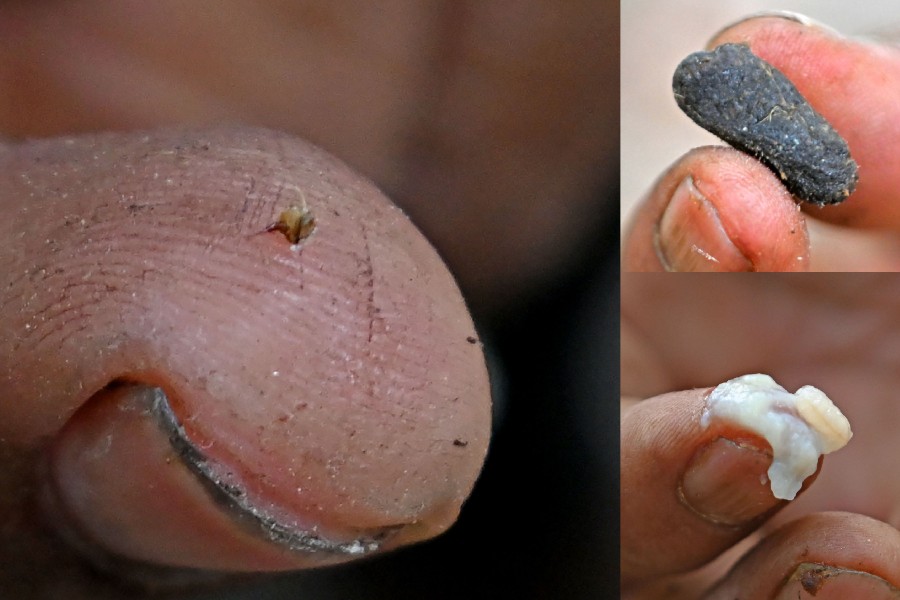
A bee stinger (L), Propolis (top right), Royal Jelly (bottom right)
Incidentally, everything a bee produces is useful to us humans too. From the honey they produce, to wax, propolis (bee cement which can be used as an antiseptic balm), to royal jelly, which is a very popular superfood for athletes.
“We had mailed the previous government 20 times, and visited Nabanna time and again. Every time, we were told, our application for the benefits of bee-farmers is under process. The government has changed, but the process unfortunately has not,” says Dutta.
Among the national schemes, the benefits are present on paper, but the farmers have received nothing from these schemes, says Dutta.
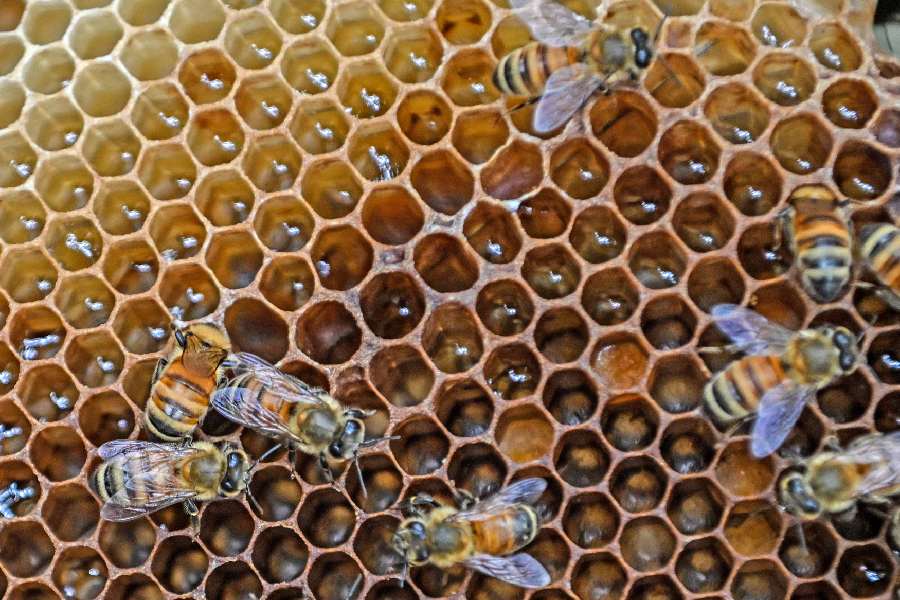
Honey bees at work
“Not having benefits is one thing, but the illiteracy of the people about honey bees is staggering. I have been chased with a hacksaw to remove my boxes from a litchi orchard because they thought bees would eat the flowers,” says Dutta.
While visiting one such plantation of eucalyptus, Niranjan Roy showed us the intricacies of a bee colony.
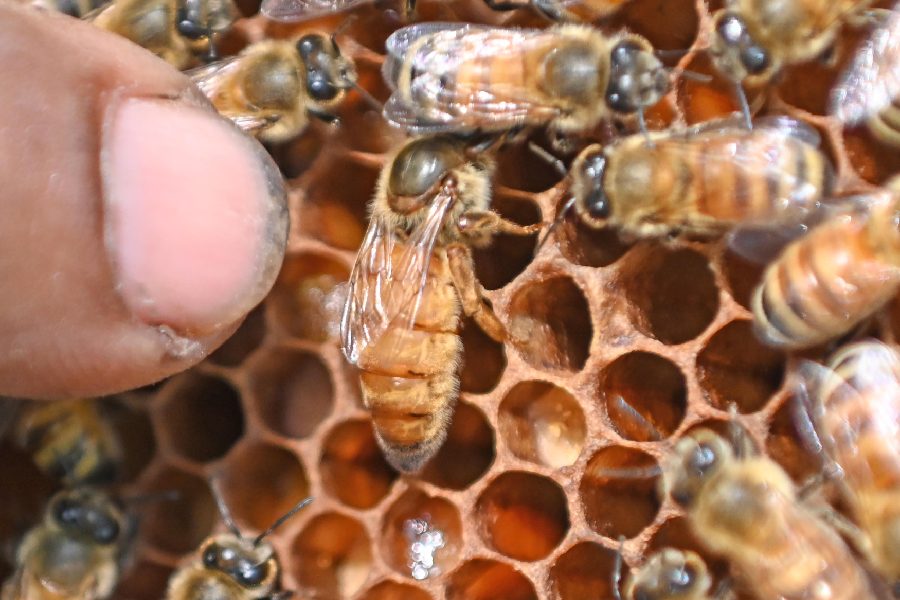
A queen bee
Removing the lids of the boxes, Roy, like a teacher, showed where the queen bee was, how new larvae are being nurtured, where the bees store honey and how bee venom from the stinger goes for Rs 2 crore per kilogram.
The farmers have a wide selection of honey. Litchi, eucalyptus, sesame, sunflower and the sundari mangrove trees are among some of the honeys they have collected this year, showing us drums full of the golden liquid.
“I am tired of running to Delhi for the welfare of my people while my bee boxes lay to waste. Corruption runs throughout the system, and I have had news of government agents trying to buy us out too,” said Dutta.
But among all this tumult, the bees are surviving.