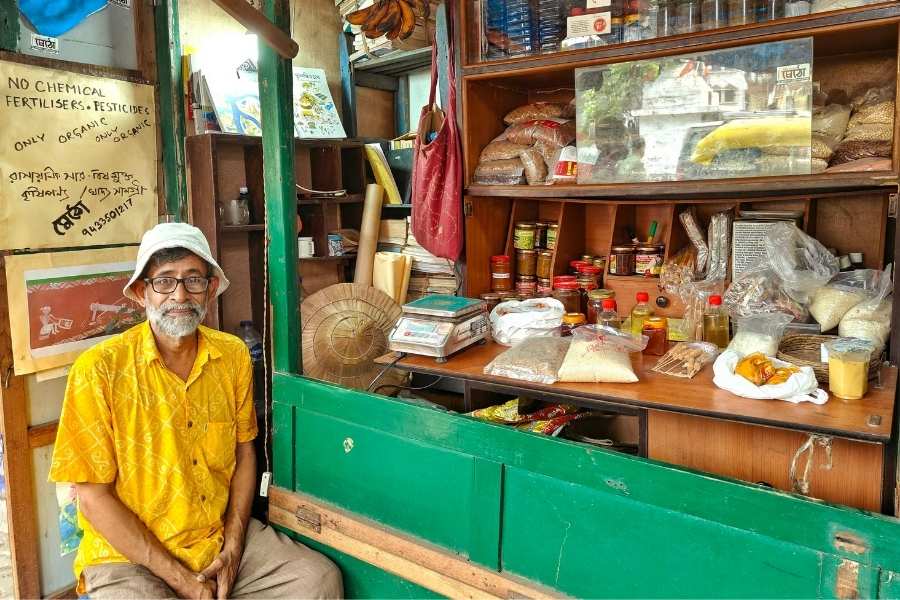
On a pavement near Jadavpur 8B bus stand, just past the post office and shaded by trees, is a small shack.
Here, between sacks of rice, glass jars of pickles and bottles of ghee, 65-year-old Arup Kumar Das is trying to rebuild something that many in the city have lost a long time ago. Trust in clean food.
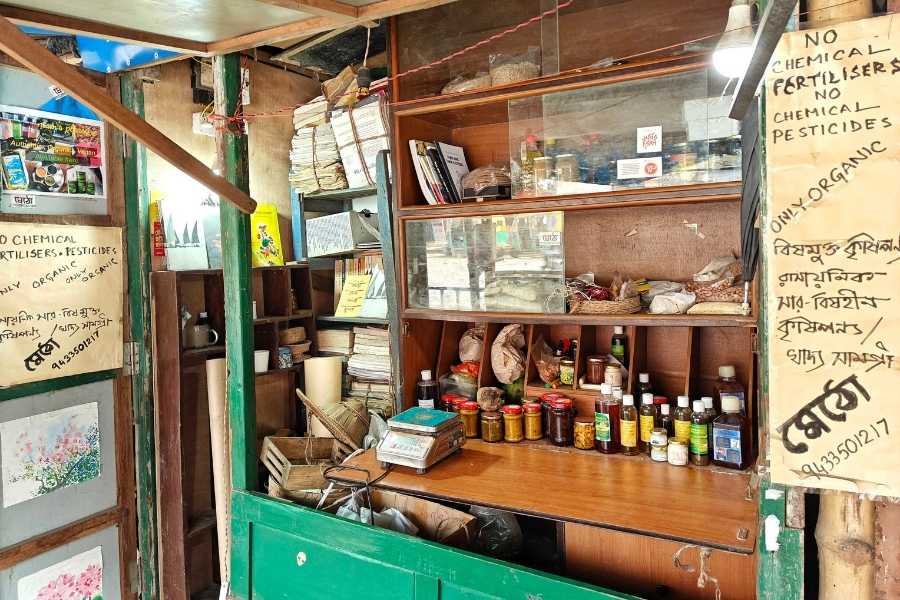
Metho is a small shack on the pavement near Jadavpur post office
Das did not set out to become a rice seller.
With a background in comparative literature from Jadavpur University and decades spent in the NGO sector, he has worked for child rights, education, self-help groups and rural industries.
But, during the lockdown, he decided to venture into the business to bridge the gap between farmers and buyers.
“The shop was never mine. It was my friend Pradyut Nag’s shop. It was registered as a bookshop. But it was broken when a tree fell during Cyclone Amphan, causing great damage to the shop. That is when I joined him to sell organic products from this small shop, besides a few books,” he said.
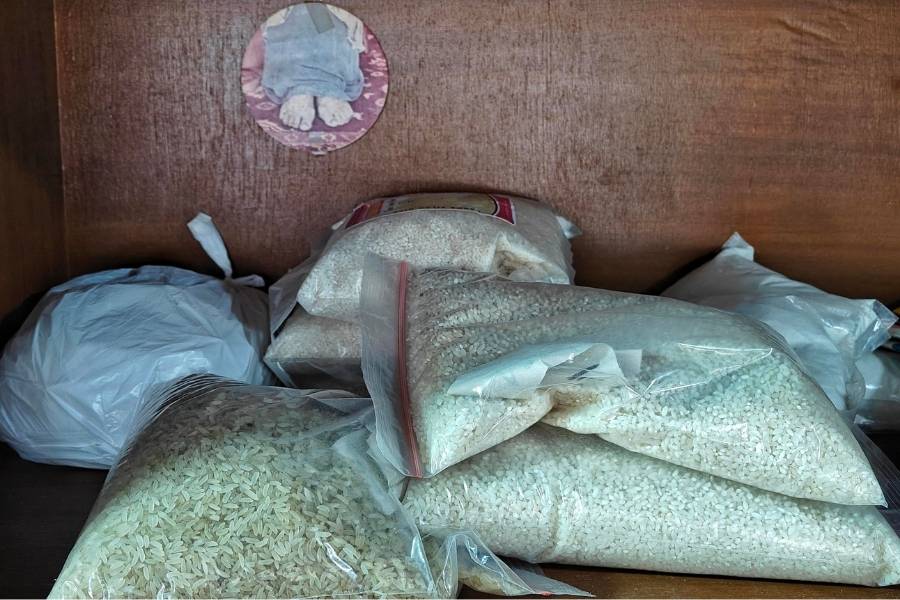
Metho offers a diverse range of indigenous rice varieties like Lal Dudhesar, Gobindobhog, Radhatilak and Karpurkanti, sourced directly from farmers across Bengal
According to Das, the pandemic changed everything.
People became more health-conscious. “I had worked in villages for years. During the lockdown, I felt that if I focussed on food, I could still do something meaningful for people.”
Metho, his modest shop, is stocked with indigenous, often forgotten rice varieties sourced directly from farmer collectives across Bengal.
There are no fancy labels or packaging. Just simple food ingredients available besides books. There is Dudhesar, Karpurkanti, and Lilabati and Kanakchur from the Sundarbans, Gobindobhog and Radhatilak from Burdwan, and Dudhesar from Bankura.
Many are dhenki-chhata (traditionally pounded), unpolished and free from chemical preservatives.
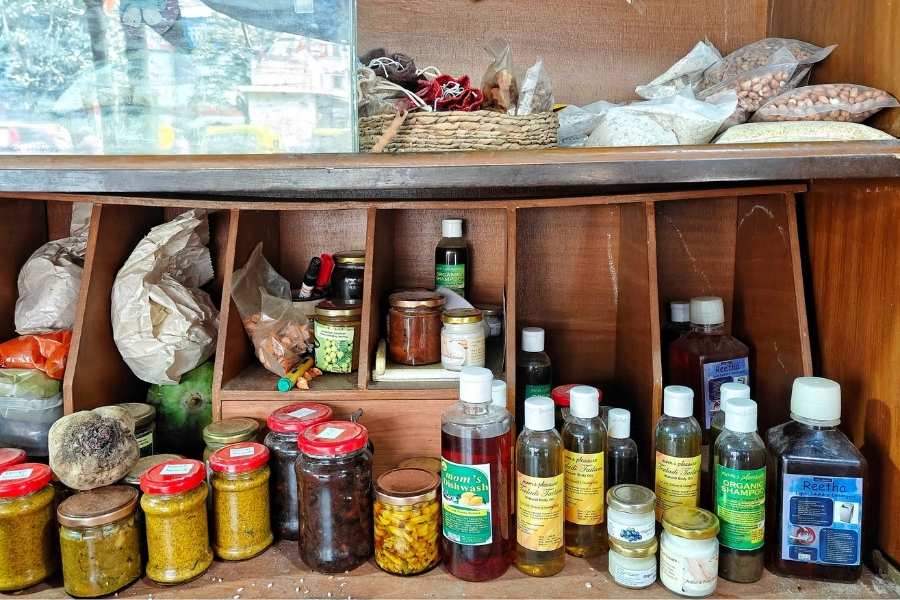
Through his shop, he aims to reconnect urban consumers with clean, chemical-free food
“Sometimes, I don’t even know how many varieties I have,” Das said with a laugh. “My space is small, and these grains need care. There are no preservatives, so if you don’t clean and store them properly, they can spoil.”
The shop also carries spices, pulses, mustard oil, coconut oil, puffed rice, sattu and handmade soaps and cleaners.
But Metho is not built for convenience, and it resists the instant gratification of app-based shopping.
“Bringing the rice grains from different parts of Bengal is difficult. The cost of bringing 2kg of rice to Kolkata is the same for a bag of 50kg of rice. But it is difficult to carry 50kg of rice.”
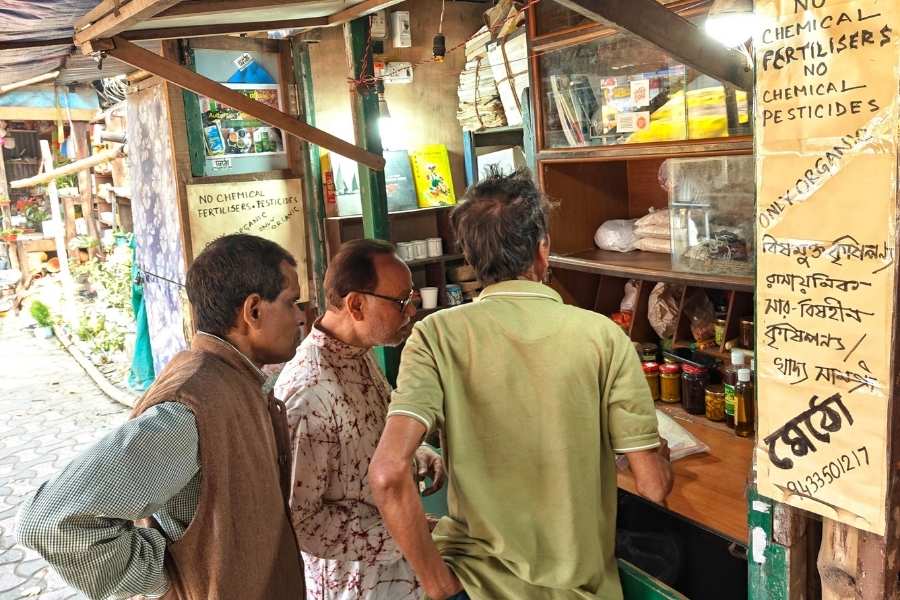
Das challenges the idea that organic food must be expensive or exclusive
He does not sell in bulk quantities or with fancy packaging. But his larger concern is more urgent. Making organic food accessible so that everyone can afford it.
“Why should we eat poison? We write on cigarettes that they are injurious to health, but what about the food we eat every day? No one is addressing this seriously,” Das said.
Das believes the organic food conversation in cities has been distorted by exclusivity and pricing.
“People think organic means expensive. That is because big companies control the market. The idea is not to make huge profits. If even 100 families can get clean rice, dal, oil and essentials at a fair price, that itself is a big step.”
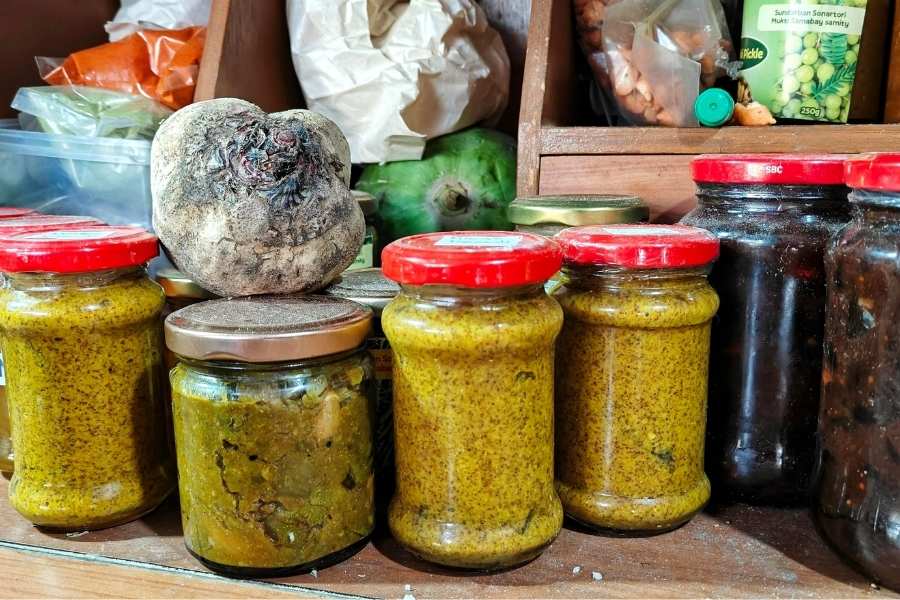
Metho is not just a shop, but an effort to support organic farmers and revive food culture
He works closely with small farmer groups and collectives, trying to ensure they receive a fair share while keeping prices accessible. The goal is not scale, but sustainability.
“If local consumption does not rise, this will not last. Food should not travel thousands of miles while farmers here struggle.”
The name Metho, meaning rustic or rooted in the soil, reflects that philosophy. For Arup Kumar Das, it is not just a shop, but an act of resistance against industrial food systems, expensive packaging and fancy stores.