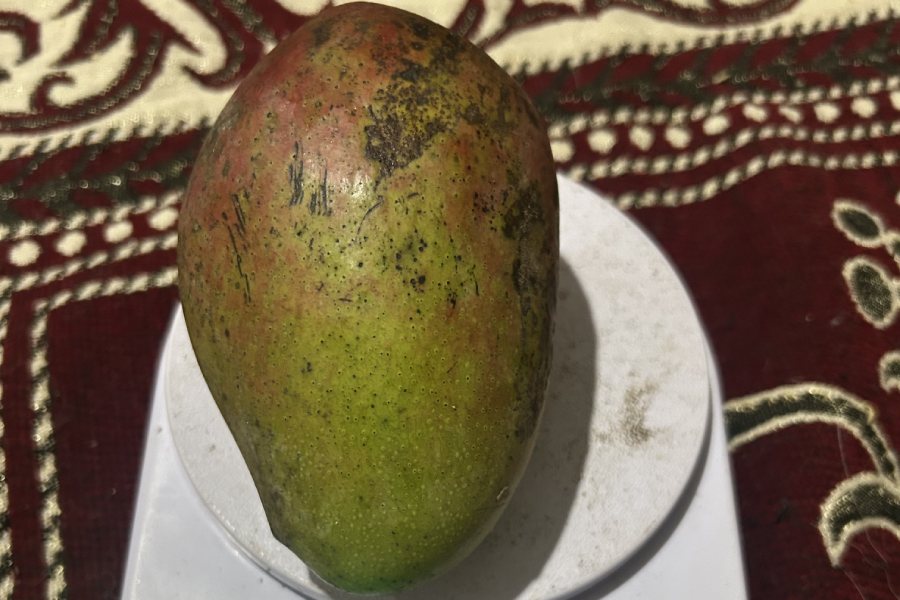
Darjeeling has made a breakthrough in horticulture by harvesting a single Miyazaki mango weighing 380g. Although Miyazaki harvests are carried out in parts of Odisha and Karnataka, Thakuri’s Nursery Pvt Ltd says it has successfully harvested what is believed to be the first Miyazaki mango grown in the Darjeeling foothills, a region known for tea gardens.
What is a Miyazaki mango?
This mango variant is originally from Japan’s Miyazaki Prefecture. It has a deep red-purple skin, high sugar content and enjoys premium branding. The top-quality Miyazaki mangoes in Japan are sold under the ‘Taiyo no Tamago’ or ‘Egg of the Sun’ label, and they can fetch staggering prices in the international market (Rs 2.5 lakhs per kilo in India).
What is the breakthrough?
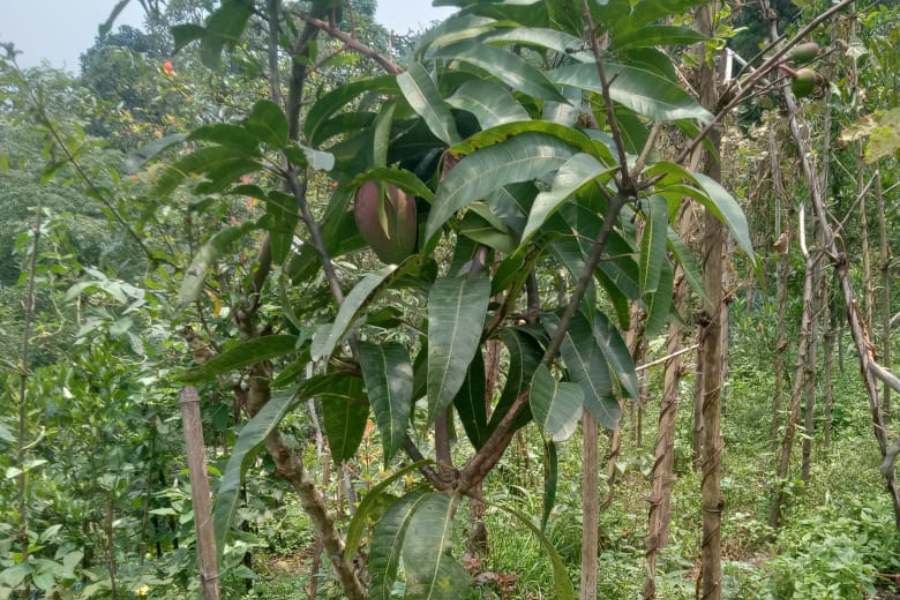
Saplings in Thakuri’s Nursery in Darjeeling
In Darjeeling, the experiment of growing the premium Japanese mango started in 2023, when Rajat Thakuri planted four grafted Miyazaki saplings in the foothills near Gok Kharka, within the Mundakoti Tea Garden area.
“In 2021, I first came across the Miyazaki mango while scrolling on Facebook. A purple-coloured mango came on my feed, and made me curious to research it. Then I read about its value and characteristics, and I wanted to see whether it could be grown in our sub-tropical conditions. Finally, I got four saplings from a verified source," Thakuri told My Kolkata.
Growing mangoes in Darjeeling is challenging as the region lacks the suitable tropical climate that mango trees typically require. Despite this, Thakuri believed some warmer pockets in the foothills can support experimental cultivation.
The first signs were encouraging for Thakuri when, in 2025, all four trees flowered and bore one fruit each. However, the fruits fell off even before they could mature.
"All four plants produced fruits, but we were very new to handling the variety, and all the fruits fell before maturing. But this year, one tree successfully retained and matured a fruit. We harvested it; it weighed 380 grams, exceeding the 350-gram benchmark needed to call it a premium-grade Miyazaki mango according to the standards of Japan,” said Thakuri.
Thakuri’s nursery plans to preserve the mother plants. They intend to expand by grafting and studying the fruit's sugar content before they go ahead with a larger-scale cultivation.
Thakuri also sees greater possibilities for the hills' economy at a time when tea gardens are shutting down in north Bengal.
He said, “The tea industry has been facing challenges for the past few years. If we can successfully grow premium fruits like Miyazaki mangoes, it could make for an additional source of income and boost the local economy.”
What does it mean for the commercial mango market?
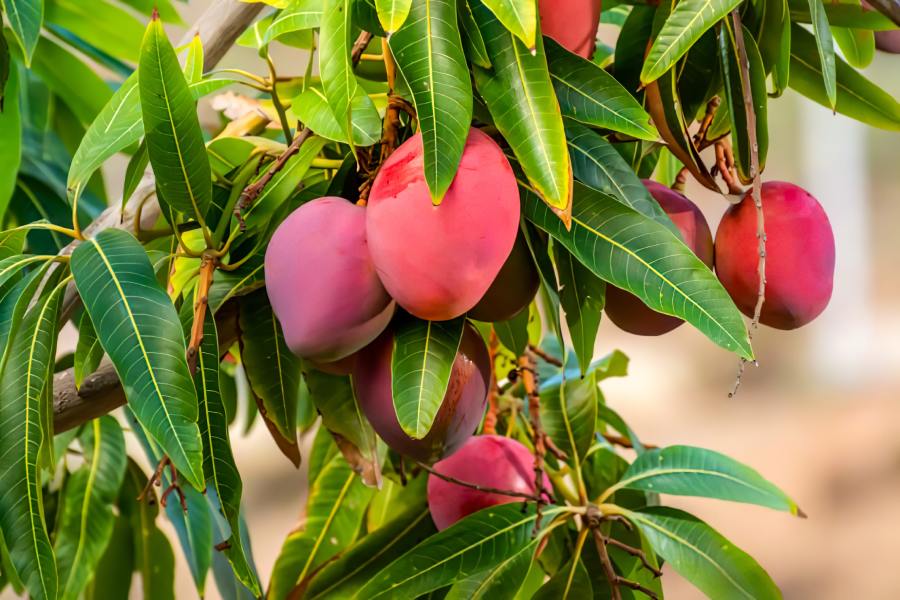
Most Miyazaki mangoes in Japan are grown under protected cultivation, unlike the open-field conditions in India Shutterstock
Although it is a breakthrough in horticulture, experts say that building a viable commercial crop is a very different achievement.
Joydip Mandal, professor in the Department of Horticulture and Post-Harvest Technology at the Institute of Agriculture, Visva-Bharati, said the high prices of Miyazaki are often associated not just with the fruit itself, but also with Japan's highly controlled cultivation, grading and marketing systems.
"In Japan, it is not simply sold as a variety of mango, but as a premium product backed by strict quality standards, specialised cultivation techniques and a well-organised marketing chain. It has a brand value. Say, like our Alphonso mangoes," Mandal said.
He explained that factors like size, sugar content, colour, residue levels and post-harvest handling determine whether it qualifies for international markets.
"Miyazaki is definitely an exotic and valuable variety. But commercial success in India is still uncertain because market prices depend on demand, supply and competition. If cultivation expands, prices may not remain as high as it is today," he added.
Mandal said most Miyazaki mangoes in Japan are grown under protected cultivation, unlike the open-field conditions in India. "When you grow the fruit in controlled conditions, quality and consistency can be maintained. In open cultivation, those factors are difficult to guarantee. There is a lot of work to be done to make it a commercial crop in India," he said.