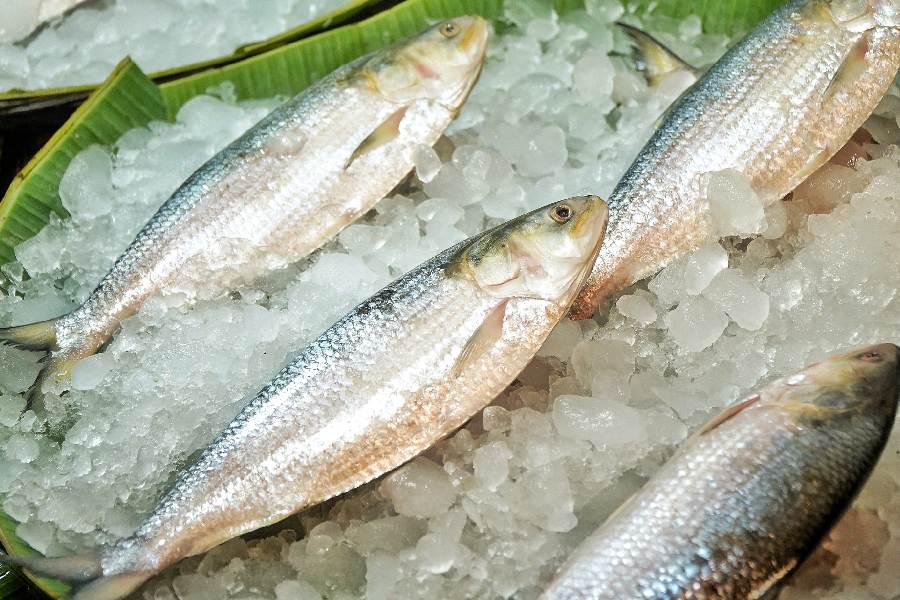
The monsoon ritual of relishing fresh hilsa has hit a roadblock in Kolkata this year.
Cold-storage fish dominated Jamai Sashthi platters and continues to do so. With the season well underway, fish markets across the city are reporting low supplies of fresh ilish, forcing many sellers to rely on frozen Myanmar fish from the cold storage.
The shortage has also pushed up prices for the handful of fresh fish arriving at the main markets of Kolkata. A fish weighing more than 1kg is between Rs 2,200 and Rs 2,800. The cold storage fish are leaving customers disappointed with both the cost and the quality.
Across bazaars in Lake Market, Gariahat, Behala and Manicktala, fish sellers say fresh hilsa are arriving in very low quantities at high prices. Most of what is being sold has been preserved in cold storage for weeks.
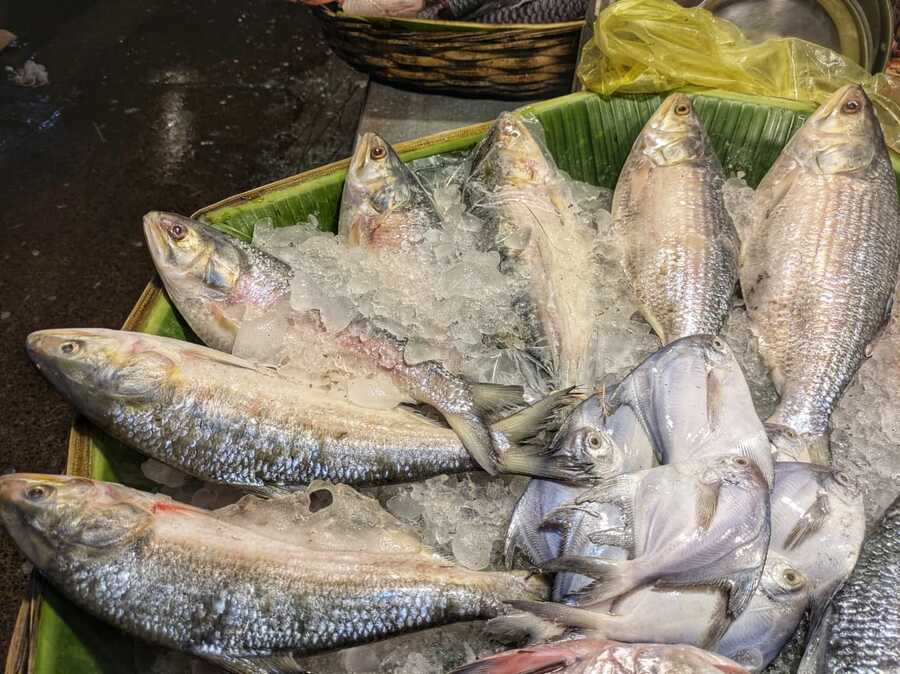
Traders say the shortage is unlike the previous monsoons Amit Datta
And Padma hilsa from Bangladesh, a favourite among Bengalis, is completely absent from the city's markets.
Babu Mondal, a fish seller in Behala, said, "The fish supply is mostly from cold storages. There is no Padmar ilish at any of the bazaars. People who are buying hilsa are taking the cold-storage fish. People who value the premium quality aren't buying. Everyone wants fresh fish."
In 2025, Bangladesh’s Padma hilsa was available in Kolkata after Bangladesh approved the export of 1,200 tonnes to India ahead of Durga Puja.
The move came a year after Dhaka had initially banned, then partially relaxed, hilsa exports during the festive season in 2024.
The situation is similar at Lake Market. Traders say the shortage is unlike the previous monsoons.
"Around this time every year, if you go around any fish market in Kolkata, you'd see most fish sellers selling hilsa. But this year, you'll hardly see that. Most fish sellers are getting three to four fish. We are sceptical about getting more than that because there are no takers for cold storage fish," said a fish seller at the market.
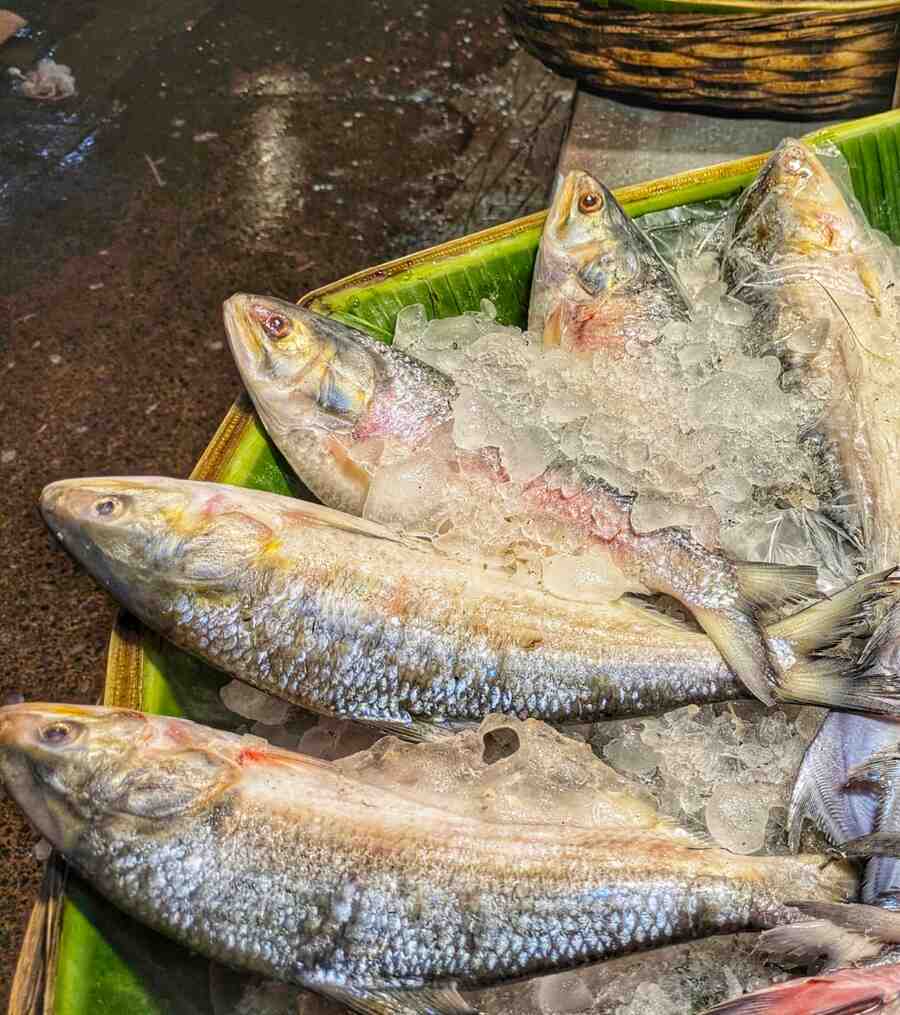
Consumers who bought hilsa this season say the frozen fish has failed to live up to expectations Amit Datta
According to traders in the wholesale supply chain, the shortage is due to low catch.
A fish dealer in Diamond Harbour said, “Trawlers went out to the sea right before Jamai Sashthi, but there was hardly any catch. As per our experience, we think it has to do with the insufficient rainfall. Unless it rains properly and the salty waters clear, it is difficult to get hilsa. The fish swim up when the water is less salty. Macch jaale dhora porbe na jodi jole phyana thake beshi. (Fish won’t get caught in the net unless the salty foam clears out from the water).”
However, retailers say that the limited availability has kept prices high despite the fish being frozen. Jitu Sen, a fish seller at Manicktala market, said, "This week the supply is quite low. Whatever we have is cold-storage fish from Myanmar. The fish weighing around 1.1kg is almost Rs 1,400. The supply was poor before Jamai Sashthi, too."
Subhranil Mondal, a fish seller in Gariahat, said fresh fish is available but only in small quantities. “The supply is very low for fresh fish. The fish that is coming is mostly from Diamond Harbour. The season has just begun. Once the supply is steady, we will be able to understand the quality of fish. The price for fish below 1.5kg is around Rs 1,400 for frozen fish. The fresh catch is around Rs 2,200 for the same weight," he said.
Consumers who bought hilsa this season say the frozen fish has failed to live up to expectations when it comes to taste and texture.
Rounak Sen, a resident of Rajarhat, said, "We got hilsa twice this year, but none of them had the same taste. There is no kancha machh (fresh fish) in the markets."
Rita Chatterjee from Behala shared a similar experience. "I got one for Jamai Sashthi to treat my newlywed daughter and son-in-law. The fish hardly had any taste. The meat was very fibrous, which is quite unusual for a good hilsa. I was tricked by the local vendor. I paid about Rs 1,000 for a 1.2kg fish," she said.
My Kolkata reached out to the West Bengal fisheries department on the issue. A spokesperson said the department had ‘just held office’ after the change in state government and the department was looking into the matter.