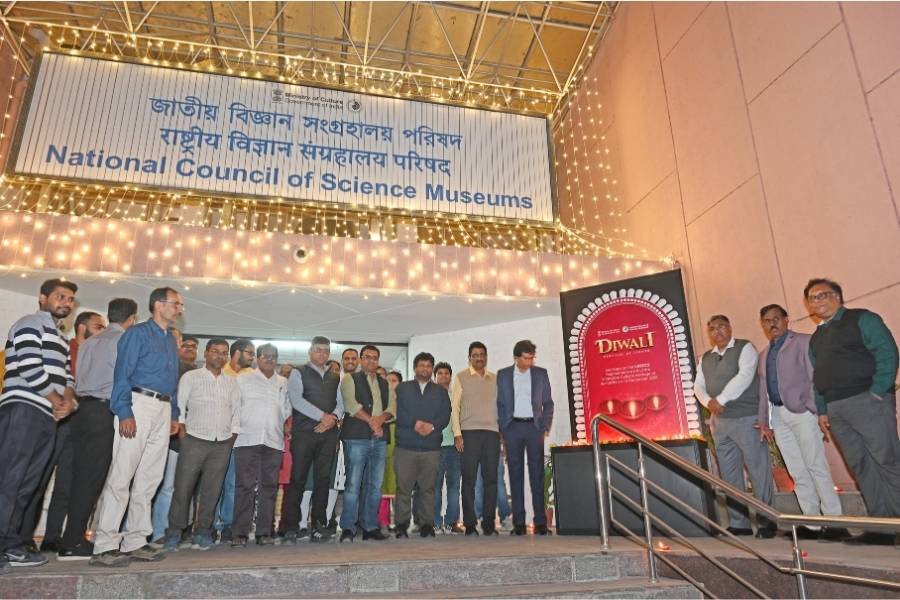
The National Council of Science Museums (NCSM) marked Deepavali’s inscription on UNESCO’s Representative List of the Intangible Cultural Heritage of Humanity with coordinated celebrations across its 26 units on 10 November.
At the NCSM headquarters in Kolkata, the observance began with the lighting of diyas by A. D. Choudhury, director general of NCSM, along with senior officials. The building was illuminated for the occasion and a short video on Deepavali’s inclusion in the UNESCO list was displayed at the entrance for visitors.
Deepavali was inscribed during the 20th session of the Intergovernmental Committee at the Red Fort in New Delhi. The recognition is being seen as an important cultural moment for India.
Across the country, NCSM units organised heritage illumination ceremonies, cultural showcases, demonstrations on the science of light, interactive talks, exhibitions on the Festival of Lights and community outreach activities. Visitors also took part in rangoli and diya-themed creative sessions and open house discussions on Deepavali traditions.
Choudhury said the recognition is a proud moment for the country. “This acknowledgement reinforces India’s cultural richness,” he said, adding that it also places responsibility on institutions to help safeguard Deepavali as a living heritage.
Anurag Kumar, deputy director general of NCSM, said the inscription highlights India’s commitment to protecting its cultural practices. “This milestone honours Deepavali’s cultural significance,” he said.
Deepavali becomes the 16th Indian cultural element to enter UNESCO’s global heritage list, which also features traditions such as Yoga and Durga Puja. UNESCO’s Intangible Cultural Heritage list seeks to safeguard living traditions that reflect human creativity, community identity and cultural continuity.