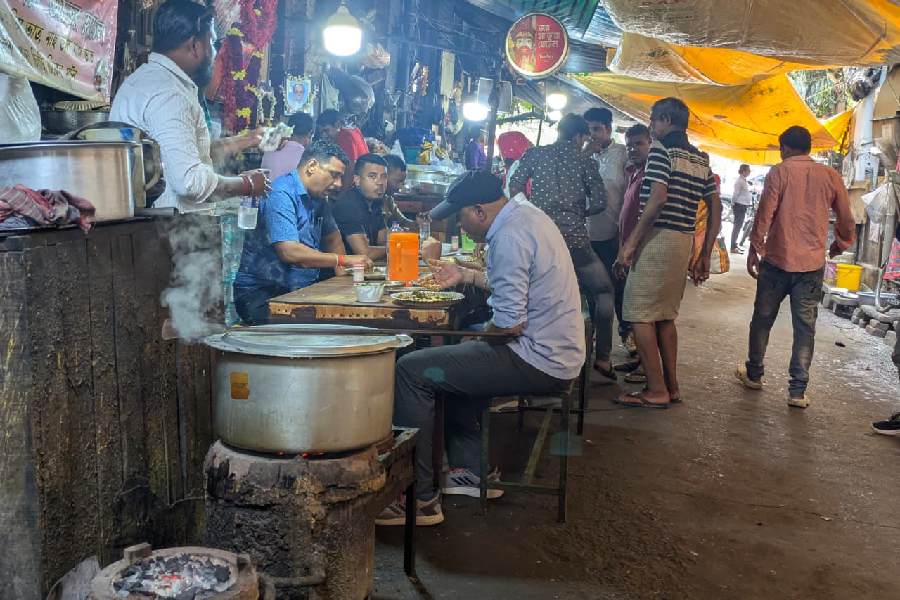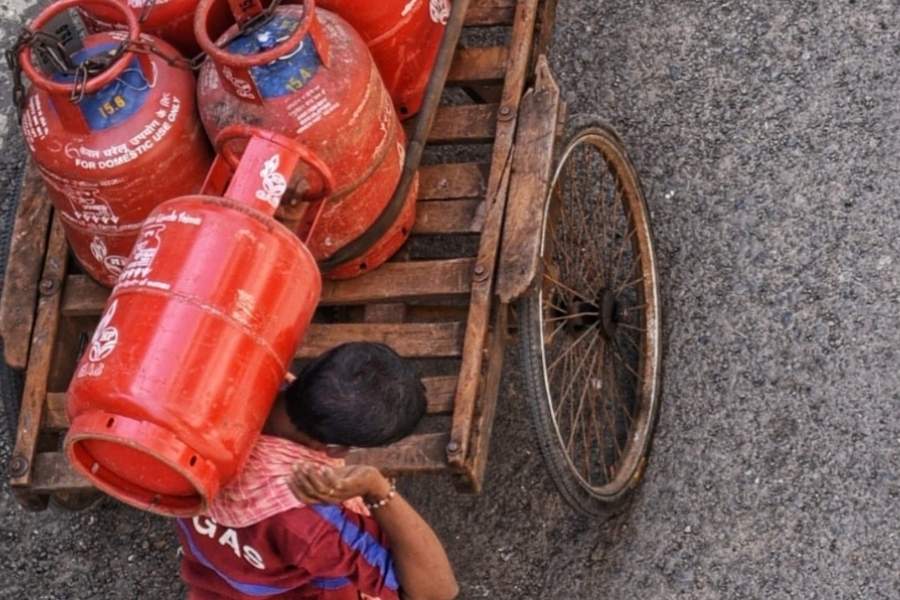
The ongoing shortage of commercial LPG in Kolkata has led restaurants to rethink how their kitchens operate, with many scaling down on menus, discontinuing buffets and experimenting with alternative cooking methods to keep service running.
Several restaurants depending heavily on LPG for high-volume cooking are tweaking their offerings and operations until the supply stabilises.
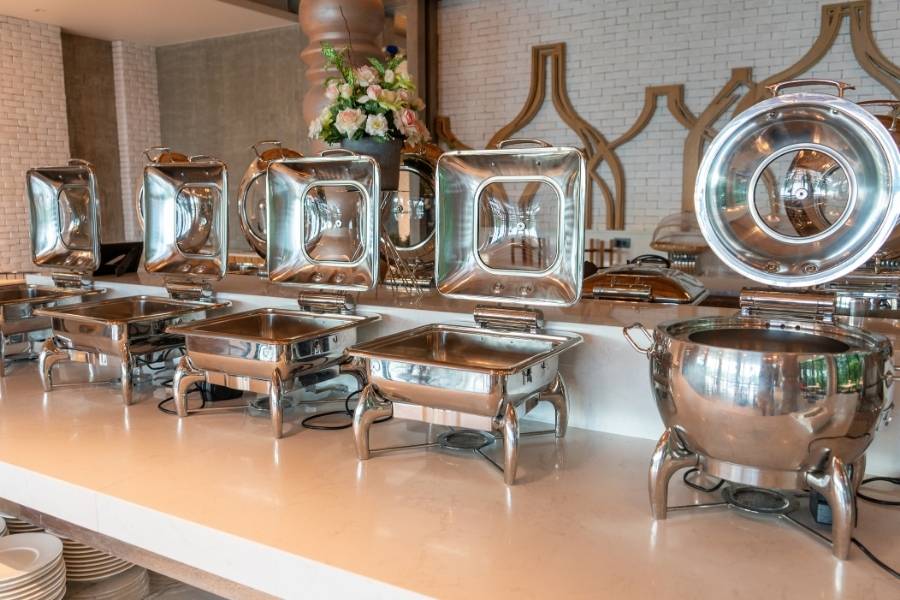
At Yellow Turtle, buffet services have already been affected. Owner Apeksha Lahiri said the Baguihati outlet has temporarily halted its regular buffet. “The buffet service at the Baguihati outlet is currently not being operated on a regular basis. However, the buffet will be available for group bookings of more than 20 guests,” she said.
Both outlets are now running on specially curated short menus.
“At present, both outlets are offering a specially curated short menu for guests. In addition, online orders and à la carte services are being operated with a limited menu. The Hindustan Park outlet will remain open for four days a week from Friday to Monday for dining operations, while the Baguihati outlet will remain open throughout the week,” Lahiri added.
Other restaurants have also begun trimming operations to reduce fuel consumption.
Flamboyant has paused one of its most popular offerings. “We have stopped the Sunday brunch. Instead, we are having small plates that will be served on the table itself,” said owner Keya Biswas.
At Ilish Truly Bong Restaurant & Bar, director Lopamudra Kamilya said the situation feels like a crisis the industry must collectively survive. “This is definitely a war-like situation. In our industry, it is almost like a shutdown, and we have to handle it,” she said.
Despite the fuel shortage, the restaurant has continued full operations. “We have continued with all 130 items on the menu and have not cut down on our operational hours.”
She added that to reduce LPG usage, they have made several adjustments. “We have cut the use of gas. For cooking staff food, we have shifted to electric systems. Shifting the entire cooking process to induction is not possible at the moment, as increasing the electricity load in a commercial kitchen is not easy and applying for additional electricity power load takes time,” she said.
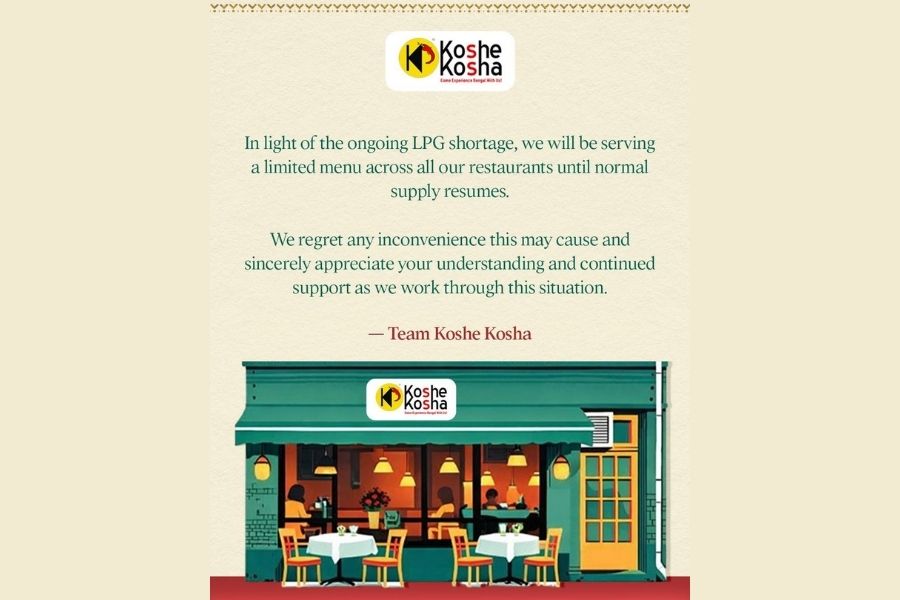
Koshe Kosha has also moved to a restricted menu. “In light of the ongoing LPG shortage, we will be serving a limited menu across all our restaurants until normal supply resumes,” the team said in a statement.
Smaller food businesses are feeling the strain as well. “The recent shortage of commercial LPG has created serious challenges for restaurants and small food businesses across the city,” said Himu Sutapa, owner of Himur Henshel. “Many kitchens depend entirely on LPG for daily cooking, and the irregular supply is disrupting normal operations.”
Some establishments are experimenting with alternatives. “Many are now exploring earthen ovens, induction cooktops and other traditional or electric cooking systems. While these options help temporarily, they cannot fully replace the efficiency and scale that commercial LPG provides,” Sutapa said.

Shutterstock
Hospitality groups are also pushing for temporary operational changes. Subhadip Basu, corporate general manager, retail and hospitality at Merlin Group, said kitchens were encouraged to partially shift cooking methods. “We requested F&B units to shift a portion of their cooking activities to electrically operated equipment wherever feasible, reducing dependence on LPG based appliances,” he said.
According to him, the staff were encouraged to use electric induction ranges, electric boilers and other energy efficient electric cooking appliances for suitable preparations. These steps helped them lower LPG usage while maintaining operational efficiency. Basu added that the situation is still evolving. “It is a supply cycle process and is continuous, so this keeps changing every day.”