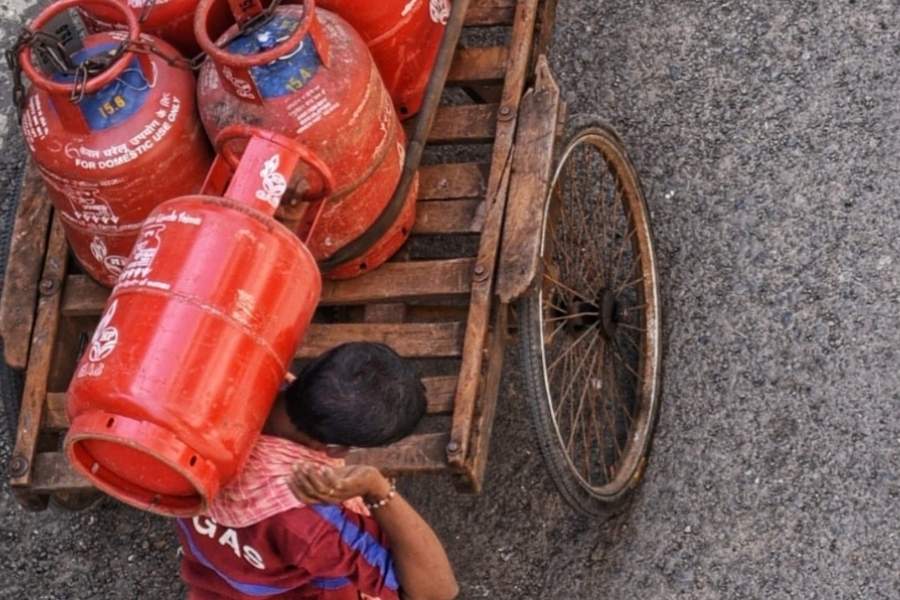
Besides restaurants and cafes, cloud kitchens and home chefs in Kolkata have begun to feel the impact of the ongoing LPG supply disruption, with many saying uncertainty over domestic cylinder availability is affecting their ability to accept orders.
One of the networks facing the strain is Nanighar, an initiative that connects homemakers with customers looking for home-cooked meals.
“There is a shortage of gas supply, and we are facing a problem, especially the mom chefs in the franchising model we work with,” said founder Debjani Mukherjee. “Many of them have temporarily stopped taking orders because they say their priority is cooking for their family. There is a fear factor at work.”
Mukherjee said several home chefs, who usually run their kitchens with two domestic cylinders, are now struggling to get refills. “Even in the black market, some are saying that cylinders are not available even if you offer Rs 2,000. This is affecting our regular operations of delivering home food to senior citizens and other customers,” she said.
The anxiety comes in the light of a wider disruption in LPG supplies across the country. A supply crunch in commercial LPG, triggered by disruptions to liquefied natural gas shipments from West Asia, is beginning to affect restaurants and cafes in Kolkata. India imports a large portion of its LPG from Gulf countries and shipments have been affected by the ongoing conflict in the region and disruptions in the Strait of Hormuz, a key global energy route.
The Centre has diverted available gas to prioritise domestic LPG, CNG and hospital supply. While this has offered some relief to households, small food businesses that depend on domestic cylinders say the uncertainty has created operational challenges.
For many cloud kitchens that operate out of homes, LPG is the backbone of daily cooking.
“As someone who runs a cloud kitchen from home, the recent developments around LPG supply have naturally caused stress,” said Jayeeta Ghosh of Haarir Khobor. “It is reassuring that domestic LPG continues to be treated as a priority, but even small delays in delivery can affect order commitments.”
Ghosh said she has kept backup arrangements, such as induction cooktops and other electrical appliances, ready. “Small orders can still work, but bulk orders may be affected. These alternatives can work only for a few weeks, not for months.”
Others say they are trying to build a buffer stock to avoid immediate disruption.
“We always keep spare LPG cylinders, so, for now, I have enough stock to manage for about two to two-and-a-half months. But if the shortage continues, cloud kitchens like ours may have to rely on induction or other appliances, and those cannot support large-scale cooking,” said Subhojit Sen, who runs The Harmony Pot.
Besides buying alternatives like an induction stove, chefs like Sayani Sengupta are also rethinking their menu. The owner of Gooseberri, a catering service, Sengupta said, “After hearing that commercial cylinders were unavailable, I tried booking a domestic one, but couldn’t even do that for 24 hours. I immediately arranged induction cooktops as a backup. For now, we are adjusting menus to use OTG and induction for smaller batches, but that cannot support large-scale catering.”
Some food entrepreneurs also worry about rising costs if the shortage pushes up prices.
Tania Maity, who runs Didar Henshel, “The biggest problem now is that LPG cylinders cannot be booked, while at the same time, some are reportedly being sold in the black market. If we are forced to buy cylinders at higher rates, we will have to raise food prices, and we worry how much more customers will be willing to pay.”
For now, many home chefs say they are taking the situation one day at a time, hoping the supply stabilises before the disruption begins to affect their businesses more seriously. Even switching to electric alternatives is not a simple solution for small kitchens.
“The problem is that dealers are rationing cylinders. Earlier, we could get four at a time; now they are sending one or two so that everyone gets some supply. Industrial induction systems are expensive and consume a lot of electricity, which small kitchens cannot afford,” said Samita Gopal Halder, who runs a supper club in Gurgaon.

