The delayed arrival of shipping containers bringing essential materials for medicines and packaging to India, due to the ongoing Middle East war, has hit the pharmaceutical industry with costs of active pharmaceutical ingredients (API) and essentials surging.
Glycerine has seen the steepest jump at 64 per cent, while paracetamol is up 26 per cent. Prices of diclofenac sodium and ciprofloxacin (used to treat bacterial infections and inflammation) have climbed between 20 and 30 per cent, alongside similar increases in amikacin and ibuprofen.
Montelukast sodium has risen by 25 to 30 per cent, azithromycin by 18 to 25 per cent, and pantoprazole sodium by 18 to 22 per cent. Metformin HCL has gone up by 15 to 20 per cent, with vitamin C also registering a 20 to 25 per cent increase.
Packaging materials are no exception, with polyethylene doubling from Rs 80 per kg to Rs 160 per kg, while PVC bottles have become costlier by 35 to 45 per cent.
Aluminium foil used in blister packs is up 30 to 40 per cent, glass vials by 25 to 35 per cent, and rubber stoppers by 20 to 30 per cent, signalling a broad-based cost escalation likely to push medicine prices upward in the months ahead.
The price hike comes after manufacturing plants all over the country have got intimation of the price hike amid the Iran war.
“The government is still denying all cost hikes. But the manufacturer knows what’s going on. There is no subsidy presently, and the cost of essential medicines will go up after the old stock finishes,” said Abhijit Ghosh, deputy general manager, Commercial, Supermax Drugs & Pharmaceuticals Private Limited.
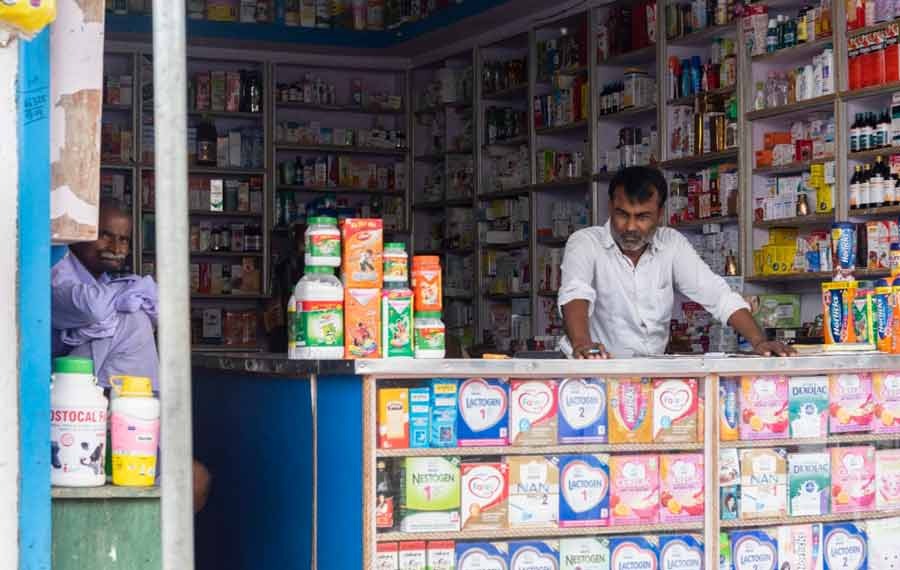
“Our distributors have advised us to stock up on the daily-selling medicines, because there is an imminent price hike. It can be a day or a week, but some medicines will get a hike in price, that is assured,” said Sudipta Bhattacharya, a medicine shop owner from south Kolkata.
While some medicines face a hike because of the Union budget and GST charges. This crisis is primarily for the ongoing war situation, and the disruption of normal shipping routes.
Industry officials stated that vessel shortages have restricted the movement of active pharmaceutical ingredients (APIs) from China, which remains the largest supplier to Indian manufacturers.
This disruption is expected to impact local manufacturing and push up retail prices, as producers are forced to pass the higher costs on to consumers.
AICC general secretary Randeep Singh Surjewala on Tuesday questioned the Centre as it increased prices of 900 essential medicines, including those for diabetes, hypertension and infectious diseases, which will come into effect from April 1.