Step 1 Didis
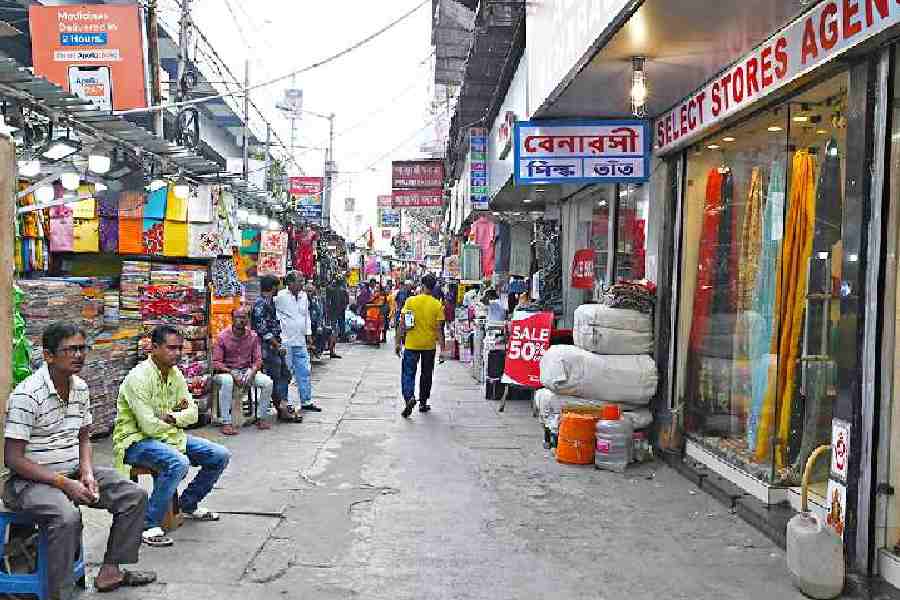
The first step is all about collecting customer feedback and it happens so casually that you wouldn’t know anyone is taking note. But it turns out, many are. In between haggling and inspecting, purchasing and returning for more, they talk about their demands. Strings please, no sleeves, detachable sleeves, pockets for mobiles and keys, belts, zippers, frilly sleeves, pompoms, indigo, knee-length (so they can be paired with leggings). Right now the flavour of the season is Mexican cuts with Kashmiri stitch. And then there are designs made popular by Bengali web series. The two names that come up — Lojja and Noshtoneer — are serious social dramas and far cries from the stuff sweet dreams are made of.
Step 2 Dadas
Next, the hawkers convey the gamut of feedback to the wholesaler, who is also working out of Gariahat. The two groups meet every week at Metiabruz, Harisha or Howrah — where the three large wholesale markets are located. So Hawker A goes to Howrah, because that’s where the man he sources his nighties from is, while Hawker B goes to Harisha for the same reason, though both sell their wares at Gariahat.
Step 3 Factories
After this, the wholesaler meets the manufacturer, who has his “factory” in Dhakuria or Kalighat, Kasba or Garia, but mostly in Metiabruz and definitely in Canning. He has already purchased raw material — fabric, buttons, zippers, lining, elastic from Burrabazar — based on feedback. Now, he hands that over. These meetings take place every week and the orders are of modest volume.
Step 4 Tailormaster
The manufacturer’s outfit has three divisions. Division A comprises the tailor-in-chief who visualises the new product. Division B, the other tailors, who execute it. Division C
comprises what is known as “finishing”; it is made up of karigars. It is they who stitch the buttons, iron the nighties, package them and set them off marketwards.
Step 5 Off to...
This process is ongoing. Redesigned and customised nighties reach the market in bulk every quarter, mostly timed with some festivity. Poila Baisakh is one such and timed with it is the Chaitra sale. Nighties abound. An Ekenbabu web series is around the corner. Now, Ekenbabu does not wear nighties, so you might think that is one less nightie trend. But then, you never know; never think you have the Bengali all figured out.