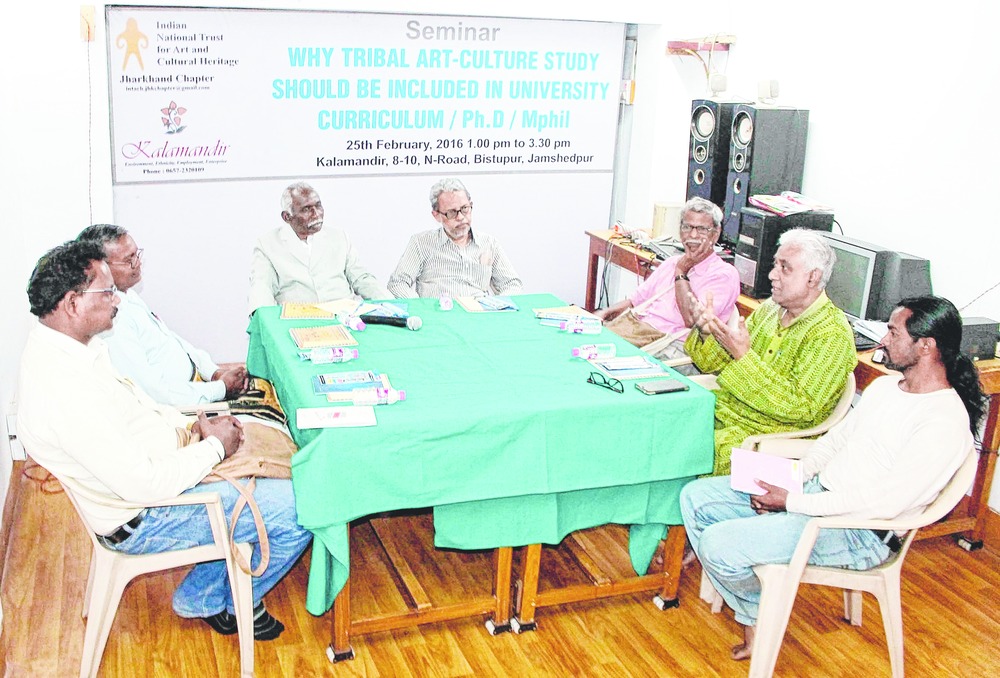

The only way to protect fading tribal languages and culture is to include them in university curricula, feels Indian National Trust for Art and Cultural Heritage (Intach), the Jharkhand chapter of which organised a seminar on this in Jamshedpur on Thursday.
Chaibasa-based independent researcher Ashok Kumar Sen rued that Jharkhand hardly had any university where tribal studies, including its rich art and culture, were taken seriously.
"We are trying to formulate a way to form an apex body which would make a curriculum not only for Jharkhand universities but also for Odisha and Bengal. We discussed about the challenges and fundings as well. We will first approach the state government regarding this," said Sen.
Sen was among a host of speakers on Thursday, deliberating on "Why tribal art-culture study should be included in university curriculum/ PhD/ MPhil".
The seminar, to be held in two sessions, was organised at Kalamandir in Bistupur.
Thursday saw discussions on Santhali language, while Mundari would be taken up on Sunday.
Among the others who spoke on Thursday were Jamshedpur-based Santhali publisher Mangal Majhi; author Ganesh Thakur Hansda; and Santhali language faculty members of Vidyasagar University in Midnapore Ratan Hembram and Suhrit Kumar Bhowmik.
Besides, discussions were also held about the challenges in publishing works in tribal languages.
The speakers also stressed on motivating the youth to learn about their culture, which they had almost forgotten. According to publisher Majhi, tribal youths, especially those in urban areas, do not know their culture, tradition and rituals.
"When asked about their tribal culture, they rarely have anything to say. We want every youth of the state to know about their roots. We will approach the government to introduce children stories in Santhali in schools as well. It will be better to influence the young minds," he said.
Later, the experts resolved to organise a block-level meeting to take their ideas on promoting tribal languages forward.
Saturday's seminar on Mundari would focus on society's responsibility in protecting the intangible heritage of the community. There will also be a poetry reading session on Sunday, February 28.