The mating season of Olive Ridley turtles has begun near Rushikulya river mouth in Odisha's Ganjam district, as the administration increased patrolling to keep away poachers, an official said.
Forest officials say several mating pairs have already been sighted near the Rushikulya rookery in Ganjam district. Patrolling has been stepped up.
“The mating season of Olive Ridley turtles has begun near Rushikulya river mouth,” Berhampur Divisional Forest Officer (DFO) Sunny Khokkar said, adding that the number of mating pairs is expected to rise in the last week of December.
For conservationists, this is the calm before a larger arrival.
Nesting typically begins about 45 days after mating, Khokkar said. Once the mating phase ends, female turtles crawl ashore under the cover of darkness, dig pits in the sand and lay their eggs before returning to the sea. Hatchlings emerge 45 to 50 days later, guided instinctively toward the water.
“We hope Olive Ridley turtles turn up in large numbers this year as well. Mass nesting is expected to take place in the third week of February,” the DFO said.
Last year offered a benchmark few places in the world can match. More than 9.04 lakh turtles laid eggs along a seven-km stretch of beach from Bateswar to Gokharakuda in two distinct phases, according to official sources. Between February 16 and 23, around 6,98,698 turtles nested during the first phase. Another 2.05 lakh followed from March 16 to 23.
Those numbers are why Rushikulya matters. And why vigilance has intensified.
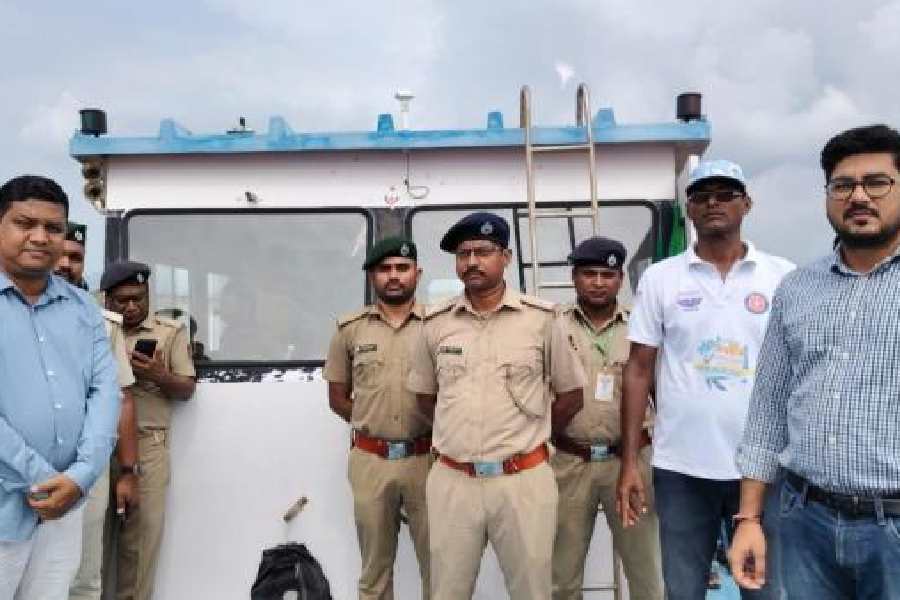
“Patrolling has been intensified in the sea for protecting the mating Olive Ridley turtles from poachers,” said Dibya Shankar Behera, Assistant Conservator of Forests (ACF) of the Khallikote range. He said two mechanised fishing trawlers from Andhra Pradesh were recently seized for illegal fishing in the restricted zone.
The enforcement on the water is part of a wider state-led effort that began weeks before the turtles arrived.
In November, the Odisha government imposed a seven-month fishing ban in three key river mouths as part of its annual olive ridley conservation programme. The ban came into effect from November and will continue until May 31, 2026.
The decision, however, has not gone uncontested.
Traditional fishermen have opposed the length of the ban, arguing that it should be reduced from seven months to five. They have also demanded higher compensation during the no-fishing period.
The restrictions apply to three major river mouths that double as mass nesting sites: Rushikulya in Ganjam district, stretching from south of Prayagi to north of Aryapalli; the Devi river mouth covering parts of Jagatsinghpur and Puri districts; and the Dhamra river mouth in Bhadrak district, from Scott’s Island to Udabali North.
Together, these sites host nearly 11 lakh Olive Ridley turtles every year.
The spectacular phenomenon of mass nesting is known as “Arribada,” a Spanish term that means “arrival.”
The ban has been enforced under the Orissa Marine Fishing Regulation Act (OMFRA), 1982, and the Wildlife Protection Act, 1972. To ensure compliance, the state has set up 61 shore camps and five offshore camps across the three river mouths.
Joint patrols involving the fisheries department and marine police have been mandated, with the forest department providing on-ground feedback.
After laying eggs, the turtles leave the beaches and return to the sea, leaving the nests vulnerable to predators, human disturbance and artificial lighting. The forest department has held coordination meetings with local fishing communities, urging cooperation during the mating, nesting and hatching periods at the Rushikulya rookery.
Fishermen, in turn, have pressed their case. They have demanded that compensation during the ban be doubled from Rs 15,000 to Rs 30,000, arguing that the prolonged restriction affects livelihoods at the peak of the fishing season.