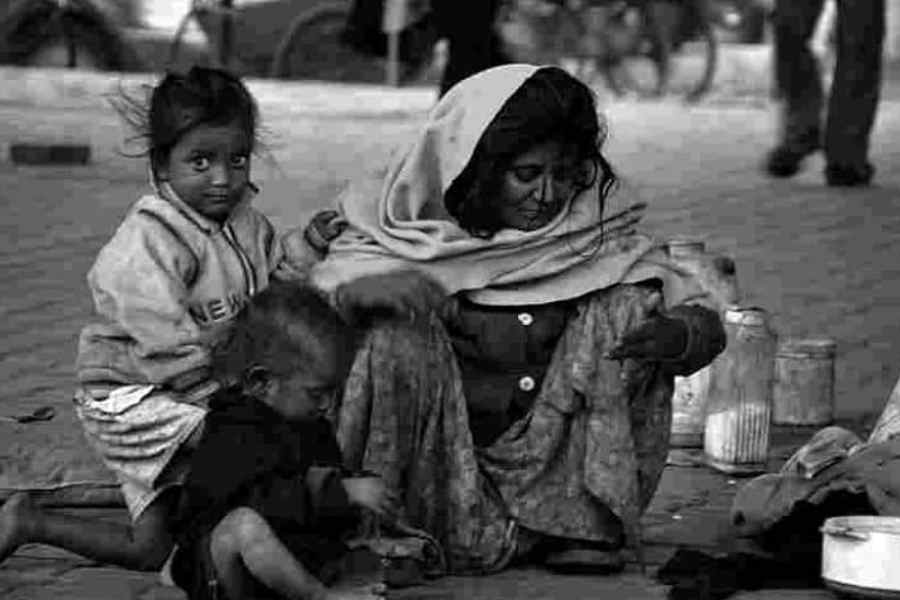
The ongoing conflict and military escalation in West Asia could push up to 2.5 million people in India into poverty and dent the country’s human development progress, according to a new United Nations assessment that flags wide-ranging economic and social disruptions across the Asia-Pacific region.
The United Nations Development Programme, in a report titled ‘Military Escalation In The Middle East: Human Development Impacts Across Asia And The Pacific’, noted that the conflict is “widening human development pressures across Asia and the Pacific. Through higher fuel, freight, and input costs, the shock is diminishing household purchasing power, raising food insecurity, straining public budgets, and weakening livelihoods.” The preliminary assessment, issued Tuesday, estimates that globally 8.8 million people are at risk of falling into poverty and the West Asia military escalation could cost Asia-Pacific up to USD 299 billion.
In India, poverty levels could rise sharply—from around 400,000 people to 2.5 million—while South Asia is expected to bear the largest burden globally. The report estimates that the number of people pushed into poverty worldwide could increase from approximately 1.9 million to nearly 8.8 million across scenarios, with South Asia accounting for between 1.7 million and over 8 million. China, in comparison, is projected to see a relatively moderate increase—from around 115,000 to over 620,000—due to smaller proportional changes across its large population base.
Under a severe scenario involving a 28-day conflict and prolonged adjustment period, India’s poverty rate could rise from 23.9 per cent to 24.2 per cent, pushing 2,464,698 additional people below the poverty line. The total number of people living in poverty in the country is projected to increase to 354,033,698 from 351,569,000.
The report also highlights potential setbacks to human development gains. “India is projected to experience a loss of approximately 0.03–0.12 years of HDI progress, followed by Nepal at around 0.02–0.09 years and Viet Nam at 0.02–0.07 years, while for China, the estimated effects on HDI remain limited in magnitude, ranging roughly 0.01–0.05 years,” it said. Iran could see a decline equivalent to one to one-and-a-half years of human development progress.
India’s heavy dependence on West Asia for energy and inputs heightens its vulnerability. The report notes that the country imports over 90 per cent of its oil, with more than 40 per cent of crude and 90 per cent of LPG coming from the region. Additionally, over 45 per cent of fertiliser imports originate from West Asia, while 85 per cent of domestic urea production depends on imported regasified LNG.
Rising LNG prices are already influencing energy choices, with India and several other Asian economies increasing reliance on coal-fired power. Trade disruptions are also significant, with UNDP analysis showing impacts in 25 of 36 countries due to freight surcharges, war-risk insurance, route diversions, and shipment delays. West Asia accounts for 14 per cent of India’s exports and 20.9 per cent of imports, including about USD 48 billion in non-oil exports such as basmati rice, tea, gems and jewellery, and apparel.
Food security risks are also mounting. The report warned that “For several countries, including India, Pakistan, Bangladesh, Nepal, and the Philippines, food security pressures could also be compounded by remittance losses, as reduced Gulf economic activity weakens household incomes and purchasing power.” It added, “In India, the timing is especially sensitive: any prolonged disruption would coincide with the preparations for the Kharif (the monsoon cropping season), which begins in June. Urea stocks stood at 6.114 million tons, providing a near-term buffer but not fully insulating the sector if disruptions persist into the planting season.”
Remittances and migrant employment remain a key concern. “For several countries, the scale of direct exposure to Gulf labour markets and remittance flows is both substantial and consequential,” the report said. “India has the largest absolute exposure,” it added, citing data that 9.37 million Indians were living in Gulf Cooperation Council countries as of October 2024 and contributing 38–40 per cent of India’s inward remittances.
The labour market impact could be severe, particularly for small businesses and informal workers. “In India, employment risks are likely to be especially pronounced in MSME-intensive sectors that rely on imported energy and inputs or are exposed to Gulf-linked trade. This is particularly significant in a labour market where about 90 per cent of employment is informal.
“Small firms in hospitality, food processing, construction materials, steel-based manufacturing, and gems and diamonds may face higher input costs, supply shortages, and delayed or cancelled orders, with knock-on effects on jobs, hours worked and business continuity. These pressures could translate into reduced working hours, job losses and business interruptions, especially for informal and migrant workers and MSMEs operating with limited financial buffers and constrained access to credit,” it said.
The healthcare sector is also facing cost pressures, with raw material prices for medical devices expected to rise by around 50 per cent due to disruptions near the Strait of Hormuz, while wholesale medicine prices have already increased by 10–15 per cent.
“At the same time, we see important opportunities for countries to accelerate longterm resilience through adaptive social protection, stronger local and regional value chains, and diversified energy and food systems,” UN Assistant Secretary General and UNDP Regional Director for Asia and the Pacific Kanni Wignaraja said.