Opposition leaders have highlighted lacunae in the VB-G RAM G Act that persist despite facing problems during the outgoing MGNREGA scheme.
The leaders claimed that the new law, which will be implemented from July 1, goes against the federal structure.
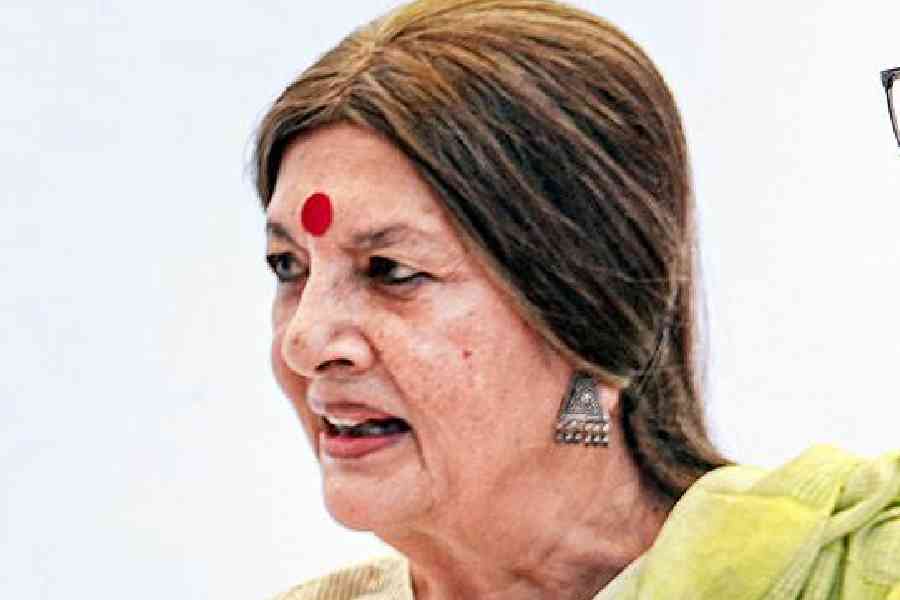
Citing the example of a tribal village at Barapala in Rajasthan’s Udaipur, CPM leader Brinda Karat said in a letter to Union agriculture minister Shivraj Singh Chouhan on Monday: “Rajasthan has special summer timings because of the heat. For four hours, from 6.30am till 10am, scores of women waited for the online official attendance site to open. But despite repeated efforts, the connection was not available and the ‘mate’ in charge had to finally declare there could be no work that day. This, I was told, is a common occurrence.”
Under the Viksit Bharat-Guarantee for Rozgar and Ajeevika Mission (Gramin) Act, a “mate” acts as the designated worksite supervisor or site supervisor.
Karat, who had visited the village on Sunday, said: “From December last year, when the MGNREGA was scrapped, even though Parliament was assured that work would continue till the new law was implemented, these women workers have got only 18 days of work from January till June. At least 12 elderly women workers said the biometric face recognition had excluded them as their eyes could not be captured by the technology...
“The reason I give you these details is because your Ministry has published a set of eight Rules for the implementation of the VB-G RAM G Act on May 22 without any consultation with rural and MGNREGA workers’ organisations and unions. Perhaps if they had been consulted, the very real problems I have described above would have been addressed by the Rules.”
Karat explained: “The Rules reflect (1) extreme concentration of all decision making in the hands of the Union government (2) are an assault on the federal nature of the Constitution by denying state governments any say in the implementation of the law except what is decreed by the Union government (3) prescribe ‘objective’ parameters for fund allocation which are neither objective nor fair (4) rely excessively on technology (5) lay out no parameters for wage fixation.”
She said that Rule 396E, which gives weightage to a state’s population, would effectively reduce funding to southern states that have been providing more days of work under the MGNREGA. She cited other rules as well that could create hurdles for states to spend more on providing work, the silence on minimum wages, and the mandatory e-KYC via mobile phones of workers, which only about half of all workers have been able to do.
Karat added: “It is ironical that a set of Rules ostensibly drafted to ensure transparency and control corruption has no separate body for social audit or any independent authority.... The top-heavy, bureaucratic nature of the entire exercise is underlined by the total lack of recognition in the Rules of the rights of panchayats and their voice in decision-making. For all these reasons, the Rules need to be withdrawn. The MGNREGA should remain in operation.”
Chouhan said at an event here on Sunday: “For two years, I studied the MGNREGA and found that several glaring discrepancies had crept into the scheme and there was massive misuse of funds, muster rolls were not properly made, and attendance numbers were forged… and therefore we thought of changing it with VB-G RAM G.”
Congress communication head Jairam Ramesh said on X: “MGNREGA was a demand-driven rights-based guarantee by the Central Government. VB-G RAM G will be an allocation-based scheme in which 60% of the expenditure will be borne by the Centre (and) 40% will come from the states.
“The normative allocation formula that is being adopted is the same that the 16th Finance Commission had adopted to distribute the single divisible pool of taxes amongst states. The Finance Commission formula is for distributing revenues, not underwriting expenditures. That is the role of grants most of which were abolished by the 16th Finance Commission. Ensuring equity through an efficiency formula is yet another assault on the already fragile fabric of our federalism.”
Bihar, Madhya Pradesh and Jharkhand have reportedly asked the Centre to review the 60:40 (Centre-state) funding ratio under VB-G RAM G. Under the MGNREGA, more than 90 per cent funding came from the Centre.