More than 700 “unopposed” victories in Gujarat’s local body elections are being projected as a sign of the ruling party’s popularity. In reality, it raises an uncomfortable question: what does an election mean when so many seats see no contest at all?
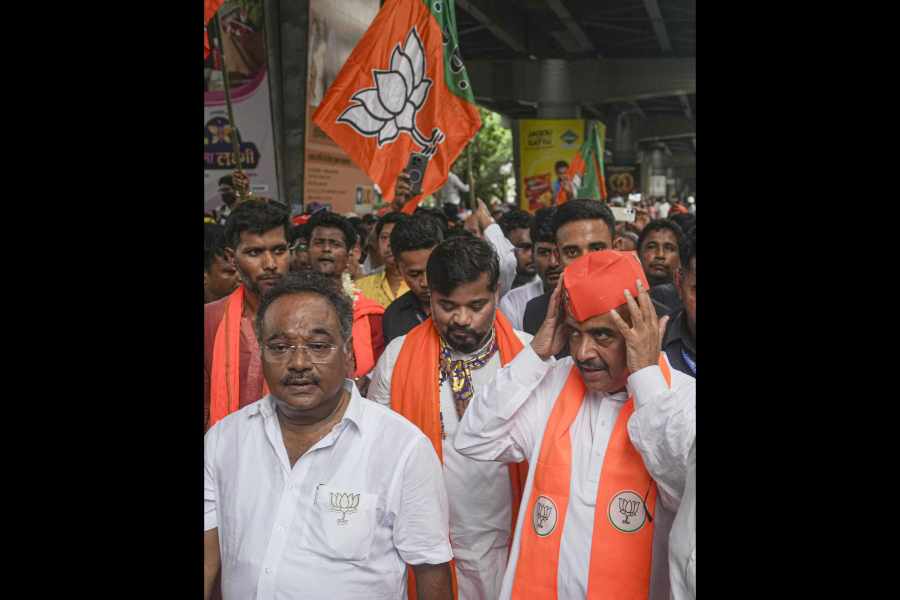
The scale of these uncontested results is massive. For the April 26 local body elections covering 15 municipal corporations, 84 municipalities, 34 district panchayats and 260 taluka panchayats, the state election commission reported that around 730 seats had been declared uncontested after withdrawal of nominations.
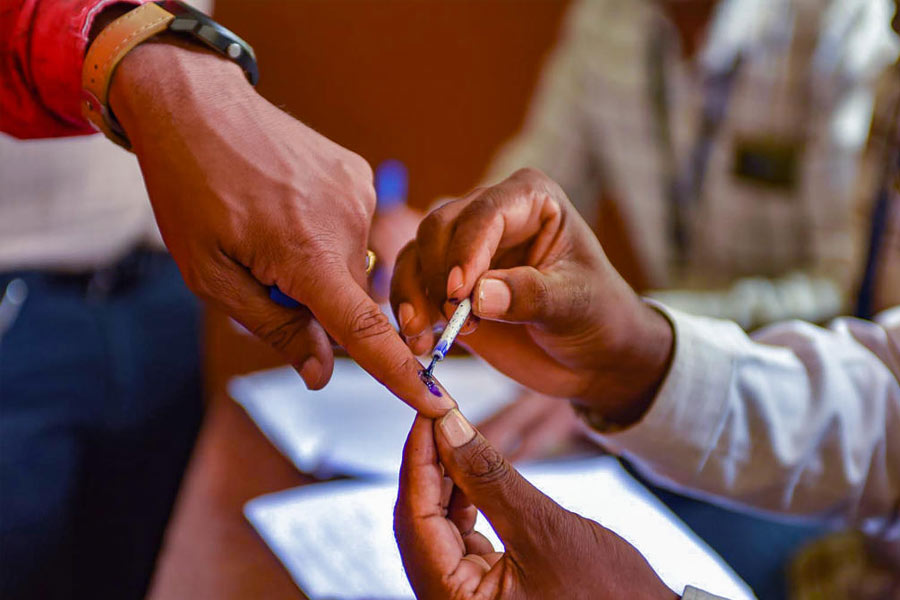
This includes 43 municipal corporation seats, 385 in municipalities, 51 in district panchayats and 251 in taluka panchayats. Voting will take place in the remaining seats on April 26, with counting scheduled for April 28.
When large numbers of candidates from rival parties withdraw, it becomes a deeper concern about whether a level playing field existed in the first place, and whether meaningful competition was ever fully allowed to take shape.
In George Orwell’s famous work, Animal Farm, Napoleon does not secure power through persuasion or open electoral contest. Instead, he consolidates authority by gradually removing rivals until the Opposition ceases to exist in practice. The outward structures of democracy remain for public display.
The case of Bhumi Prajapati is a classic example of the modus operandi of the ruling party in Gujarat. Prajapati, a Congress candidate from Vadodara, withdrew her nomination on the final day of withdrawal. She had initially filed her nomination as a Congress candidate but stepped away at the last moment. Soon after, she was seen with BJP leaders, seeking their blessings and joining them.
If she had genuine disagreements with her party, why accept the ticket in the first place— only to step away at the final hour? And why does the exit and new alignment happen so quickly, almost seamlessly? Even local political voices describe such episodes as “scripted”.
In Animal Farm, Orwell captures this same erosion of genuine choice, where outcomes look voluntary on the surface but are carefully managed underneath.
This is not an isolated story.
In Ahmedabad, several Congress candidates have alleged pressure and coercion around withdrawals. One candidate, Bina Modi, publicly claimed in a video statement that she was offered around ₹30 lakh to withdraw her nomination. Others have spoken of threats and intimidation. Whether every claim is proven or not, the fact that candidates are publicly raising such concerns changes the atmosphere of the election itself.
There is also a precedent to the nomination withdrawal exercise. In the 2024 Lok Sabha elections, Surat constituency saw an uncontested victory after the Congress candidate’s nomination was rejected during scrutiny, and other candidates withdrew by the last date. With no Opposition left, the BJP candidate was declared elected unopposed, one of the rare cases in Indian parliamentary elections where no voting took place in a constituency.
The tone from the top has also drawn attention.
Gujarat chief minister Bhupendra Patel, speaking at a public event after the recent withdrawals in local body elections, reportedly said the aim should be a situation where no one even files a nomination against the ruling party. Taken literally, it sounds less like winning elections and more like removing the need for them to be fought at all. Opposition parties have also alleged administrative pressure and police presence behind withdrawals.
Gujarat has long been a political laboratory for the BJP. There are concerns about growing anti-incumbency sentiment in the state with the party being in power uninterrupted for more than three decades, along with complaints of corruption in government domains and public dissatisfaction during crises.
People have voluntarily put up banners at the entry gates of residential societies asking political workers not to enter for election campaigning, stating that they had done nothing to help them during times of crisis, including floods and other issues.
The recent SIR, which led to the deletion of around 70 lakh voters in Gujarat, has been seen as a significant shift in the electoral landscape. Managing the withdrawal of nominations at the last moment is also seen by many as an extension of the same process, which has now resulted in a large number of uncontested wins for the ruling dispensation.
In Animal Farm, Orwell’s most enduring warning is about how systems can be gradually engineered so that contest becomes unnecessary because Opposition has already been neutralised. When elections produce large numbers of uncontested wins amid allegations of coercion and pressure to withdraw, the democratic process begins to lose its meaning. The key question is whether the contest itself still remains meaningful. What does it mean when elections produce so many seats without a fight?