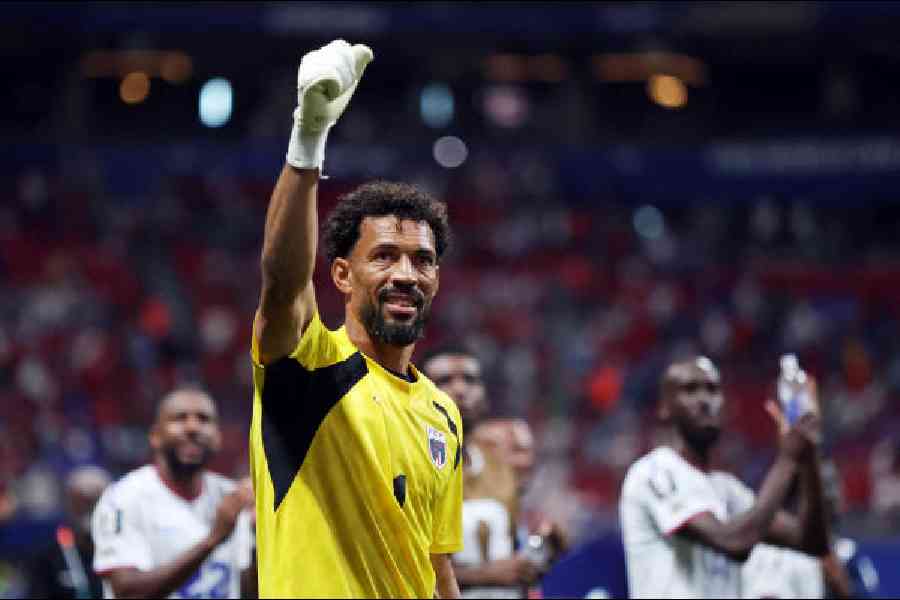
A Muslim majority in MBBS admissions had triggered the first protests. Now, the predominance of Muslims in Jammu and Kashmir’s Santosh Trophy football team has Jammu’s Rightwing ecosystem breathing fire.
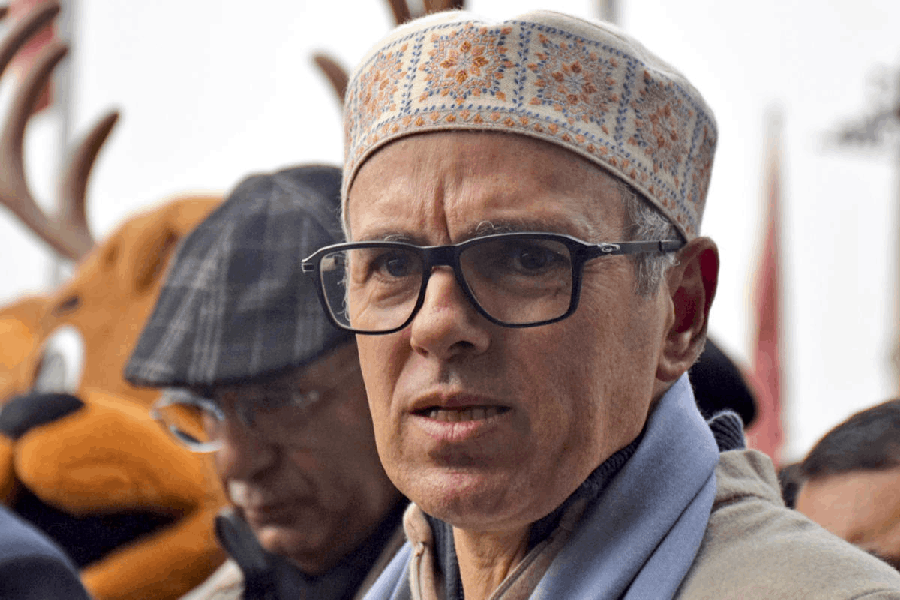
Days after chief minister Omar Abdullah defended the team selection as fair and urged people not to politicise sport, his sports minister Satish Sharma, who is from Jammu, has ordered a probe into the selection process.
“If anybody is involved in (unfair selections), there will be action against him,” Sharma said.
BJP leaders and many social media users from Jammu had over the past few days alleged that 19 of the 20 members of the football team were Muslims from the Valley, with a lone Hindu member from Jammu.
An official from the Jammu and Kashmir Sports Council — which picked the team — backed this.
But two of the council’s football coaches, one from Jammu and the other from Kashmir, suggested the breakup was 18-2.
The Jammu-based coach, who declined to be named, said the selection had been perfectly fair. He shied away from giving a religious breakup but said 18 players from the Valley and 4 from Jammu had been selected, but 2 among the Jammu players had pulled out.
Multiple sources said – and minister Sharma, too, acknowledged in public – that football was far more popular in Kashmir than in Jammu.
“There wasn’t much enthusiasm here; we had only 72 players joining the trials in Jammu. We selected 18 (provisionally); 4 made it to the final list before 2 opted out,” the Jammu-based coach said.
“The number of players who joined the trials in Kashmir was far bigger. All those selected are very talented.”
Going by the yardstick of results, Jammu and Kashmir fans should have little reason to complain about the selection. Their team has started off with 3-0 victories against Ladakh and Himachal Pradesh in the first two matches.
Jammu recently witnessed protests after 42 of the 50 students admitted to the first-year MBBS course at the Mata Vaishno Devi medical college turned out to be Muslim.
The admission figures prompted the BJP and its allies to seek 100 per cent reservation for Hindu students at the college on the grounds that it was run with funds collected from pilgrims visiting the shrine. The students had been selected through the all-India NEET exam.
Javed Ahmad Sofi, a Valley-based football coach, said the composition of the football team was almost the same last year, with just “four or five” players from Jammu. He attributed this to the dwindling football culture in Jammu.
“Until 2005 or so, Jammu players used to dominate the team. In the last four years, no (local) league or tournament has been organised there,” he said. “In Kashmir, it’s the private sector running the show.”
Srinagar witnessed the birth of the Real Kashmir Football Club, a professional outfit, in 2016. It competes in the I-League, India’s second tier football championship, while its reserve side participates in the local league.
Players from Jammu figure prominently in the Union Territory’s cricket team. A Kashmir cricketer, Auqib Nabi, was recently bought by the IPL team Delhi Capitals for ₹8.4 crore.
Sofi said some 134 players from Kashmir had joined the Santosh Trophy trials. “Twenty-eight made it to final camp, which was held in Jammu and ran for 21 days,” he said.
The probe committee is headed by Anuradha Gupta, director-general, youth services and sports. Gupta has been asked to submit recommendations based on the findings, and present the report within seven days, the sports ministry order said.
Minister Sharma acknowledged that two (Hindu) players, one of them named Aryan Gupta, had been picked but could not play because of their exams.
He conceded that Jammu lacked the sort of football culture that Kashmir had. He, however, suggested the ratio was still very skewed.
“What would you say if 10 out of 11 players in hockey come from the Sikh community? Football in Kashmir is doing very well. We need to encourage football in Jammu as well, and at the same time ensure that sports is not dragged into politics,” he said.
Days earlier, Omar had suggested that the politicisation was happening from the other side.
“All these boys have been selected based on their talent. I don’t understand why politicians are bringing politics into everything,” he had said.
“When students get into a medical college, you bring politics into it and now when boys who work very hard make it to the football team, that is also being dragged into politics.”
The sports council official said Jammu had one player in the team but three others from the region were on standby.
He gave a list of the players: Nirdosh Sagotra (Jammu) and Furkhan Ahmed Dar, Shahid Nazir, Zubair Ahad Akhoon, Mohammad Sajid Dhot, Aakif Javaid, Basit Ahmed Bhat, Hyder Yousuf, Urfan Hamid, Shahmeer Tariq, Talib Nazir, Mohammad Inam, Shakir Ahmed Sheikh, Adnan Ayoub, Sahil Khurshid, Asrar Rehbar, Waris Amin, Ahteeb Ahmed Dar, Ikhlaq Fayaz Bhat and Hayat Bashir (all Kashmir). Those on standby are Aditya Mahajan, Aryan Gupta and Rishab Dogra.