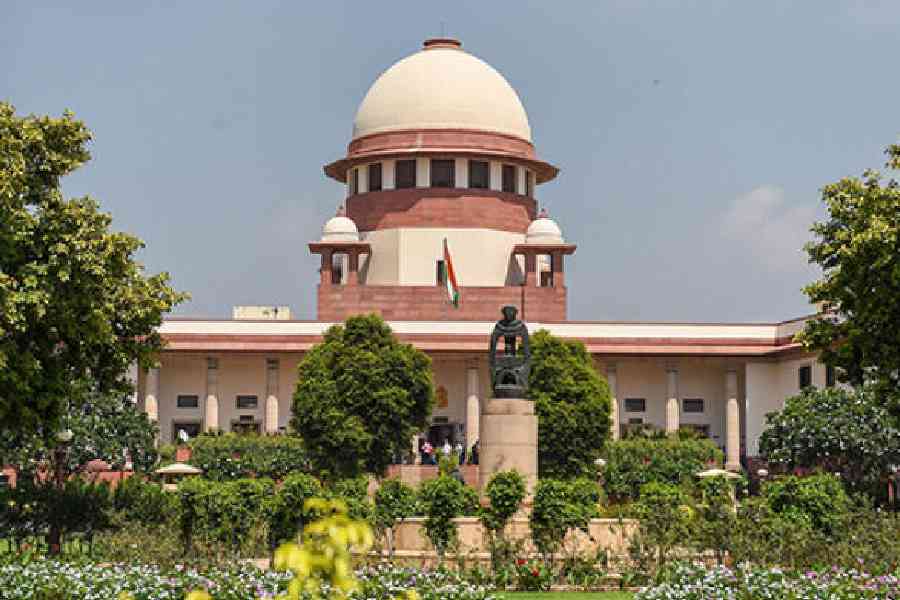
The Supreme Court on Friday ruled that stem cell therapy could not be touted by clinics and hospitals as a “treatment or cure” for autism spectrum disorder (ASD) as there was no scientific or medical research to back such a claim.
The apex court asked the Centre to come out with legislation to check such malpractices and cancel the licences of errant clinics and hospitals.
“As regards the errant clinics/organisations, we are of the firm view that action must be taken against them by the appropriate authority, under Section 32 and Section 40 respectively, of the Clinical Establishments (Registration and Regulation) Act, 2010, which provide for the cancellation of registration and penalty,” a bench of Justices J.B. Pardiwala and R. Mahadevan said in the judgment.
The apex court passed the verdict while allowing an appeal filed by the Yash Charitable Trust, which had raised concerns over the rampant promotion, prescription and administration of stem cell “therapy” for the treatment of ASD by several clinics across the country.
The petitioner alleged that stem cell therapy for ASD was illegal and did not provide for safety nets available to the subjects of clinical trials under the present regulatory framework. It also violates the New Drugs and Clinical Trial Rules, 2019, promulgated under the Drugs and Cosmetics Act, 1940, and the National Guidelines for Stem Cell Research, 2017, published by the Indian Council of Medical Research, the petitioner submitted.
“We are of the view that the requirement of ‘adequate information’ about the said treatment method is not fulfilled simply because sufficient information is not available regarding the same,” the top court said.
“The lack of a clear regulatory framework is an issue of implementation of these core ethical considerations. Any use of such lacunae to offer stem cell therapy as a routine treatment as an alternative to other options is a contorted understanding of the legal and ethical framework and hence, impermissible,” it added.
The bench noted that therapeutic use of stem cells in ASD was not recognised as “a sound and relevant medical practice” and "medical practitioners offering it as a clinical service, outside of an approved and monitored research/clinical trial, failed to meet the reasonable standard of care that they owed to their patients".
“Hence, until there is further research which establishes this as a sound and relevant medical practice, stem cell ‘therapies’ for ASD cannot be offered by medical practitioners as a clinical service, outside an approved and monitored clinical trial/research setting,” it said.
However, the bench said it did not wish to leave patients who are already undergoing the therapy in any apprehension that discontinuing the same may prove to be detrimental to their well-being.
"...At the same time, we are also sure of our decision that stem cell therapy for ASD cannot continue as a commercial endeavour in the form of routine clinical treatment," it said.
The bench said it was “unfortunate” that the Centre let the matter worsen without any suitable and timely intervention. “Such inaction has led to several parents/guardians seeking an unproven method of treatment for their children suffering from ASD, incurring huge financial cost," it said.