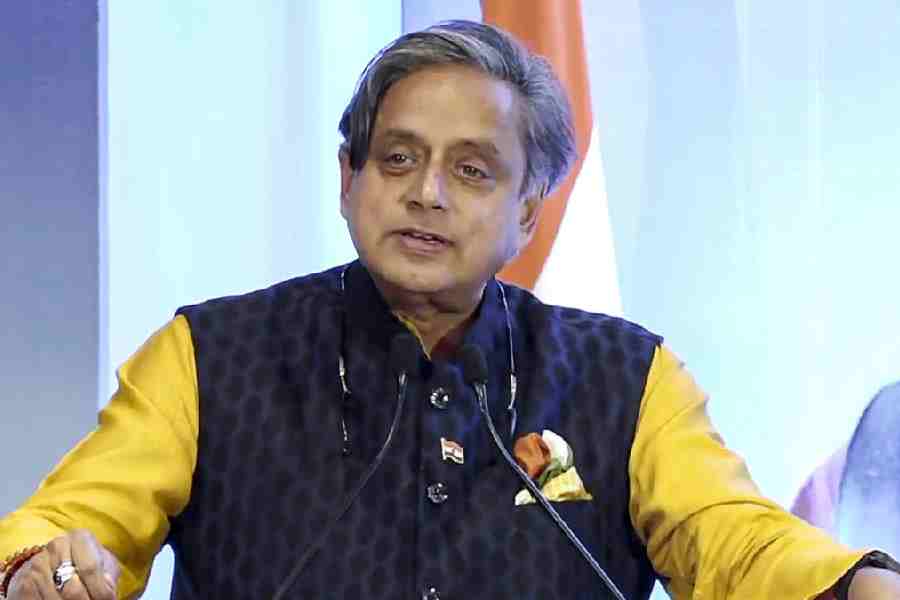
Congress MP Shashi Tharoor on Friday warned the Narendra Modi government that its rush to push the delimitation bill will turn into “political demonetisation.”
“We risk creating a tyranny of the demographic majority. Large, poor states could theoretically determine the fate of the country,” the Thiruvananthapuram MP said on the floor of the Lok Sabha during the debate on the bill.
“You have proposed delimitation with such haste. The same haste showed on demonetisation and unfortunately we all know what damage that did to the country.”
The Modi government convened a special session of Parliament where it intends to pass the delimitation bill along with two other bills that propose to increase the number of seats in the Lok Sabha to 850 from the existing 543, and a constitutional amendment.
Voting on the three bills is scheduled for later on Friday. The BJP, which does not have the adequate numbers, is trying to crack open the Opposition which so far has remained united in its opposition to the proposed delimitation.
Citing the examples of Tamil Nadu and Kerala which have done well in population control and make greater contributions to the national exchequer, Tharoor said these states cannot be punished for pursuing inclusive human development.
“In future delimitations, states which failed to curb population growth would be rewarded with greater political weight. Does governance excellence lead to political irrelevance?” Tharoor asked. “Delimitation is not a mere bureaucratic rearranging of maps. It is a profound shift in political powers. Such an exercise carries a risk that could strain the very fabric of our federalism.”
Tharoor said the Opposition members were in agreement with the Treasury benches on the need to get the long-pending women’s reservation law passed allowing higher representation for women in India’s electoral politics.
“For decades the women’s reservation bill has been long-promised, often-discussed and perpetually delayed, like waiting for Godot of our political system,” Tharoor said.
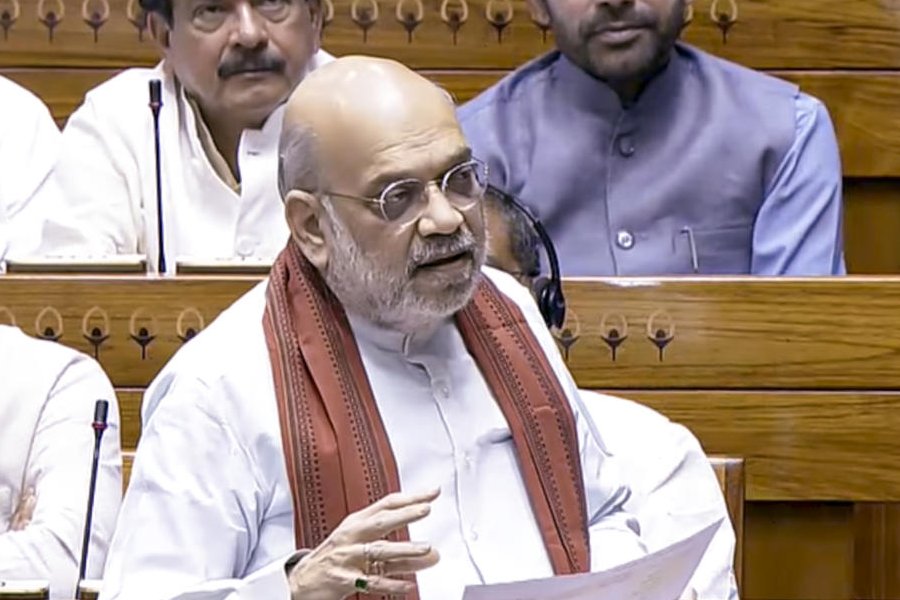
Addressing the Lok Sabha on Thursday, Prime Minister Narendra Modi had cautioned the Opposition on the political consequences of delaying passing the women’s reservation bill.
“The PM”s gift of Nari Shakti is wrapped in barbed wire. Tethering the implementation of women’s reservation to the expansion of Parliament, to numbers from the 2011 Census and an exercise of delimitation,” Tharoor said.
“Why must we entangle a moral imperative with a demographic minefield? Women’s reservation is ready for harvest. It can and should be implemented immediately based on our existing parliamentary strength. To link it to delimitation is to hold the aspirations of Indian women hostage to one of the most complex and contentious administrative exercises in the nation’s history.”
Tharoor suggested the Union government to decouple the issues.
“Pass the women’s reservation bill today, we will support it. Let it take effect in the next general elections. As for delimitation, let us defer it. Let us constitute a formal mechanism, perhaps a JPC [Joint Parliamentary Committee] to debate a new federal settlement that protects the interest of all states,” he said.
Tharoor said increasing the size of the Lok Sabha leaving the Rajya Sabha with its present strength would raise serious structural concerns. In the event of a joint sitting of both Houses, the Lok Sabha will dominate the voting process.
He reminded the Treasury benches of a similar situation in America in 1787 which led to the Connecticut Compromise that led to the establishment of a bicameral legislature in the United States, balancing the power between the small and large states.
“These are problems that cannot be solved by a simple calculator,” Tharoor said. “They require a great compromise, a historical settlement that no region feels diminished.”