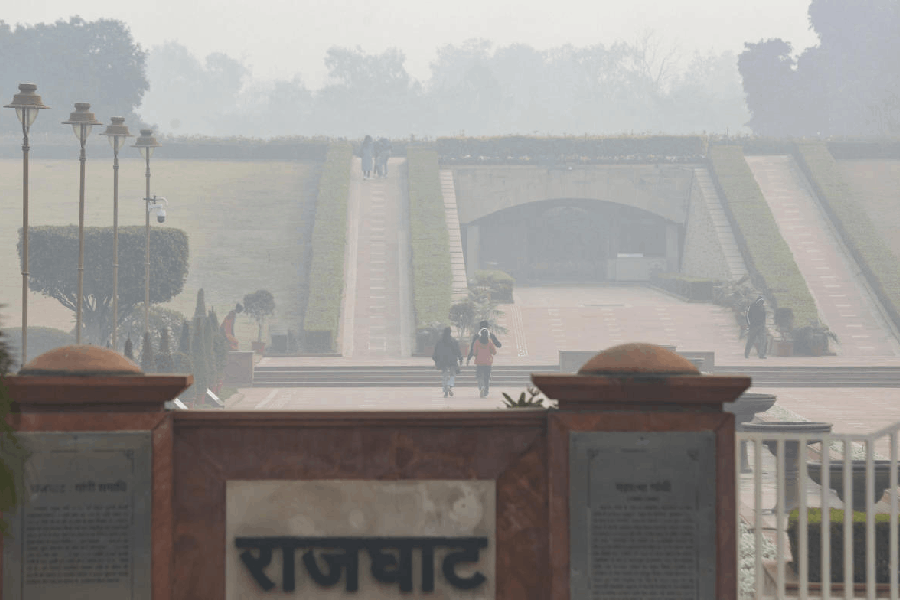
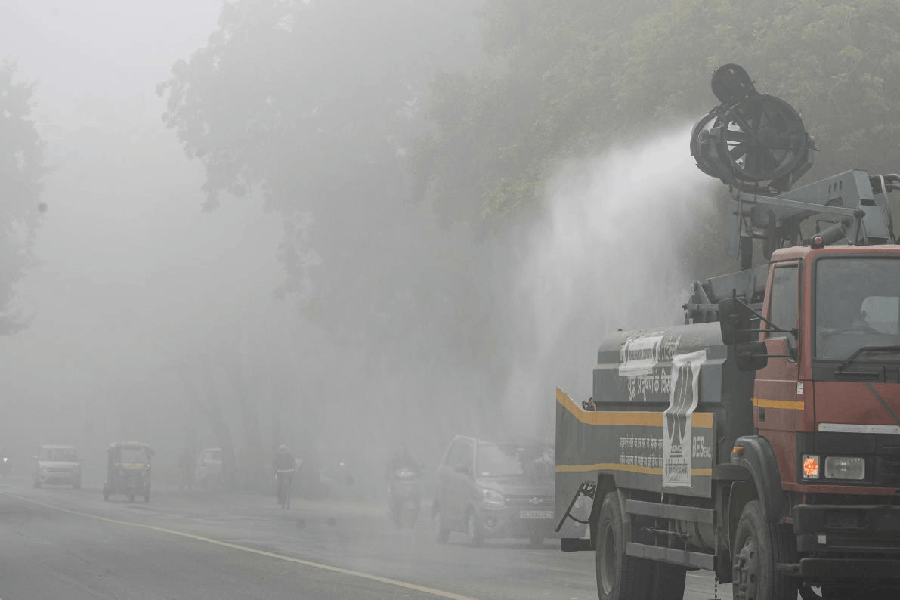
Delhi continues to reel under toxic air, with experts warning that the crisis is no longer limited to damaged lungs and hearts but is increasingly taking a toll on mental health, cognitive development and emotional well-being, especially among children.
Medical practitioners and mental health professionals have pointed to growing research-based evidence linking prolonged exposure to polluted air with depression, anxiety, poor memory and disrupted cognitive development.
Long-term exposure has also been associated with an increased risk of neurodegenerative disorders such as Alzheimer’s and Parkinson’s disease.
Dr Anchal Miglani, a psychiatrist at Emoneeds, which provides care to people struggling with mental health problems, said that while respiratory, cardiovascular and allergic conditions dominate public attention, the psychiatric impact of air pollution is equally alarming.
Researches indicate a clear link between pollution and rising cognitive and neurotic disorders, with children, the geriatric population and low-income communities being the most vulnerable, she said.
Children growing up in polluted environments face lower IQ levels, memory disturbances and a higher likelihood of developing ADHD, she said, adding that long-term exposure elevates cortisol levels, disrupts mood regulation and contributes to chronic stress.
"Residents of Delhi report 30-40 per cent higher rates of depression and anxiety compared to cities with lower AQI levels. Social isolation, reduced outdoor activity, and persistent health anxiety further compound these effects," Dr Miglani highlighted.
Fiza Khan, a psychologist at Emoneeds, said pollution is often discussed as a lung problem, but its impact extends to the mind.
"On days when the sky turns grey and visibility drops, many people report feeling unusually irritable, restless, low in mood, or mentally exhausted. This is not just in their head.
Research shows that prolonged exposure to high levels of air pollution is linked to increased risk of anxiety, depression, poor concentration and memory, and sleep disturbances," she said.
Elaborating further, Khan said pollutants can trigger inflammation and stress responses in the body, which also affect brain functioning and emotional regulation.
At the same time, the constant awareness of bad air days, school closures, flight delays and health warnings creates a background of chronic stress.
"For parents, older adults, and people with existing mental health conditions, this stress can be overwhelming. Pollution also quietly changes our daily behaviour. Reduced outdoor activity, limited social interaction, and cancelled walks or playtime mean fewer natural mood boosters like sunlight, movement, and connection. Over time, this can add to loneliness and low mood," Khan said.
Experts said that while policy-level solutions are essential, acknowledging the mental toll of pollution at an individual level is equally important.
Dr Jitender Nagpal, deputy medical superintendent and a paediatrician at Sitaram Bhartia Institute of Science and Research, said Delhi’s children are growing up in one of the most polluted environments globally and the impact goes far beyond their lungs.
"Increasingly, a wide spectrum of behavioural and learning issues such as attention difficulties, irritability, and poor academic performance are being noticed in many children," he said.
While these challenges have multiple causes, it is reasonable to speculate that environmental factors like chronic air pollution, combined with rising screen exposure, may be contributing to this trend, Dr Nagpal said.
"Cleaner air and mindful screen habits are not just lifestyle choices; they are public health imperatives to safeguard the emotional and cognitive well-being of our future generations," he added.
Dr Deepika Dahima, a psychologist at AIIMS, Delhi, described the air pollution crisis as both a mental health emergency and an environmental one.
Prolonged exposure to fine particulate matter and toxic gases correlates with rising anxiety, depression, cognitive impairment and chronic stress, she said.
Children show disrupted neural development and learning difficulties, while adults experience irritability, emotional fatigue and impaired decision-making.
Vulnerable populations, already facing social and economic inequities, endure compounded psychological burdens.
"Yet, policy responses largely ignore these mental well-being consequences, focusing narrowly on physical illness. Effective intervention demands integrating air quality management with mental well-being frameworks, prioritising accessible psychological support, urban green spaces, and strict emissions control.
Protecting mental wellbeing must become a central metric in evaluating India's environmental policies, reframing clean air as essential for cognitive and emotional resilience," Dr Dahima added.
The warnings come as Delhi’s air quality remained in the very severe category on Saturday.
Data from the Centre-run Early Warning System under the Ministry of Earth Sciences showed the Air Quality Index at 356 at 11.15 am, while private monitoring platform aqi.in recorded the AQI at 447, placing it in the severe-plus category.