
New Delhi: A Supreme Court bench on Monday asked the Centre why it was shying away from changing the law if it wanted people to stand up in cinemas when the national anthem was being played.
The three-judge bench of Chief Justice Dipak Misra and Justices A.M. Khanwilkar and Chandrachud was hearing a petition filed by a film society to recall an interim order by an earlier bench that had made standing up mandatory.
When the matter came up on Monday, attorney-general K.K. Venugopal read out portions from Article 51A which enjoined fundamental duties on citizens to abide by the Constitution and foster respect for the national flag and anthem.
Justice Chandrachud observed: "Why should we assume the responsibility? Are we supposed to enforce all this? As the government, you have the power. You take the call. Why should we take your burden?"
The judge asked: "What stops you from amending the provision? There is no bar to play the national anthem on other occasions also."
The Prevention of Insults to National Honour Act, 1971, deals with the issue.
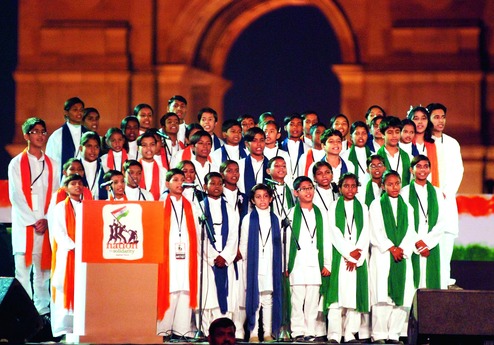
The judge pointed out that it was sometimes played during the commencement of cricket matches or Olympic events, but half the people gathered at the venue hardly understood the national anthem.
In Maharashtra, it has been a convention for decades to play the national anthem at the end of a film show. "But many people start leaving the halls even before the conclusion of the anthem and start boarding auto-rickshaws," Justice Chandrachud said.
The attorney-general remained non-committal, merely saying: "We will take a call this way or that way."
Senior advocate C.U. Singh, appearing for the film society, insisted that the earlier order should be recalled as it amounted to "judicial legislation".
Singh contended that the Centre can bring in legislation to make it mandatory but courts should not interfere.
Another intervener from Kerala, however, supported the original petitioner's contention, saying a large number of youths from the state are joining the Islamic State and other extremist organisations. Instilling a sense of patriotism among the people through such directives would deter the youth from joining terrorist outfits, the intervener said.
Senior advocate Rakesh Dwivedi, appearing for the petitioner, supported the November 30 order and said the directive should be extended to all educational institutions as they produce the future leaders of the country.