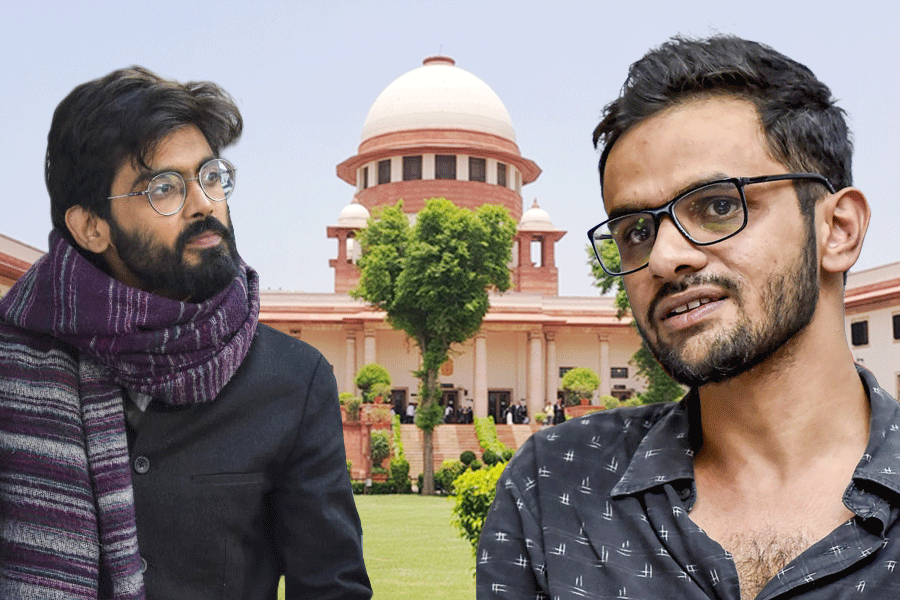
The Supreme Court on Monday denied bail to Umar Khaild and Sharjeel Imam in the 2020 Delhi riots conspiracy case.
The apex body refused to grant bail to Khalid and Imam, citing a prima facie case against them under the Unlawful Activities (Prevention) Act.
Here’s what the Supreme Court said while denying bail to Umar Khalid
The Supreme Court said it was not deciding Umar Khalid’s guilt or innocence, only whether the prosecution case crosses the threshold required to deny bail under the UAPA.
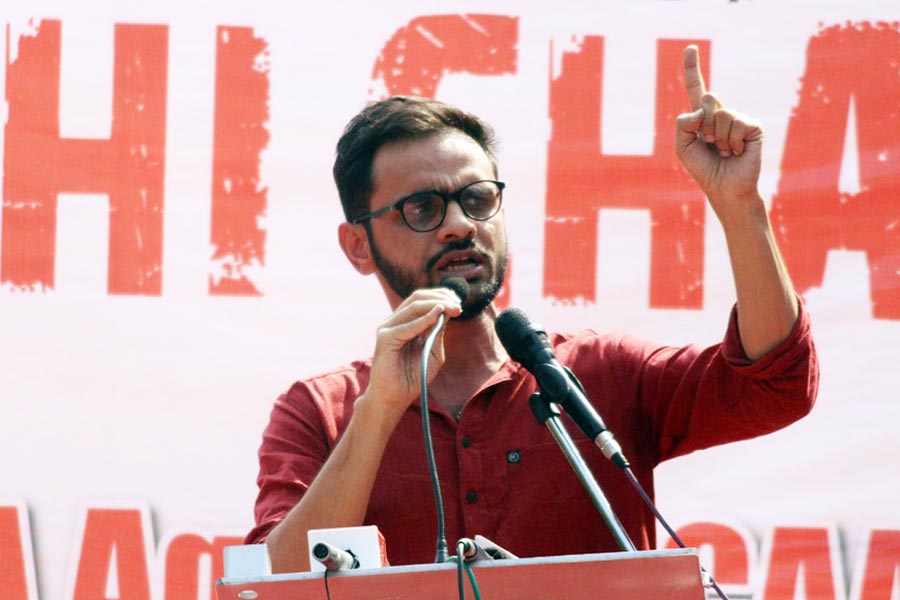
The court held that Section 43D(5) of the UAPA is attracted as there were reasonable grounds to believe that the accusations against Khalid were prima facie true.
The court said a conspirator need not personally commit violence or be present at riot sites; conspiracy can be inferred from planning, coordination and preparatory acts. Khalid’s physical absence during the February 2020 riots does not weaken the prosecution case, as he is alleged to be an organiser and strategist, not a street-level executor.
The court rejected the argument that Khalid should be given bail because no weapons or incriminating articles were recovered from him, saying organisers often leave no physical trail.
The court said the chargesheet presented a phased and structured conspiracy — mobilisation, formation of committees, expansion of protest sites, escalation and culmination in violence.
Khalid’s repeated presence at meetings and involvement over weeks showed continuity, which the court said distinguished an organiser from a mere participant.
Bodies like the Jamia Coordination Committee (JCC), Jamia Awareness Campaign Team (JACT) and WhatsApp groups were viewed as coordination mechanisms, not routine protest structures. (Khalid was allegedly involved in the creation/operation of the JCC WhatsApp group per charge-sheet claims.)
While acknowledging that Khalid’s Amravati speech invoked non-violence, the court said public disclaimers cannot negate alleged private preparation.
The court said it cannot assess credibility of protected witnesses at the bail stage and must accept prosecution material at face value.
The court refused to isolate individual acts like speeches or meetings, stressing that conspiracy cases must be judged as a whole.
The court said the prosecution case is not about traffic disruption but about alleged systemic paralysis of Delhi and engineered confrontation.
The court highlighted allegations that protests were moved from minority-dominated areas into mixed-population zones to provoke communal skirmishes.
Disruption of essential services, transport networks and civic life in the National Capital was treated as relevant to invoking UAPA provisions.
While acknowledging prolonged incarceration, the court said delay cannot dilute the statutory bar when the prima facie threshold is met.
The court noted there was no significant change in circumstances since earlier bail rejections.
The court said constitutional protection for dissent does not extend to a design involving coordinated disruption and violence.
The Supreme Court clarified its observations were limited to bail and must not influence the trial on merits.
The court asked the trial court to proceed with the case as quickly as possible.
The Supreme Court held that Umar Khalid’s alleged role as an organiser of a phased conspiracy, if taken at face value, is sufficient to deny bail under the UAPA, regardless of his absence from the riot scenes or lack of recoveries.
On Sharjeel Imam
The Supreme Court held that Sharjeel Imam is not being prosecuted for dissent or protest, but for an alleged foundational role in a conspiracy linked to the anti-Citizenship Amendment Act (CAA) agitation and subsequent riots.
The Court said the case cannot be reduced to “mere speeches”, noting that the prosecution alleges a chain of acts including mobilisation, coordination, meetings, pamphlet distribution and strategic planning.
At the bail stage under the UAPA, the Court clarified that it cannot test the credibility or admissibility of evidence, and must proceed on the prosecution material taken at face value.
The judges emphasised that the inquiry is limited to whether there are reasonable grounds to believe the accusations are prima facie true, triggering the statutory bar under Section 43D(5) of UAPA.
The prosecution’s case, the Court noted, portrays Imam as a coordinator and ideational driver from the inception of the mobilisation in early December 2019, not as a peripheral participant.
The Court relied on material showing Imam’s alleged role in creating and administering WhatsApp mobilisation groups, including “Muslim Students of JNU” and its core committee.
It highlighted allegations that Imam was involved in distributing pamphlets aimed at galvanising protest participation, including material said to create fear and insecurity.
The Court said CDR (call detail record) analysis placing Imam at Jamia Millia Islamia University on 13 December 2019 supports the prosecution narrative.
A protected witness statement was treated as significant, particularly the allegation that Imam was directed to initiate a 24x7 “chakka jam” at Shaheen Bagh, distinct from a peaceful dharna.
The Court underlined that the prosecution differentiates between ordinary protest and a “chakka jam” strategy intended to blockade roads and paralyse civic life.
It noted that Imam’s speech of 13 December 2019, as relied upon by the prosecution, allegedly exhorted disruption in the national capital and choking of essential services like milk and water.
The Court rejected the argument that absence from Delhi during the February 2020 riots absolved him, stating that physical presence at the site of violence is not necessary to attract conspiracy liability.
It observed that a conspirator may publicly claim non-violence while still engaging in acts intended to create conditions for escalation and confrontation.
The Court accepted the prosecution’s position that the February 2020 riots were not sudden, but the culmination of earlier phases of mobilisation, blockade and disruption.
On parity, the Court ruled that bail granted to other accused cannot be mechanically extended, as Imam’s alleged role was distinct and foundational.
The Court said delay and the scale of the trial, while concerning, cannot override the statutory embargo once prima facie satisfaction under UAPA is reached.
It clarified that the proper response to delay is expedition of trial, not grant of bail contrary to statutory mandate.
The Supreme Court concluded that the allegations, taken cumulatively, show deliberate mobilisation, planned blockade strategy and intentional disruption of civic life.
As a result, the Court held that Section 43D(5) of the UAPA squarely applies, leaving it with “no lawful option” but to deny bail.
The Court stressed that its observations were strictly confined to the bail stage and will not influence the trial on merits.
It directed the trial court to prioritise the case and ensure expeditious proceedings.