|
 |
 |
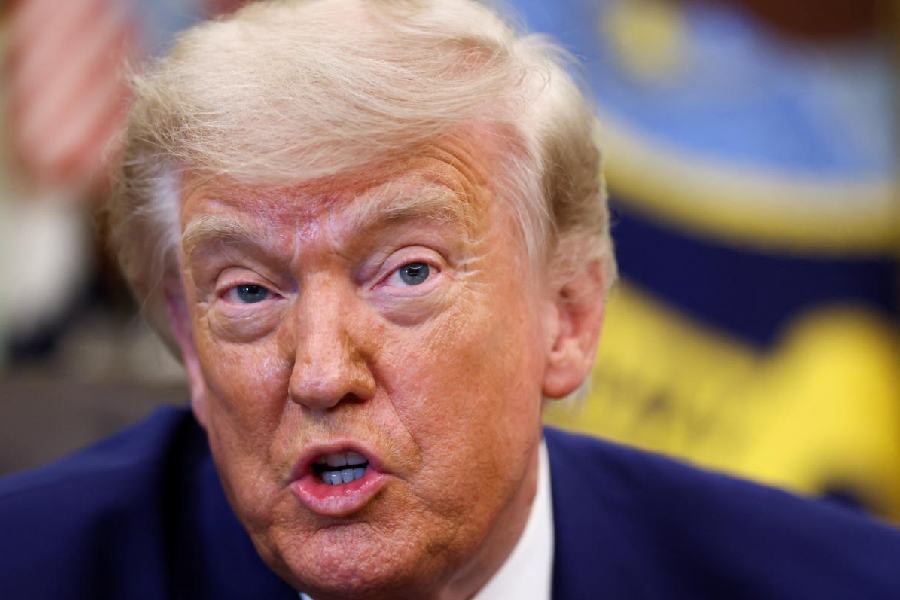
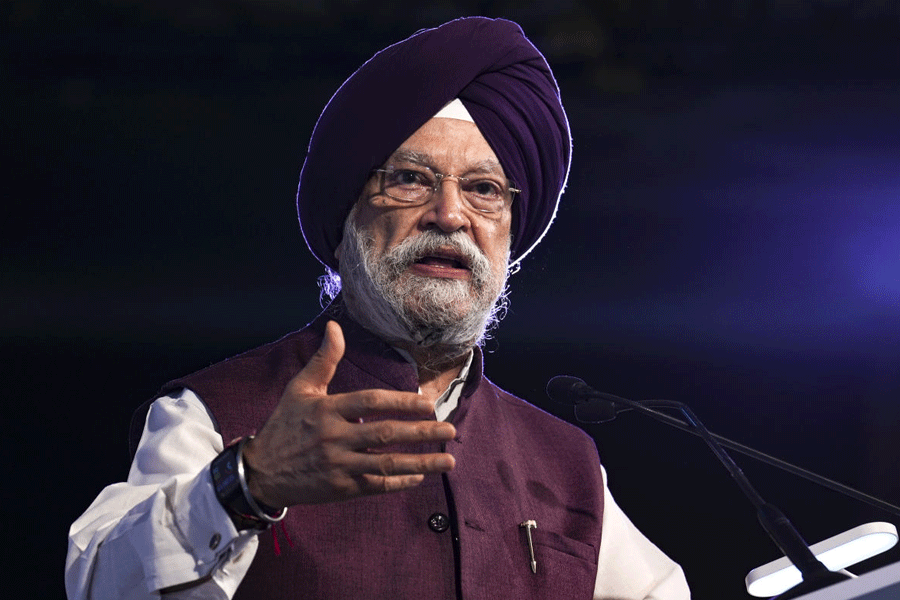
| (From top) Pranab Mukherjee, Arjun Singh and ML Fotedar |
Bhopal, June 13: Senior Congress leaders who served under Rajiv Gandhi want Arjun Singh to clear the air on former Union Carbide chief Warren Anderson’s release, failing which they feel Sonia Gandhi should consider disciplinary action.
One of the triggers for the calls, ironically, appears to be Narendra Modi. The Gujarat chief minister has dared Sonia to name the “maut ka saudagar (merchant of death) in Bhopal”, heightening anti-Arjun feelings within the Congress. Arjun is a member of the Congress Working Committee, the party’s top decision-making body.
M.L. Fotedar, Arjun’s close friend who was also an aide to Rajiv and Indira Gandhi, felt the former Madhya Pradesh chief minister should break his silence.
“Arjun Singh should come out in the larger interest of the country and the party. He should clear the air,” Fotedar, known not to speak his mind easily, told The Telegraph today.
State Congress chief Suresh Pachauri echoed the sentiment. “I cannot fathom why Arjun Singhji is not reiterating what he had said in December 1984. I have documentary evidence of the two main points that he had made after Anderson left Bhopal. Firstly, it was his (Arjun’s) decision and secondly, Rajiv Gandhi wanted the culprits of the gas tragedy to be punished severely.” Pachauri said the leadership should ask Arjun to come out with the truth.
Fotedar said another key person was Arun Nehru. Nehru, a Congress general secretary then, also emphasised that as chief minister, it was Arjun’s call to let off Anderson on December 7, 1984, four days after the gas leak that killed over 15,000 people. He asserted that Rajiv had no role in the American’s release.
“It is obvious that chief minister Arjun Singh took the decision (to release Anderson) and informed the Centre, according to the press conference which the CM (Arjun) had addressed on December 7, 1984. He was the person in charge and he took the decision,” Nehru was quoted as saying by a news agency today.
Nehru subsequently fell out with Rajiv and quit the Congress. Now, he is politically inclined towards the BJP, but spends more time as a psephologist and columnist.
But old timers like Fotedar, Pachauri, Buta Singh, Satish Sharma, Arif Mohammad Khan, Vishwajeet Prithvijeet Singh and others close to Rajiv feel Nehru’s assertions are significant because the burly politician is no longer in the Congress and, therefore, has almost no reason to present facts in a biased way.
A senior Congress leader recalled Nehru’s influence during the tumultuous days of November-December 1984. “If there were three important persons close to Rajiv then, they were Arun Nehru, Arun Nehru and Arun Nehru.”
Within the Congress, however, Arjun and Nehru never got along well. When Arjun led the Congress to victory in the 1985 Assembly elections, he was removed as chief minister within 48 hours of being sworn in.
Rajiv sent Arjun off to Chandigarh as governor of Punjab at a time the state was battling militancy.
Arjun’s supporters suspect that Nehru conspired to shift Arjun out of Bhopal, even though the Congress had achieved a landslide in the state elections, winning 250 of the 320 seats under Arjun’s leadership.
Pranab on Anderson
Finance minister Pranab Mukherjee today said Arjun had decided to send Anderson out of the country in view of the deteriorating law and order situation after the gas tragedy.
“Singh (Arjun) had clearly said there was deterioration of law and order after the gas leak. People’s anger was also very high. Therefore, it was thought right to send him (Anderson) out of Bhopal,” Mukherjee said in Calcutta, citing Arjun’s statement days after the gas leak.
Mukherjee, who even then was holding the finance portfolio but had developed differences with Rajiv, said: “People’s frenzy was on high, therefore it was thought necessary to move out Warren Anderson.”
On the question of extraditing Anderson, the finance minister said: “The question of extradition has come up. The government would look into the legal avenues available for the possible extradition.”