|
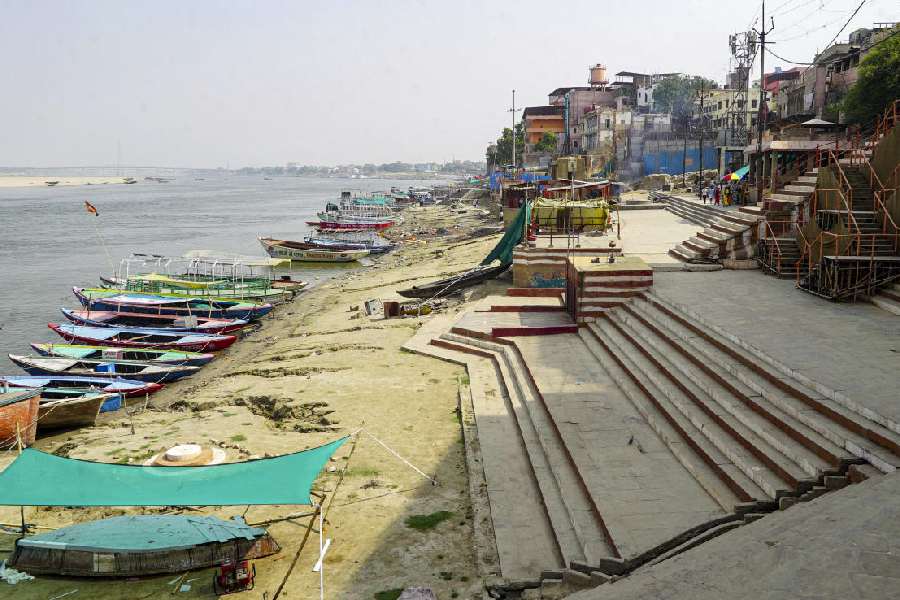
| Snippet from the Sonepur cattle fair. Picture by Deepak Kumar |
Sonepur (Bihar), Nov. 8: It was easier to spot a tourist, either Indian or otherwise, and harder to find cattle and exotic breeds of animals in Asia’s largest animal fair.
Elephants that used to be the prime attraction at Sonepur fair at one time (organisers boasted that there would be 3,000 elephants being sold off at a time), were nearly missing this year when this correspondent visited the congregation on Friday, the fair’s fifth day. So had the horses that would supposedly attract sellers and buyers from as far as Afghanistan and west Asia.
While 68 elephants were sold off at the fair last year, in 2009, eight could be spotted hidden away in the southern-most corner as an amusement for tourists.
But, authorities did not really mind the missing animals, as there were more than 60 international tourists soaking in the sights of “Incredible India”, from Switzerland, United States, France, Germany, Britain and Japan and bringing in the money.
“I like the Indian culture,” said Riesel, 30, laughing nervously while riding an elephant. Her husband, Vayhom, 32, too, was mesmerised by the sight of sadhus takig a dip in the confluence of the Ganga and the Gandak. The British couple had heard of the fair from their grandparents who lived in pre-independence India. “This is exactly how we imagined it to be,” Vayhom said, adding: “We will come again.”
To rope in more tourists, the state tourism department this year has built 30 cottages near the fair grounds with lavatory-cum-bathrooms (complete with bathtubs), steady supply of drinking water and living rooms. To give them a rural twist, the otherwise “modern” huts had their walls plastered with cow-dung and decorated with Madhubani paintings.
Sarabjit Singh, a Sonepur farmer, who still owns a horse, tried to explain the reasons behind the disappearance of animals. His explanation: stricter conservation laws and changing lifestyle. “Villagers no longer need to keep oxen or horses to till the land or travel, tractors do the job better. Number of cows and buffaloes, too, has gone down. Farmers prefer machines to cattle,” he said. He is right.
After the Union government declared elephants as “scheduled” in 2003, banning its trade in fairs, Sonepur fair registered a sharp decline in elephant sale. Nowadays, an occasional elephant is brought in to amuse locals and tourists. Aslo, cars and jeeps have replaced horses that used to be a Bihar landowners’ prime vehicle in the past.
Lalbabu Pandey, a visitor from Motihari, had an interesting angle to add. He blamed the fair’s dwindling cattle population on Lalu Prasad. Lalu, who adored his cattle, used to bring horses and cattle both to the fair. In fact, the former CM”s horse won a race in 2003 attracting media and people’s attention and starting a trend of horse breeding among the politicians.
“The more urbane Nitishji does not enjoy cattle and horses,” rued Pandey.
Senior manager of the state tourism corporation Rayees Azam and manager of tour and travels Gajendra Singh do not have the time to discuss the “old glory” as they are far too busy. “We are happy to receive over 60 foreign tourists. We have worked hard to keep the original character of the fair alive,” said Gajendra Singh.
Records state that Mauryan king Chandragupta bought elephants for battle from Sonepur fair. Myths state that Vishnu saved an elephant from the jaws of a crocodile on the confluence of the Ganga and the Gandak.
This year, as cattle, horses and elephants disappeared, dogs became the biggest trend. “Dogs are fetching Rs 2,200 to Rs 70,000 depending on their breed,” said Mohammad Sheru, a trader who brought over 20 labradors and German shepherds to the fair.
“The so-called middle-class can’t keep a cow in their tiny flat, but can somehow keep a dog. That gives them a reason to visit the fair and keep it running,” said a Patna-based doctor. Perhaps, this compromise is the best way to keep pockets safe and traditions alive.