Monday, 29 June 2026
Monday, 29 June 2026
Monday, 29 June 2026
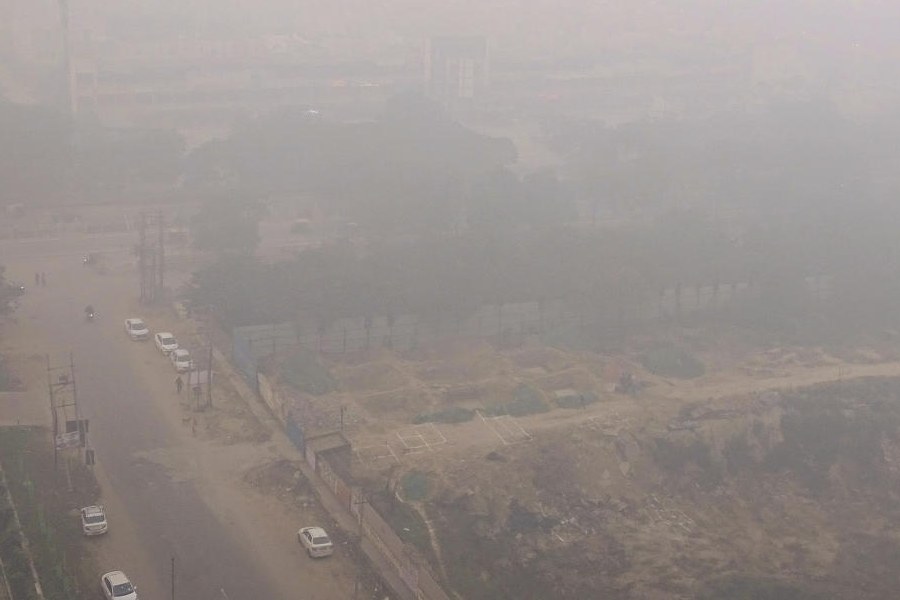
Nearly one billion people living across the Indo-Gangetic Plains (IGP) and Himalayan Foothills (HF) are exposed to unhealthy air, leading to around one million premature deaths every year and economic losses estimated at close to 10 per cent of the region’s GDP annually, according to a World Bank report.
Titled A Breath of Change: Solutions for Cleaner Air in the Indo-Gangetic Plains and Himalayan Foothills, the report says a limited set of coordinated actions across sectors and jurisdictions could substantially reduce air pollution, improve public health, and support stronger economic growth.
The IGP-HF region spans parts of Bangladesh, Bhutan, India, Nepal, and Pakistan and constitutes one of the world’s most polluted air basins.
Annual average PM₂.₅ levels in the region are seven to 20 times higher than World Health Organisation guidelines, with severe consequences for human health and economic outcomes.
Air pollution in the region stems mainly from five sources, according to the report.
These include household use of solid fuels for cooking and heating, inefficient industrial burning of fossil fuels and biomass without appropriate filtration, emissions from inefficient internal combustion vehicles, agricultural practices such as crop residue burning and poor fertiliser and manure management, and the burning of household and commercial waste.
Exposure to high PM₂.₅ levels affects every major organ system, causing both short and long-term damage.
The report linked elevated particulate pollution to negative impacts on child development, cognition, learning outcomes, and broader public health, with deeper consequences for poorer and more exposed populations.
The study stressed that no single sector can resolve the crisis. It identifies sector-specific mitigation options including cleaner cooking fuels, industrial technology upgrades, stricter vehicle and fuel standards, improved agricultural residue management, and stronger waste control, while underscoring the need for enabling policies, financing, and institutional support to scale these interventions.
The report highlighted several solutions that can be readily adopted and scaled up.
These include electric cooking, electrification and modernisation of industrial boilers, furnaces, kilns and thermal power plants, expansion of non-motorised and electric transport systems alongside improvements in fuel quality, improved crop residue and livestock waste management, and better waste collection, segregation, recycling, and disposal.
Clean-air solutions are grouped into three mutually reinforcing areas.
The first focused on emission abatement at source in cooking, industry, transport, agriculture, and waste management.
The second emphasised protection measures to strengthen health and education systems, ensuring children and vulnerable communities are safeguarded during the transition to cleaner air.
The third highlighted the need for strong institutions supported by regulatory frameworks, market-based instruments, and regional coordination to sustain long-term, multi-sector and multi-jurisdictional progress.
“This report shows that solutions are within reach and offers a practical roadmap for policy and decision makers to implement coordinated, feasible, and evidence-based solutions at scale,” said Martin Philipp Heger, senior environmental economist at the World Bank.
“There are strong financial and economic rationales for South Asian enterprises, households, and farmers to adopt cleaner technologies and practices, and for governments to support them,” he added.
To help countries translate recommendations into action, the report introduces the “Four I’s”.
These include information to provide reliable data for planning and accountability, incentives to encourage behavioural and investment shifts towards cleaner options, institutions to coordinate action and ensure compliance, and infrastructure to support clean energy, transport, waste systems, and modern industrial operations.
“Achieving cleaner air will require continued collaboration, sustained financing and strong implementation at local, national and regional levels,” said Ann Jeannette Glauber, World Bank practice manager for environment, South Asia.
“By acting together, governments can follow this pathway to cut pollution, save millions of lives and deliver cleaner air for all,” she said.
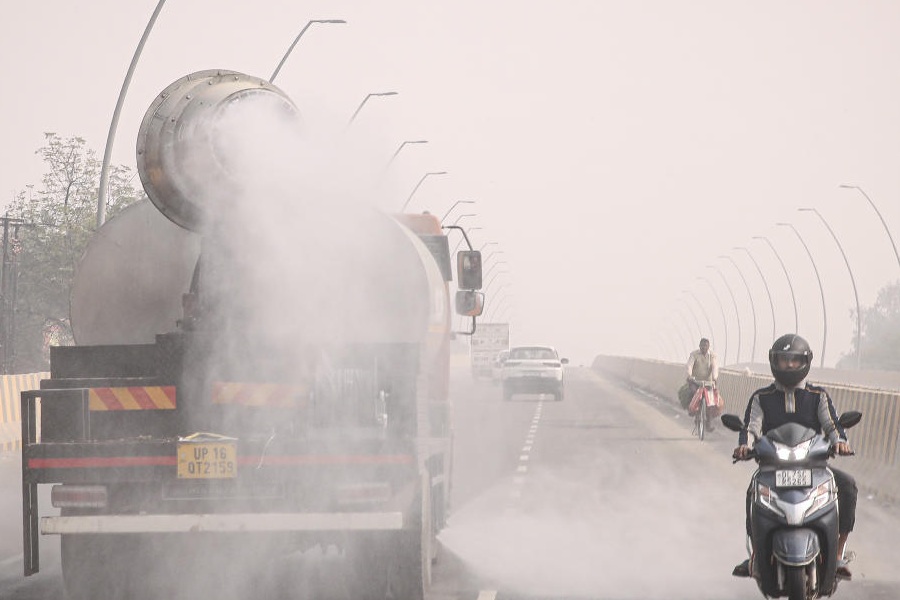
With toxic air pollution continuing to affect the National Capital Region, the report highlighted a portfolio of interventions aimed at tackling the crisis across the wider IGP and HF.
It sets out a road map for reducing annual average PM₂.₅ concentrations below 35 µg/m³ by 2035, a target called ‘35 by 35’, while laying the foundation for cleaner air.
“International experience shows that rapid and sustained improvements can be achieved when governments commit to ambitious targets and back them with action,” the report said.
It pointed to China’s Jing-Jin-Ji region, comprising Beijing, Tianjin, and Hebei, where PM₂.₅ concentrations were cut by more than 30 per cent in just five years through strong multi-sectoral action and enforcement, while Beijing reduced air pollution by half over a decade.
Mexico City, once among the world’s most polluted cities, also succeeded in almost halving air pollution by adopting an airshed governance approach, transforming its transport system, tightening vehicle standards, and relocating heavy industry.
The report underlined that air flows freely across administrative and national borders, making coordinated regional action essential.
In many jurisdictions, more than half of ambient PM₂.₅ concentrations originate outside local boundaries, carried by regional pollutants.
Because a significant portion of pollution crosses borders and airsheds extend across countries, the report argued for coordinated regional frameworks with shared targets such as reducing annual PM₂.₅ to 35 µg/m³ by 2035, harmonised data systems, joint governance, and financing mechanisms to achieve lasting improvements in air quality across South Asia.