Tuesday, 26 May 2026
Tuesday, 26 May 2026
Tuesday, 26 May 2026
Fighting has reignited between Thailand and Cambodia in multiple areas at their disputed border, with both sides blaming the other and Thailand carrying out air strikes on what it said were Cambodian military installations. The latest flare-up will be a major test of a ceasefire brokered by U.S. President Donald Trump in July.
What is the current situation?
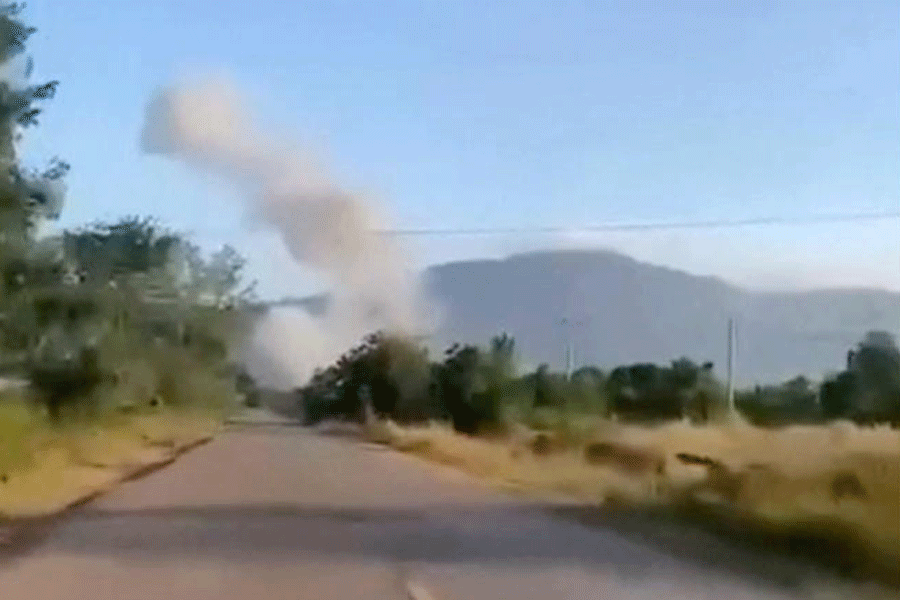
Conflict erupted before dawn on Monday, with clashes in five border locations, according to Thailand's army. Cambodia's defence ministry said its forces came under attack but had not retaliated and were respecting the ceasefire after "numerous provocative actions" by Thailand.
Thailand's army also said its troops were attacked and accused Cambodia of firing BM-21 truck-mounted rockets towards civilian areas. It said Cambodian forces have used grenade launchers, artillery and drones to drop explosives on Thai bases.
The Thai air force said its fighter jets launched air strikes early in the morning targeting military installations, based on operational assessments that showed Cambodia had mobilised heavy weaponry and repositioned combat units.
The air strikes were intended as a deterrent to prevent an escalation and to reduce Cambodia's military capabilities, the Thai air force said.
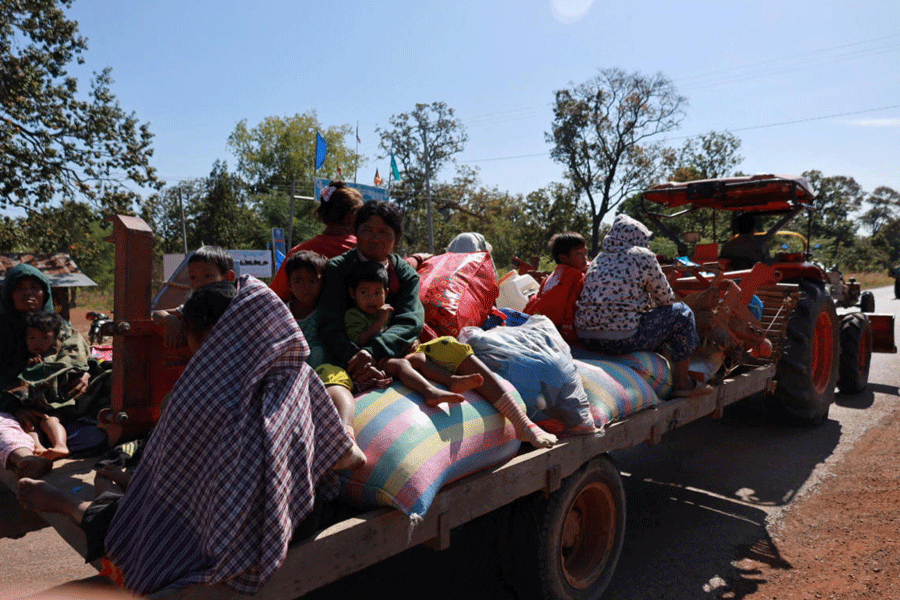
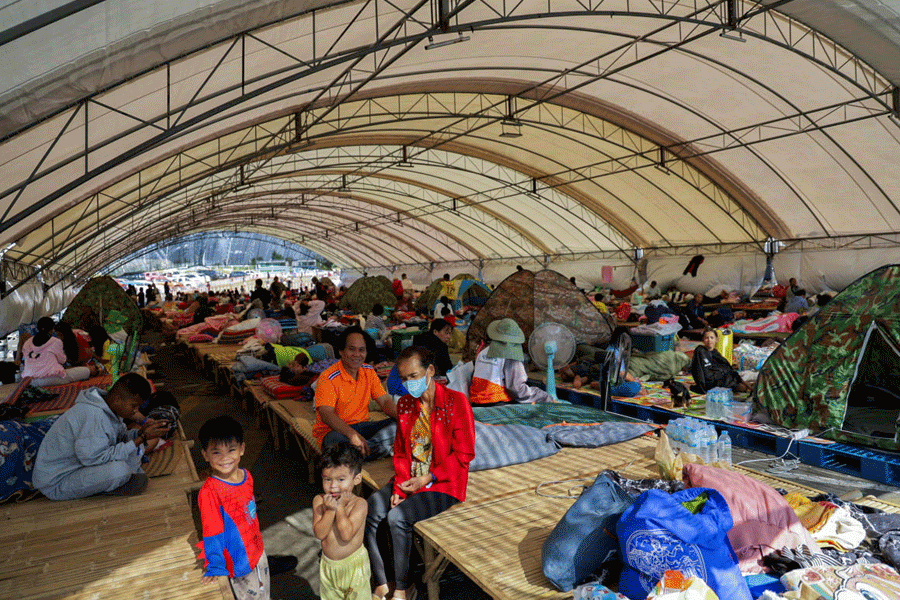
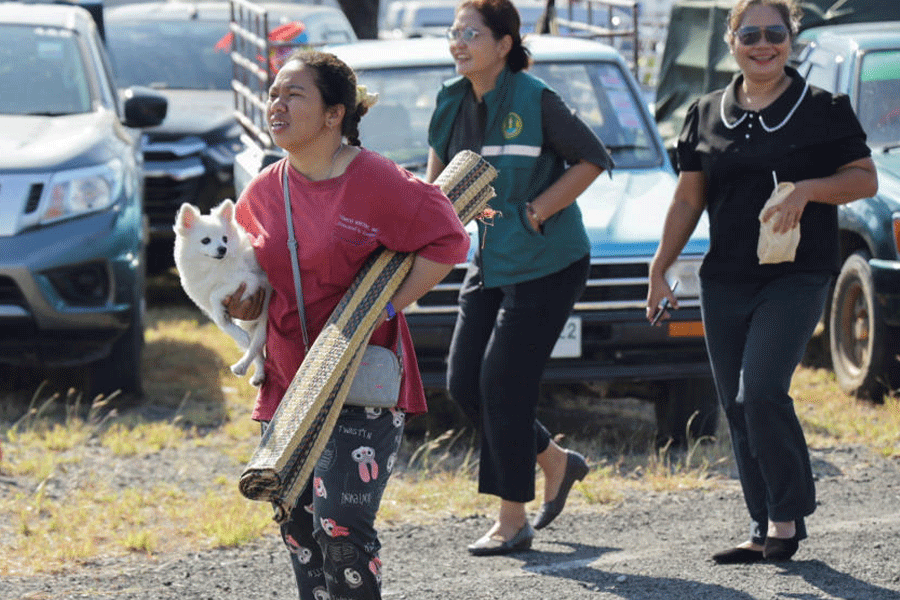
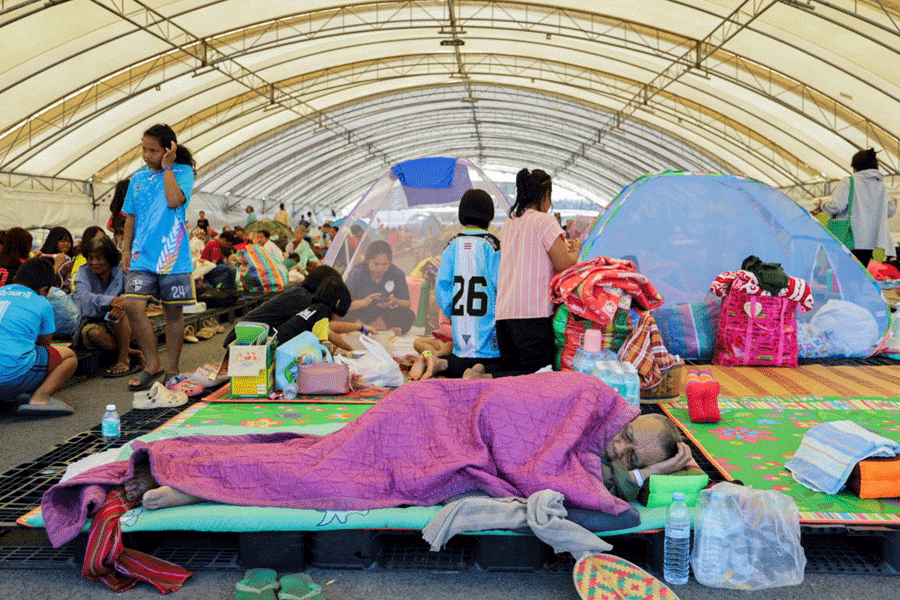
Thailand said 380,000 people were being moved to shelters and Cambodian authorities said 1,157 families were being relocated from Oddar Meanchey province.
Malaysia's Prime Minister Anwar Ibrahim, who helped broker the initial ceasefire, has urged restraint to prevent the ceasefire from unravelling.
What led up to the fighting?
The renewed fighting is the most serious since a five-day exchange of rockets and heavy artillery in July that marked their worst fighting in recent history. At least 48 people were killed and 300,000 displaced before Trump intervened to bring about a truce. It is not immediately clear what sparked the latest unrest, but tensions have simmered since a Thai soldier was wounded by a landmine on November 10, prompting Thailand to suspend de-escalation measures agreed in an enhanced ceasefire deal agreed a few weeks earlier in Malaysia in Trump's presence.
Thailand says the landmine was among several that were newly laid by Cambodia and that it would not resume the de-escalation measures until Cambodia apologises. Cambodia has repeatedly rejected the allegations. Trump, who Cambodia nominated for the Nobel Peace Prize, had made calls to leaders of both countries last month urging them to stick to the ceasefire.
How do the two countries compare militarily?
Thailand has a large and well-funded military that dwarfs that of Cambodia, with triple the active armed forces personnel and a 2024 defence budget allocation that was four times bigger than its neighbour.
Cambodia's army has 75,000 soldiers, more than 200 battle tanks and around 480 pieces of artillery, compared to the Thai army's 245,000 personnel, around 400 tanks, more than 1,200 armoured personnel carriers and 2,600 artillery weapons.
Thailand's air force has nearly 40 fighter jets and dozens of helicopters, while Cambodia has 16 multi-role helicopters but no fighter aircraft.
Where does the dispute originate?
Thailand and Cambodia have for more than a century contested sovereignty at various undemarcated points along their 817 km (508 miles) land border, which was first mapped by France in 1907 when Cambodia was its colony.
That map, which Thailand later contested, was based on an agreement the border be demarcated along the natural watershed line between the two countries. In 2000, they agreed to establish a commission to peacefully address overlapping claims, but little progress has been made. Claims over ownership of historical sites have raised nationalist tension, notably in 2003 when rioters torched the Thai embassy and Thai businesses in Phnom Penh over an alleged remark by a Thai celebrity questioning jurisdiction over Cambodia's World Heritage-listed Angkor Wat temple. The 11th century Hindu temple Preah Vihear, or Khao Phra Viharn in Thailand, has been central to the dispute, with both countries claiming historical ownership.
The International Court of Justice awarded the temple to Cambodia in 1962, but Thailand continued to lay claim to the surrounding land. Tension escalated in 2008 after Cambodia tried to list Preah Vihear as a UNESCO World Heritage site, leading to skirmishes and at least a dozen deaths, including during a weeklong artillery exchange in 2011.
What's behind this year's troubles?
Nationalist sentiments were stirred in Thailand in 2024 when conservatives questioned a government plan to negotiate with Cambodia to jointly explore offshore energy resources, warning that could risk Thailand losing island territory. In May, a Cambodian soldier was killed by Thai forces during a brief skirmish, prompting both countries to increase troops at the border. Around the same time, Cambodia referred disputes over temples in four areas to the ICJ. The border tensions led to the fall of Thai premier Paetongtarn Shinawatra, who was removed from office by a court in August after her attempt to de-escalate the situation spectacularly backfired when a sensitive phone call with influential former Cambodian Prime Minister Hun Sen was leaked, prompting public fury.