Thursday, 18 June 2026
Thursday, 18 June 2026
Thursday, 18 June 2026
Rabies Raita
What began as a routine funeral meal in a quiet Uttar Pradesh village turned into a full-blown health crisis this week.
Nearly 200 residents of Piprauli in Budaun lined up for anti-rabies shots after realising that the raita they had eaten was made from milk of a buffalo that later died of suspected rabies.
The funeral took place on December 23, with raita served as part of the meal.
Days later, news spread that the buffalo used for the milk had earlier been bitten by a dog and showed rabies symptoms before dying on December 26.
That detail was enough to send panic rippling through the village faster than any rumour.
Not taking any chances, villagers rushed to the Ujhani community health centre, where doctors decided to vaccinate everyone who had even the slightest doubt.
Health officials clarified that boiling milk usually eliminates any risk, but opted for vaccines anyway, sticking to the idea that it is better to be safe than sorry.
Medical teams kept health centres open over the weekend, vaccines were administered without delay, and authorities worked overtime to ensure fear did not spiral into misinformation.
For the villagers, what was meant to be a simple farewell meal became an unexpected reminder that even raita can come with a medical advisory.
A thief and a crisis of conscience
It was not a smash-and-grab. It was more a pause-pray-proceed situation.
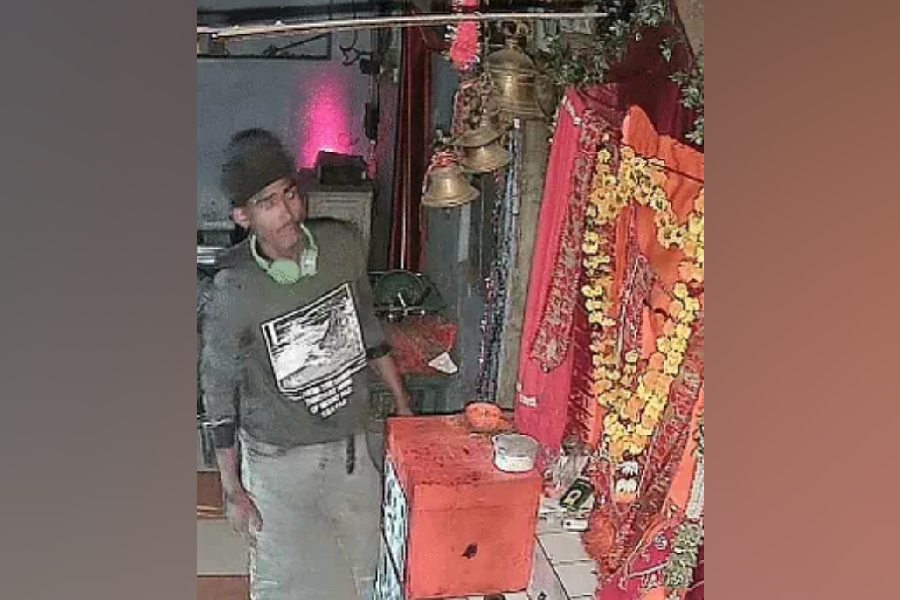
CCTV cameras at the ancient Sheetla Mata (Shitla Devi) Temple in Lucknow’s Cantonment Sadar area captured a theft that unfolded with hesitation, sweat, and repeated glances at the deity, suggesting that the accused may have been less confident about stealing than about being seen stealing by God.
The incident occurred at the Mata Shitla Devi Temple on Nehru Road. ACP Cantt Abhay Pratap Mall said the theft came to light on Friday morning when the priest arrived for daily rituals and found the donation box missing.
The priest then checked the CCTV cameras and submitted the footage along with a written complaint at the Cantt Police Station.
The footage shows a young man entering the temple barefoot, indicating that he had left his shoes outside before stepping in. He walks straight to the donation box, but then stops.
For about 15 seconds, he stands there, looking at the idol, wiping sweat from his face, and appearing unsure about his next move.
According to the police, the youth places his hand on the donation box but does not lift it immediately. He looks around, pauses again, and seems to gather courage. Before lifting the box, the accused carefully removes the items kept on top of it.
He first moves the vermilion bowl aside. Then, with noticeable caution, he places the burning lamp down without letting it go out. The matchbox follows. The red cloth is removed next.
Only after clearing the area does he attempt to lift the donation box, struggles briefly, and finally picks it up. The temple priest, Pandit Pramod Kumar Pandey, said the hesitation was visible.
“He held the donation box for 15 seconds but did not lift it,” he said. During this time, the youth wiped his sweat and repeatedly looked towards Hanuman ji.
Even while leaving, the CCTV footage shows the thief stepping backwards for a few steps, as if avoiding turning his back to the deity.
Before exiting, he turns again and takes one last look at Hanuman ji, apparently making sure no divine objection had been raised. A complaint regarding the theft has been filed at the Cantonment Police Station and the CCTV footage has been submitted.
Station In-charge Jasvir Kaur said, “We have received the complaint.” She added, “Based on the CCTV footage, we are searching for the person who stole the donation box. In the video footage, the accused appears to be a minor.”
Police officials said efforts are underway to identify and trace the accused.
Rats eat 200 kg ganja, court eats the case
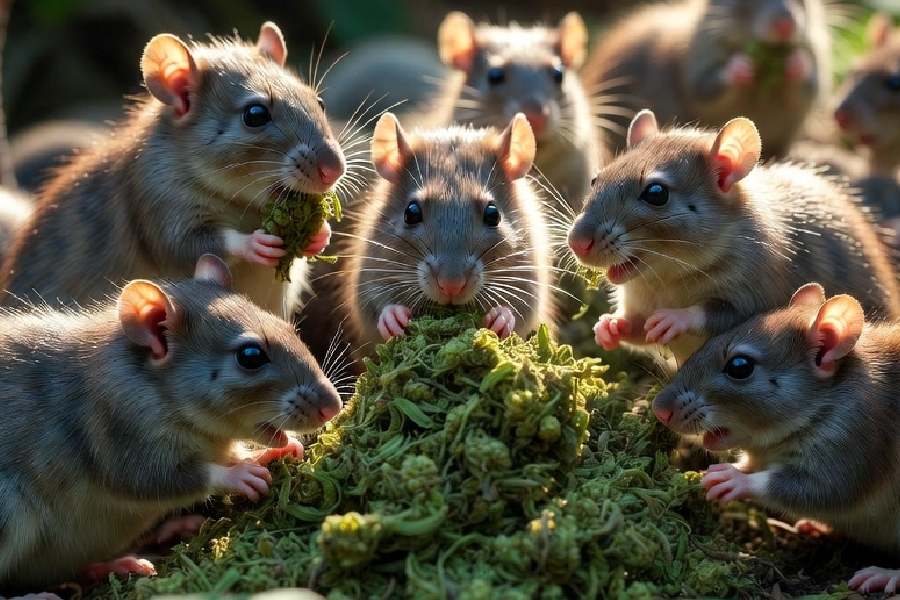
In Jharkhand, the war on drugs appears to have met an unexpected ally: rats. Not snitches, not informers, not surveillance. Just rodents with an extraordinary appetite.
Three years after police claimed to have seized 200 kg of ganja from a Bolero on a national highway, the case finally reached trial. That was when the authorities revealed a crucial development. The contraband, safely stored in the police malkhana, had allegedly been eaten by rats. All 200 kilos of it.
The explanation did not impress the special NDPS court in Ranchi. Instead, it raised questions about everything from the seizure itself to how evidence was handled, stored, sealed and remembered.
The court noted the contradictions. Timings did not match, locations shifted, witnesses disagreed, the vehicle had no engine or chassis number, and no independent public witness had been examined despite the alleged bust happening on a busy highway.
The rat theory turned out to be the final straw. If rodents could wipe out 170 packets of ganja without leaving a trace, the court reasoned, then perhaps the case itself deserved to be vanished.
The accused was acquitted. The ganja was gone. The rats remain at large.
New Year’s 12 grapes chaos
India got a taste of Spanish luck this New Year, and apparently, everyone wanted it in green.
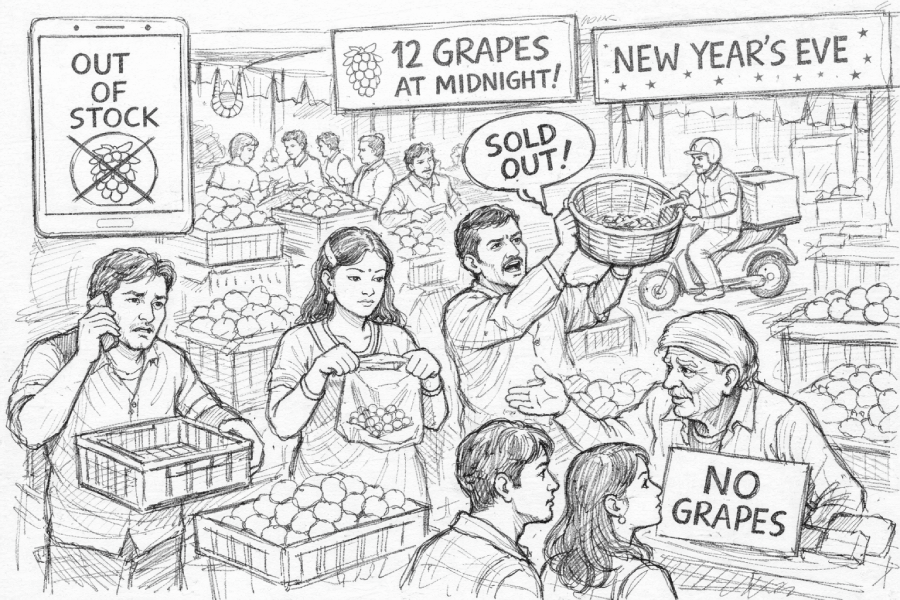
The viral craze for the Spanish tradition of eating 12 grapes at midnight, one for each month to secure good fortune, led to a full-blown grape shortage across local markets and delivery apps.
A shopkeeper’s video, which has now racked up over 2.6 million views, captured the chaos.
He explained that hundreds of customers came looking for green grapes, the only kind “allowed” for the ritual.
By the time he spoke to a group of hopeful buyers, he had less than 10 per cent of stock left and estimates that 200–300 people left empty-handed.
“After 12 am, eating 12 grapes under the table can bring good luck,” he told the girls.
Social media users shared their struggles in solidarity. One wrote that their father had to comb the entire market to find a few, while another gave up on green grapes entirely and “settled” for black.
Someone else pitched a business idea: pre-pack 12 grapes as “New Year Grapes” at a premium, because scarcity apparently makes everything lucky.
For one night, India proved it will travel halfway across the world for superstition, and that New Year’s Eve without 12 green grapes is simply unacceptable.
Scan, beep, deport? ‘Nationality detector’ turns into stand-up comedy
Ghaziabad police did not intend to reinvent immigration checks, but a December 23 video suggests otherwise. In a clip that has since gone viral, a Kaushambi police station officer is seen pressing a smartphone against a young man’s back in a slum cluster near Bhovapur and announcing the results of what appears to be India’s first spinal citizenship scan.
Station House Officer Ajay Sharma, treating his phone like a handheld miracle device, declares, “The machine is showing this man is a Bangladeshi.” The young man and his family insist they are residents of Araria, Bihar, and even flash Aadhaar cards.
Witnesses said Sharma arrived with police and RAF personnel for what was described as a verification drive in temporary settlements. When documents were produced, the officer reportedly brushed them aside and returned to his trusted “machine.”
At one point, he is heard saying, “Are you a Bangladeshi? Put the machine. The machine shows that you are, doesn’t it?” The man replies that he is from Bihar, clearly unfamiliar with this advanced technology.
As laughter snowballed, the Uttar Pradesh Police stepped in with a clarification on X: “A viral video that came to notice through social media has been investigated… the Station House Officer of Kaushambi has been given a strict warning that such behavior should not recur in the future; all facts are being investigated, and further action is being taken.”
Assistant Commissioner of Police Abhishek Srivastava reiterated that the exercise was part of routine “area domination” and not meant to verify nationality. The police explained these drills involve patrolling and checks “to establish authority and ensure a peaceful environment.”
YouTube’s biggest AI star
If you thought YouTube success required talent, storytelling or at least a plot, a new global study suggests otherwise.
According to a report by video-editing platform Kapwing, the world’s most-viewed YouTube channel is made entirely using artificial intelligence and is based in India.
The channel, Bandar Apna Dost, earns an estimated $4.25 million a year, roughly Rs 38 crore, without the burden of dialogue, logic or human creativity.
The channel features short animated clips starring an anthropomorphic rhesus monkey and a muscular, Hulk-like character. What do they do? Very little that can be explained.
The videos depend on exaggerated action, random humour and situations that make sense only if you stop asking questions.
According to the report, the channel has crossed 2.07 billion views, has more than 2.76 million subscribers and brings in an estimated $4,251,500 every year.
Rohini Lakshane, a researcher on technology and digital rights, told The Guardian, “Bandar Apna Dost's popularity most likely stems from its absurdity, its hyper-masculine tropes and the fact that it lacks a plot, which makes it accessible to new viewers.”
The trend is not limited to India. Spain leads in subscriber numbers, with trending AI slop channels there having a combined 20.22 million subscribers. In South Korea, such channels have collected 8.45 billion views. In the US, Cuentos Facinantes tops the subscriber list among AI-only channels with 5.95 million followers.
Still, Bandar Apna Dost remains the undisputed champion.
No script, no story, no humans on screen, and Rs 38 crore a year.