
Some incidents fade into history. Others leave scars on the collective memory of a nation. Raakh belongs firmly in the latter category.
Directed by Prosit Roy, the eight-episode investigative thriller draws inspiration from the infamous 1978 Ranga-Billa case, one of India's most horrifying criminal incidents.
The Prime Video series opens on an ordinary rainy afternoon. Teenage siblings Suman (Divya Sharma) and Sahil (Vivaan Sharma) are trying to get to a radio station where Suman is scheduled to sing. They accept a lift from two strangers and never return home.
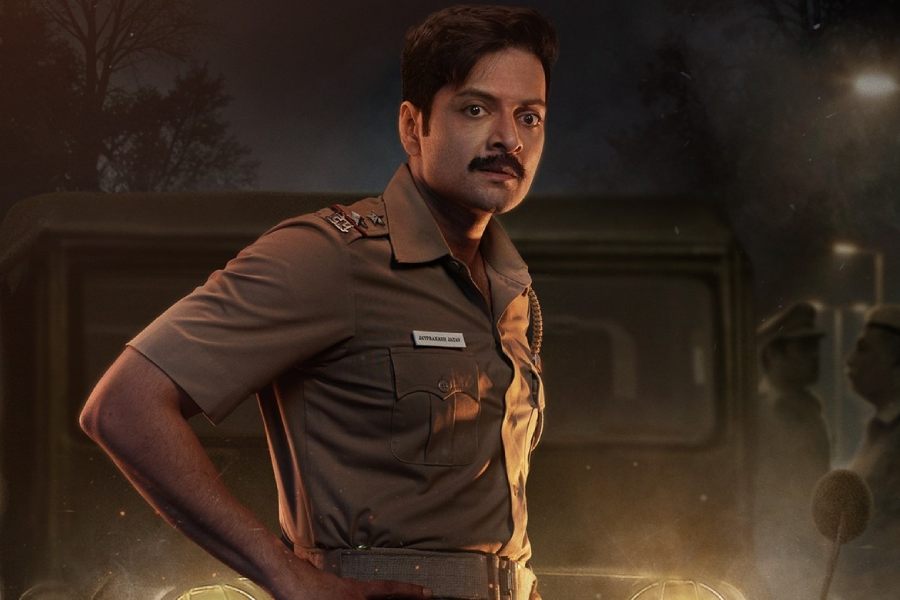
What follows is an exhaustive investigation led by sub-inspector Jayprakash (Ali Fazal), a young officer desperate to prove his mettle within a system that often underestimates him. As the search intensifies, the case transforms from a missing persons investigation into a brutal murder inquiry and eventually a nationwide manhunt.
One of Raakh's greatest strengths lies in its refusal to treat the crime as just another procedural puzzle. Prosit Roy understands that the horror of this story is not limited to what happened to the victims. It lies in what the crime revealed about human nature.
The series constantly asks difficult questions about morality, empathy and the darkness lurking beneath the surface of a civilised society.
Roy recreates 1970s Delhi with authenticity. This is an era before mobile phones, surveillance cameras and digital databases. Investigations depend on witness statements, handwritten records, radio alerts, sketches and instinct. The procedural details become fascinating because they highlight just how difficult it was to hunt criminals in an era when technology offered little assistance.
The show's narrative structure is particularly effective. Roy divides the story into chapters, each carrying thematic titles that reflect the evolving nature of the investigation. Simultaneously, the series tracks both the police pursuit and the movements of the killers, allowing the audience to witness the inevitable collision between hunter and hunted.
Ali Fazal is excellent as Jayprakash. He brings emotional vulnerability to a character who could easily have become a conventional heroic cop. Jayprakash is ambitious but insecure, determined yet frustrated. He is fighting not only the criminals but also institutional prejudice and personal doubts. Fazal captures these contradictions beautifully.
Equally impressive is Sonali Bendre as Roma, the mother of the missing children. Her performance is among the most heartbreaking aspects of Raakh. She conveys grief through silence, denial and emotional paralysis. The pain behind her vacant expressions often says more than pages of dialogue could.
Aamir Bashir delivers strong work as her husband Ashok. His portrayal of a father confronting unimaginable loss provides some of the series' most devastating moments. Together, Bendre and Bashir ground the story in human tragedy.
The performances of Akash Makhija and Ramandeep Yadav as Babu and Rajjo are deeply unsettling. Makhija, in particular, is terrifying as the more psychologically damaged of the two criminals. The show spends considerable time exploring their backgrounds, attempting to understand the architecture of their violence rather than presenting them as one-dimensional monsters.
Some sections devoted to the killers occasionally feel repetitive, and there are moments when the series seems overly fascinated by their depravity. Yet these sequences also underline the central theme: evil rarely appears out of nowhere. It grows in neglected corners of society before erupting into catastrophe.
If Raakh has a weakness, it is its tendency to over-explain. Some metaphors are verbalised when they would have been more powerful left unsaid. Certain dialogues feel overly conscious of the historical significance of the events unfolding around them.
What ultimately makes Raakh effective is its refusal to offer easy comfort. Even when the investigation reaches its conclusion and the perpetrators are brought to account, the sense of loss remains overwhelming.
Raakh is difficult viewing, and intentionally so. Long after the final episode ends, its questions about violence, fear and humanity linger like an open wound.