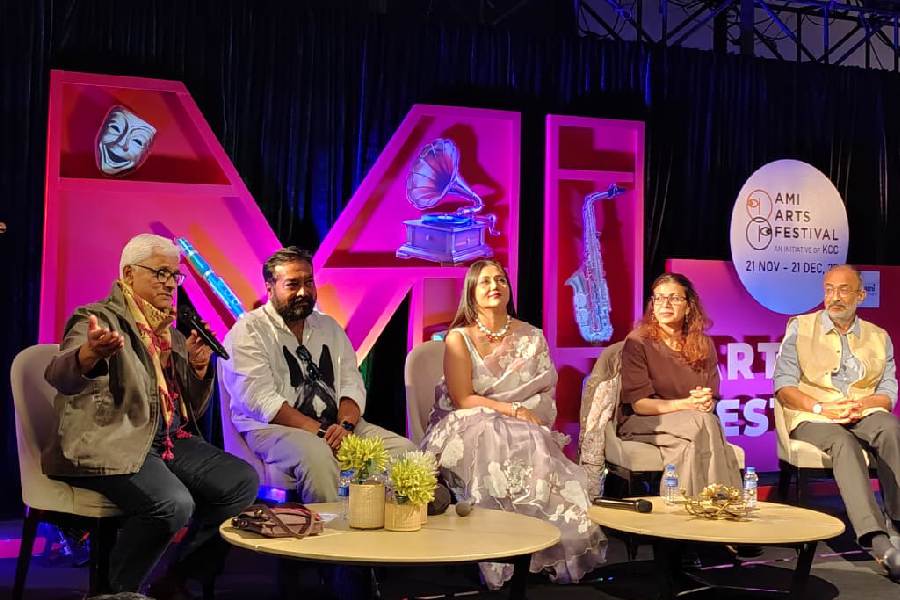
Many Hindi films are engineered to provoke outrage in a bid to spark debates for publicity, filmmaker Anurag Kashyap said in Kolkata on Friday.
“Films have become rage-bait,” he said. “They know the world gets divided on social media… the noise becomes louder and the film becomes bigger,” Kashyap added at a panel discussion held at the Kolkata Centre for Creativity (KCC) as part of the AMI Art Festival 2025.
Titled ‘Challenges Faced by Contemporary Indian Cinema’, the session was also attended by filmmaker Alankrita Srivastava, actress Swastika Mukherjee, and screenwriter Anjum Rajabali, with actor Sudhanva Deshpande moderating.
Kashyap, known for films like Gangs of Wasseypur, argued that corporate consolidation has weakened the ecosystem, with many stakeholders only involved in the process for monetary gains.
He contrasted this with southern industries where individual producers and theatre owners still shape decisions. “The audience keeps track of their filmmakers… It’s the audience that is sustaining cinema in the South and dumping films in the North,” he said.
Over nearly two hours, the panel talked about how the film industry is dealing with censorship, corporatisation, escalating production costs, shifting audience behaviour and the steady dilution of creative autonomy.
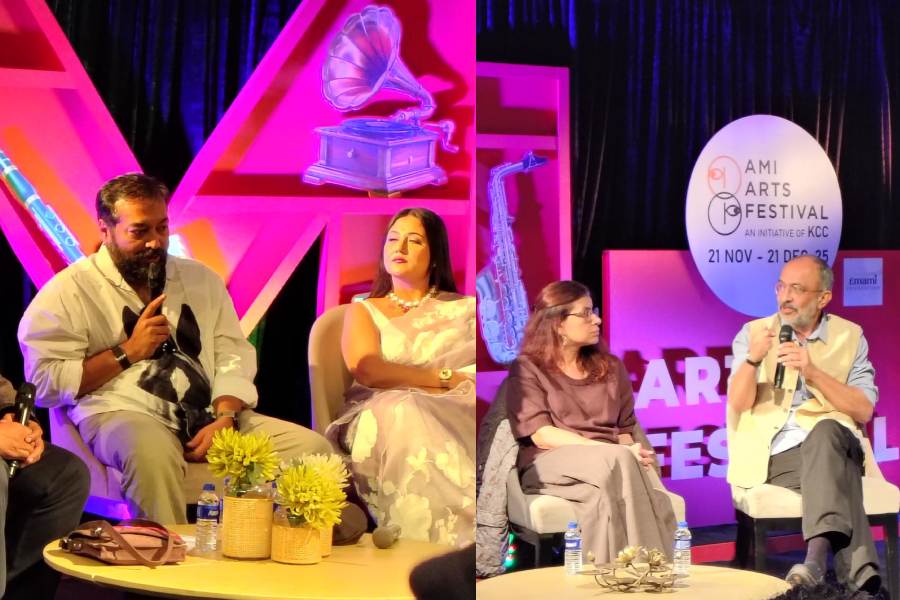
Sourced by correspondent
Alankrita Srivastava, who gained global fame as a director for her film Lipstick Under My Burkha, said misogyny in mainstream cinema has not arrived suddenly but is the “logical growth” of decades of male-dominated filmmaking, where money, marketing and creative authority were concentrated around a certain kind of male hero. She argued that audiences have been “trained” over generations to pay only for a narrow spectrum of films.
“If you don’t critique patriarchal storytelling for decades, this is where you land,” she said. “The problem is systemic, not momentary.”
Swastika Mukherjee recounted repeated censor board pushback on films featuring women making autonomous choices. “They wanted us to reshoot the climax… because the mother was accepting of her daughter being with a woman. They said, ‘How can the mother be okay with this?’” she said.
She also described being approached for what she later identified as a propaganda project. “I understood that not one paragraph or one character was written in a way which is the truth… It wasn’t even a projected lie, it was love,” she said, noting she declined the role despite the money offered.
Rajabali described screenwriters as the “most vulnerable group” in the current climate. He pointed to contracts requiring writers to indemnify producers against political backlash: “You can’t think of anything more absurd… The writer has to affirm that if any objection arises, I indemnify the producer. If the loss is Rs 30 crore, am I supposed to pay Rs 30 crore?”
He said such clauses create fear: “The worst thing a society can do is force the artist to self-censor. When that begins, art starts dying.”
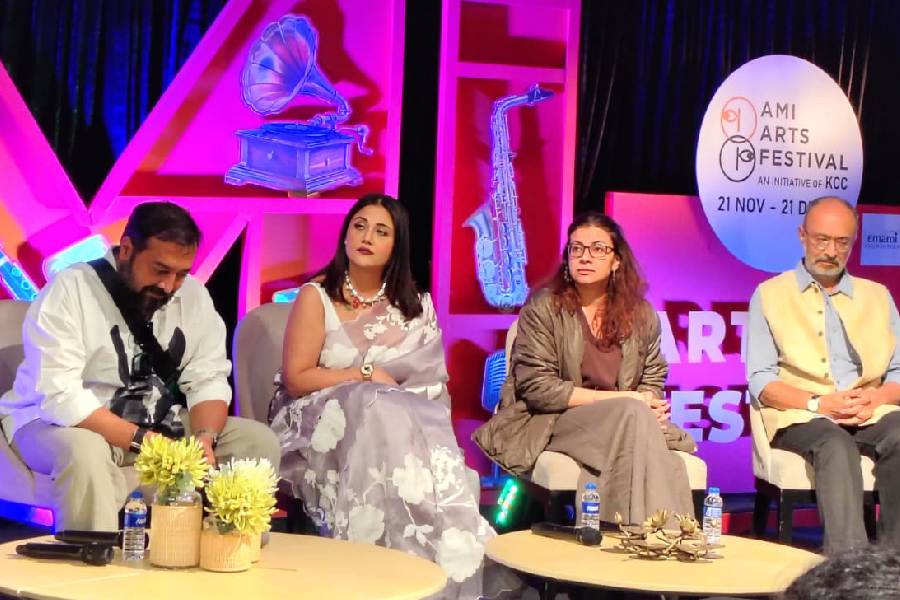
Sourced by correspondent
The panel also talked about rising costs of theatrical viewing. “The cost of a box of popcorn is more than a Bengali film ticket,” Mukherjee said. Kashyap added: “In Bombay or Delhi, to watch a film is luxury for a lot of people.”
Despite the grim situation, the speakers emphasised emerging filmmakers as the industry’s source of renewal. Srivastava said, “Change always starts on the periphery before it moves into a central space.”
Kashyap praised young directors across regions: “These filmmakers from places where there’s no industry are making very local films with local people… That’s where the hope is.”
Rajabali agreed, citing a surge in new writers: “The urge to tell your stories is indomitable… The number of first-timers keeps increasing every year.”