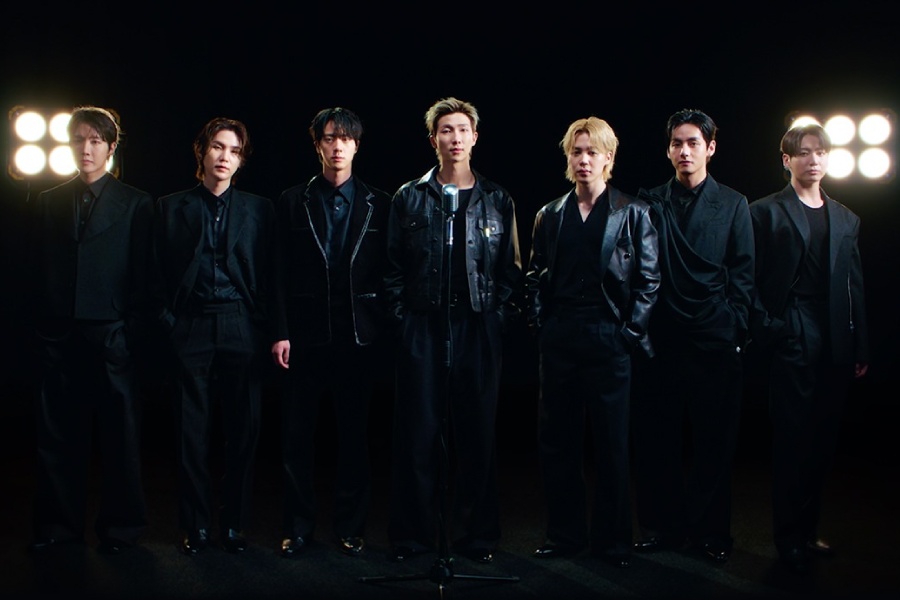
When Jungkook, the youngest member of BTS, paused his impromptu solo performance in Times Square, New York, in 2023, quoting his song line to his fans: “please don’t change”, he perhaps knew — that ARMYs are ready to wait for years, as long as the band returns stronger than before.
On Friday, BTS dropped their first music video for the song Swim from the album Arirang, marking their much-anticipated comeback as a group since 2022.
From the South Korean government arranging extra security for their free March 21 concert at Seoul’s iconic Gwanghwamun Square to Mexico City’s president, Claudia Sheinbaum, requesting additional shows, the band returned with a bang.
BTS is a big deal. The group, which debuted in 2013 like any other rookie South Korean pop act, might not have known then that they were about to change the global music landscape.
From Asia to America, BTS paved the way, introduced the rich culture of Korea to the global domain, and adapted the Western individualistic vocal-driven approach that helped them evolve over the years.
Their earlier albums, like Skool Luv Affair or Dark & Wild, were characterised by a raw, hip-hop-focused sound, heavily influenced by ’90s hip-hop, school-age angst, and socially conscious lyrics. It clicked for them. They arrived in LA in 2014, as slightly ‘eccentric’ and ‘hella lit’.
Lugging the stardust and flashy criticism, they kept moving forward — making the way for South Korea, uplifting other K-pop acts, and eventually establishing the industry as a global powerhouse in just a few years.
But what has exactly changed from Boy With Luv to Arirang?
As a ‘beacon of pop sweetness,’ BTS has continually evolved through their music.
From the uplifting retro-pop vibes and vibrant visuals of Butter to the 1970s disco-pop flair of Dynamite — a subtle tribute to Michael Jackson — the band has consistently delivered messages of hope and positivity, which ARMYs embrace, driving countless streams across all platforms.
However, much removed from the vibrant, colourful undertones and high-energy music, Arirang arrives as an understated experiment — a soundtrack that rekindled the fire of the scrappy energy of their rookie years, but with firmness and grip, that is ready to take a risk but not put up a rigorous fight, questioning the institution, unlike Baepsae (2015).
Hooligan and Swim are tracks that truly celebrate the BTS spirit, reflecting the members’ journeys and experiences from their 20s to their 30s.
Composed by RM and Jungkook, respectively, these two tracks — though poles apart — somehow summed up what BTS has never refrained from speaking for the last 13 years: staying close by and always rooting for their fans.
Swim lingers quietly in your soul, like a lazy Saturday afternoon — effortless, unassuming, yet offering a gentle solace in the darker corners of your mind. Much to the surprise of fans, they will get to hear Suga offering his vocals instead of rapping for this track.
Hooligan, a featured B-side track, reflects the group’s time together, navigating the uncertainties of their journey. Its edgy, sonically experimental rap style is a nostalgic nod to their earlier music.
Surely, unlike Blackpink or Stray Kids, fans expect BTS to be the charioteers of South Korean heritage, with the members seen as deeply connected to their country as much as to the world. If they flinch or take an independent approach, the paths get rocky, for example, Permission to Dance (2021).
Arirang plays it safe. Tracks like Body to Body and No. 29 not only pay homage to South Korean culture and heritage but also borrow the album title from the centuries-old Korean folk song of the same name, representing resilience and longing.
But what about their individuality? Tracks like Into the Sun (composed by V), Merry Go Round and 2.0 offer the group a chance to save a room for them to play, paint and create a beautiful mess, even if no one acknowledges.
Indeed, Arirang marks a new beginning for BTS — a start built on their own confidence, not a borrowed success.