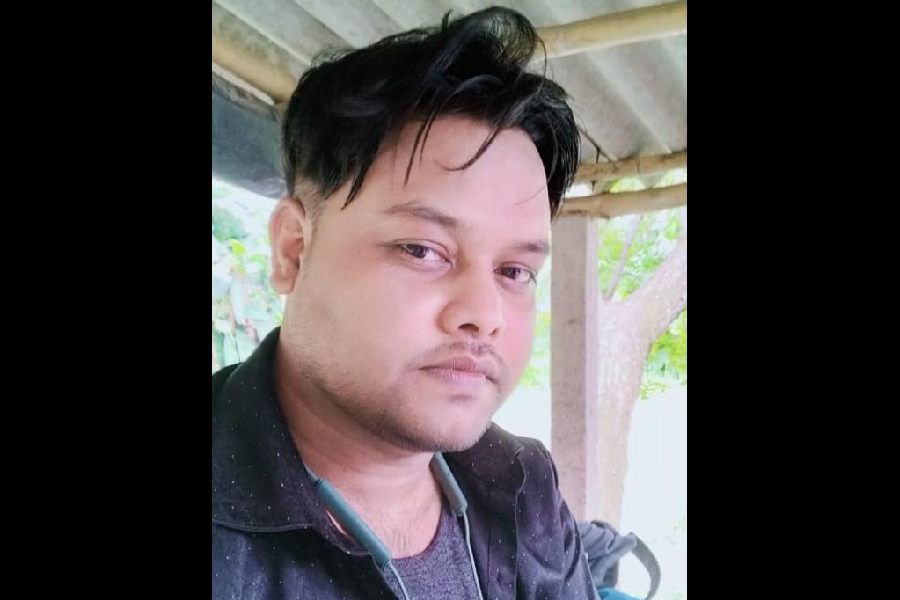
Saiful Sk had travelled more than 1,500km from his Maharashtra workplace, at a cost he could hardly afford, to reclaim his voting rights.
He was turned away from the gates of the appellate tribunals in Joka and told to wait for communication about his date of hearing to reach him.
The 33-year-old migrant worker does not know how many more days’ earnings he must miss waiting for that message, nor whether he can vote in his constituency of Kalna, East Burdwan, on April 29.
Saiful, a disenfranchised voter, works as a construction labourer in Parbhani in the Marathwada region of Maharashtra, around 490km from Mumbai. He arrived at his home in Uttar Goara, Kalna, on April 15.
On April 17 morning, he was at the gates of the SPM-NIWAS, a central government institute in Joka on Calcutta’s southwestern fringes that is hosting the tribunals that will decide the fate of voters removed from the rolls after “adjudication”. Joka is 1,590km from Parbhani.
Saiful was accompanied by his mother, Tonuja Bibi Seikh, and three sisters who, too, have been removed from the electoral rolls. None was allowed to enter.
Saiful and his family members were among the scores sent away by the central forces deployed at the gates. They returned home without any clarity on the status of their appeals.
If they are not cleared by the tribunals by April 27, they cannot vote in this election.
Saiful spent nearly ₹6,000 on his trip home. He earns about ₹500 a day in Parbhani, which means he has already lost more than ₹2,500.
That’s a lot of money for a family like his, which has an Antyodaya Anna Yojana card — the ration card for the “poorest of the poor”. But desperation to get their votes back has dwarfed, for now, the anxiety of financial loss.
“I have no clue why my name was removed. Mymother’s name was deleted because of a minor mismatch between the names printed on her voter and Aadhaarcards,” Saiful said.
“One says ‘Tonuja Bibi Seikh’ and the other, just ‘Tonuja Bibi’. We are not Bangladeshis; we are Indians. We never imagined that a minor mismatch could cause so much trouble for us.”
Saiful had taken a train on April 13 night from Nanded to Santragachhi. The ticket cost him ₹3,500. The actual fare was about a third of that, the rest was the “commission” charged by touts for the confirmed ticket he wanted at short notice.
The young man arrived at Santragachhi station late on April 14 night and spent ₹2,000 to hire a private car for the 92km journey home. It was a considerable sum for him.
“But I was desperate to reach home as soon as possible. The local politicians had said the hearing at the tribunals might happen any time,” Saiful said.
On April 17, Saiful left home at 7am with his mother and sisters. They took a toto to Kalna station and caught a train to Howrah, arriving there around 9.45am. They then boarded a bus.
“But there was some confusion and we got off at another place. We had to walk 40 minutes to reach the centre,” Saiful said.
“We had hoped for a chance to present our case to the judge and show our papers. But it was all in vain.”
Saiful’s mother cannot read or write. “My husband died several years ago. My daughters are now married. My son is the sole earner. His absence from work is draining whatever little savings we have,” Tonuja, 51, said.
“But we don’t have a choice. We can stay hungry for a few days but must get our voting rights back.”
Tonuja’s Antyodaya Anna Yojana card brings her 35kg of high-subsidy food grains a month.
This newspaper has reported how the SIR has been particularly harrowing for the hundreds of thousands of migrant workers from Bengal, who have had to make multiple trips from their workplaces to try and hold on to their voting rights.
Many, most of them Muslims, still remain deleted from the rolls, deepening their anxiety about being turned into “second-class citizens” in a polarised atmosphere where their citizenship status has come under politically and communally motivated questioning.
Bengali-speaking migrant workers have reported facing violence both from police and goons in several BJP-ruled states since last year. They have been branded “Bangladeshi infiltrators” beforebeing picked up for “questioning” or being attacked, and some have been pushed into Bangladesh without due legal process.
Saiful had not come home to fill in his enumeration form or attend the hearing after he was red-flagged for “logical discrepancy”. His mother filled in the form and attended the hearing on his behalf.
“The BLO told us not to worry. We have voter cards, Aadhaar, PAN cards and other documents. But when the names were still deleted, I had no option but to call my son back,” Tonuja said.
The family members had filed their appeals with the tribunals at the SDO office in Kalna.
Kalna votes on April 29