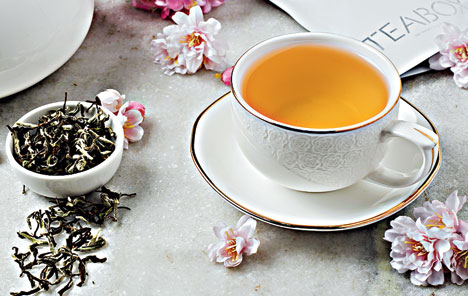


My personal favourite is Darjeeling Spring Moonlights made from particular AV2 clones (Ambari Vegetative). It’s picked during early spring flushes and in very limited quantities. This variety of tea is immensely smooth and aromatic, well-balanced, crisp and tipped with floral-fruity sweetness,” Kausshal Dugarr, founder and CEO of Teabox.com, tells t2. Founded in 2012, the company has come a long way since Ratan Tata became an investor in 2016. If you have been shopping for tea online, chances are you have stopped by www.teabox.com. The 34-year-old shares with t2 the Teabox story.
What inspired Teabox?
Thanks to age-old supply chain, it takes around four to six months, at times more, for tea to reach consumers from the time it is produced. This means consumers are forced to drink substandard teas. This is the genesis of Teabox. We are revolutionising the industry in many ways with our sourcing capabilities and backend infrastructure in an attempt to provide a fresh tea experience to consumers.

White tea, Da-Hong Pao, Silver Tips Imperial… these are great but expensive. How big a market is this? Who are buying high-end varieties?
Speciality tea is a four billion-dollar industry and this segment is having its time at the moment, growing very rapidly. Rareness, complex natural flavour profile and health benefits are the key factors driving this market. USA, UK, Germany, Japan are the biggest markets for such teas. However, Indian consumers are beginning to develop a palate for such teas, particularly in a disposable income group.
There is a wide variety of tea for consumers to choose from, with the whites and oolongs being the most expensive ones. As we speak of expensive indulgences, there is an exclusive tea we have launched as part of this year’s spring flush — Badamtam Spring White Tea, which is so exotic that one batch is all you get every year. This is a white tea, which is generally the least processed. These are the first sprouts of pruned bushes, left to grow undisturbed all winter, at 16 degrees Celsius on the remote slopes of Badamtam.
Most online tea-focused portals are targeting the US market, which is traditionally a coffee-drinking market…
USA has been the largest consumer of speciality teas. However, globally, consumer preferences have been shifting rapidly towards healthier options. Speciality tea fits their demands perfectly as it has a numerous health benefits, also because these teas have natural flavours and can be consumed without added sugars. This shift started long ago and is bound to take over the world soon.
So far Teabox has mainly found customers through online channels. Have you picked up some buying trends?
Consumer buying patterns vary across channels and geographies. For example, the US is a strong consumer of single estate teas, RU (Russia) is a 97 per cent black tea market, India has a lot of tea enthusiasts and they appreciate flavoured blends. To be more precise, consumers in New York and California prefer their beverage with pronounced flavours. We target this market with teas that are blended with actual ingredients. People in cities like Paris or London prefer their teas straight.
Best way to store tea
♦ Keep away from direct sunlight: Storing tea in transparent glass jars or exposing it to sunlight may result in lightening of tea. This adversely affects the appearance and flavour of tea.
♦ Keep tea in airtight containers: Exposure to air may adulterate the tea with impurities such as dust, increase moisture content and cause the tea to develop a foul/unpleasant flavour.
♦ Avoid storing tea in warm places: Proximity to heat adversely affects the chemical and physical nature of tea, causing the flavour to degrade significantly. It is advisable the tea be stored in a cool, dark place.
♦ Ensure tea is not exposed to humid conditions: Dry leaves have the capacity to absorb moisture quickly, which in turn results in mossy odour and an undesirable flavour.
♦ Keep tea away from items with strong odour: This means keep it away from spices, cheese or soap.
Things to look for when buying tea
♦ Ensure the dry leaves do not have any moisture or off-notes.
♦ Long, well-rolled and tippy tea leaves are considered to be of a superior quality.
♦ Look for strength and brightness in infusion.
♦ If you prefer a light black tea, opt for the ones made in spring and autumn. If you prefer a strong black tea, check out summer black teas of Assam and Darjeeling.
♦ If you prefer to drink your black tea with milk, opt for an orthodox Assam black tea or a CTC grade tea.
♦ Black teas with silvery/golden tips are of a superior quality.

Brewing the perfect cup
The classic infusion is probably the simplest — and therefore the most popular — brewing technique that works well for all teas. You can control the temperature and steeping time, so the tea will be of the strength you desire. Here’s a tea recipe you can’t go wrong with.
Step 1: Ensure the water isn’t boiling, as very high temperatures can easily destroy the delicate notes in the tea. Place the tea leaves in an infuser.
Step 2: Pour hot water over the tea leaves until they are submerged.
Step 3: Let it steep for the recommended time. Take care not to over-steep.
Step 4: Remove tea leaves. Pour the infusion into a cup and enjoy. Depending on the tea, you can choose add-ons like sugar, milk or honey. A dash of lemon juice or mint adds flavour. Mostly, they are best enjoyed plain.
BUY & STEEP