Mumbai, Jan. 29 :
Mumbai, Jan. 29:
The chairman of State Bank of India (SBI) says his organisation is ready to help slump-stalked companies with cheaper loans, waiver of penal interest and more time for repayment of loans.
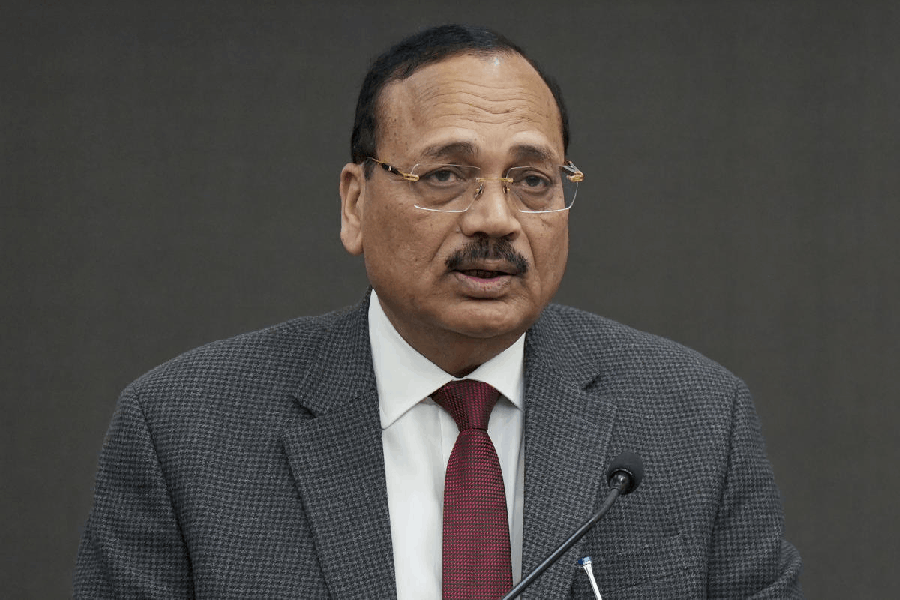
Janki Ballabh, the man who heads the country's largest bank, told a Ficci seminar here today that the sops would not be lavished on all firms, but only doled out to textiles, chemicals, steel, construction and commercial vehicle firms with clean loan-servicing records.
Those who seek help in tiding over the slowdown should be companies whose loans were standard assets with banks on March 31, 2001, but turned sub-standard in the downturn over the past six months to a year.
The idea is to ensure that non-performing assets (NPAs) -banks' euphemism for bad loans - do not pile up at a time when they struggle to present clean balance-sheets.
Ballabh's statement is significant against the backdrop of an industry-wide NPA burden of Rs 56,000 crore - much of it coming from textiles and steel firms. 'Banks have turned cautious in extending financial assistance. The legal system, including the debt recovery tribunals, have severe limitations in dealing with problems of non-performing assets,' he added.
Ficci president R. S. Lodha said banks, bound by tight prudential norms, have been restrained in credit distribution. Ballabh, too, said the planned concessions would not be given to wilful defaulters and companies that are found using outdated technology.
At the seminar, which brought together several industry leaders and senior bankers, there were calls from captains of India Inc to address the recent decline in the flow of funds to the industry, particularly those that have wilted in the current, and most cruel, phase of recession.
A section of bank officials, pointing to the problems and dilemmas of low-cost credit for the industry, said they had to walk a tightrope between meeting the needs of companies and safeguarding the interests depositors.
Housing Finance Development Corporation (HDFC) chairman Deepak Parekh said the government should speed up the second phase of reforms so that the economy can be propelled into a high-growth orbit. 'High real interest rate are inhibiting economic growth and are also responsible for a large fiscal deficit.'
It is the decline in credit demand, he said, that has forced banks to invest heavily in government securities. The hunt for safe avenues amid spiralling NPAs was another reason why bank funds were flowing into gilts. 'Banks have been eager to expand their loan portfolios faster, but they are inhibited by lack of easy exit from financial exposure,' Parekh added.
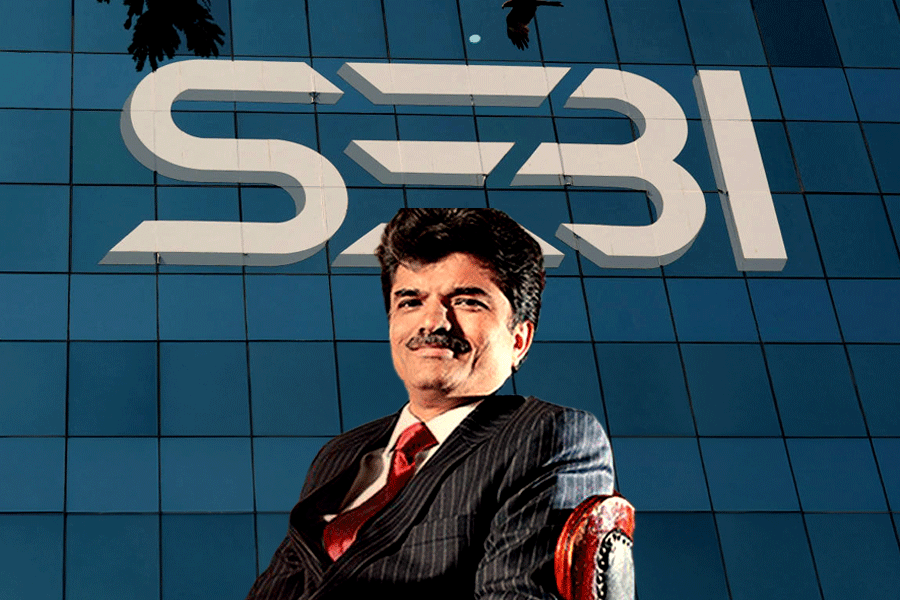
Speaking at the seminar, Mukul Kasliwal, director of S. Kumars, lamented the fact that the 'NPA bogey' has come to haunt Corporate India during the past few years, putting good firms in the small pack of 'black sheeps'.
 Sunday, 07 June 2026