Factories located in Special Economic Zones will be allowed to sell goods in the domestic market at lower import duties in FY27, the government notified on Wednesday as conflict in West Asia disrupts trade.
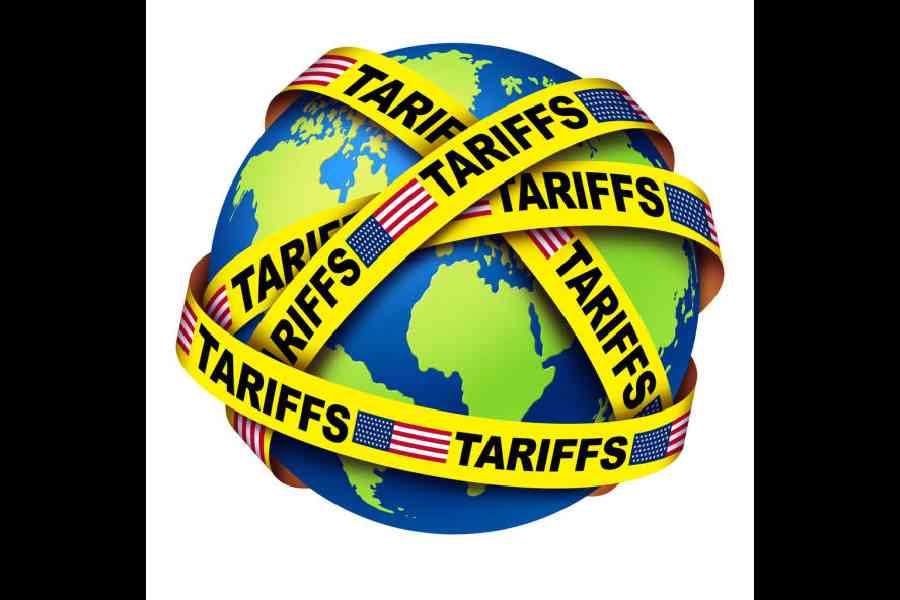
The measure was announced in the February budget to shield exporters from higher US tariffs, but trade observers say it has gained urgency as the Iran war threatens energy supplies and pushes up freight and oil costs.
According to the notification from the department of revenue, goods made in SEZs and sold in the domestic tariff area (DTA) will face a slightly lower basic customs duty (BCD) and, in some cases, a reduced agriculture infrastructure and development cess (AIDC).
The exemption will be available only if the unit in the SEZ had commenced production of goods on or before March 31, 2025, the notification dated March 31.
They also have to prove that the goods in respect for which benefits of this exemption notification have been claimed, fulfil all the specified conditions.
The policy will help Indian exporters navigate rising tariff barriers, geopolitical uncertainty and supply chain disruptions as the West Asia conflict disrupts key trade routes, said Krishan Arora, a partner at consultancy Grant Thornton LLP.
“It will also allow domestic industry to tap unused SEZ capacity and reduce reliance on imports that are becoming costlier and more delayed,” said Arora.
According to Ajay Srivastava, founder of trade intelligence firm GTRI, the impact is likely to be modest.
“The duty cut is small —around 1 percentage point for many products. The absence of any relief on IGST further limits incentive. In addition, the requirement of at least 20 per cent value addition and the cap of 30 per cent on domestic sales restrict flexibility for SEZ firms,” Srivastava said in a note.
The exclusion of petrol and diesel further weakens the policy, particularly for refinery-linked SEZs.
If the objective is to boost domestic supply, stronger measures — such as restricting exports of petrol, diesel and ATF, as practiced by
countries like China and Singapore — may be needed, he observed.
Companies operating within SEZs are allowed to import materials and components duty-free, with the condition that the finished goods produced are meant to be exported out of India.
They can sell in the Indian domestic market upon payment of applicable duties on the output.
Total exports from these zones rose 7.37 per cent to $172.27 billion in 2024-25. There are 276 operational SEZs, with 6,279 units, in the country.
Government sources clarified that the measure will be a one-time, time-bound relief, and is strictly a targeted, short-term intervention announced to address immediate constraints faced by SEZ units.
“It is not a permanent shift in policy. This is not a sweeping overhaul of the SEZ framework,” the sources said.