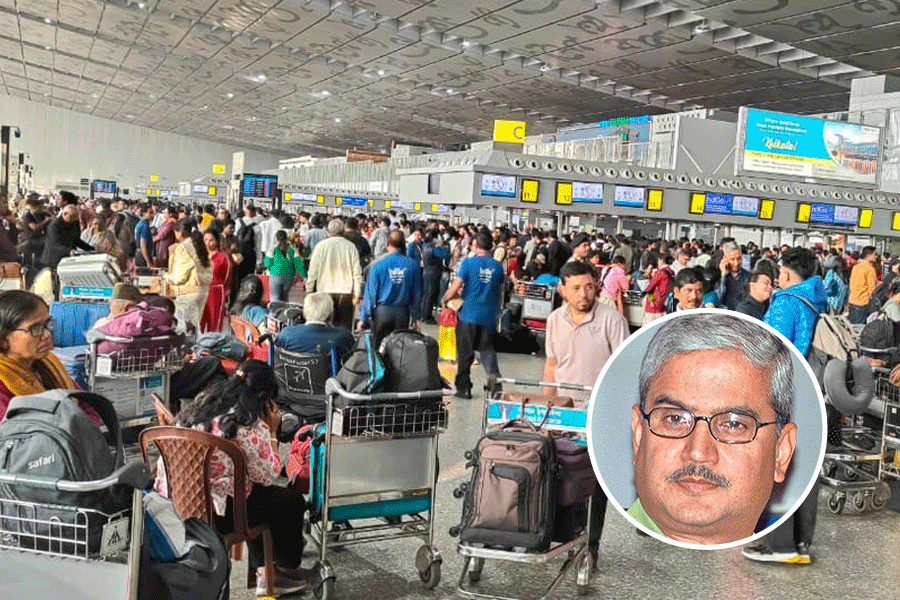
As IndiGo Airlines descends into chaos, there’s one question aviation experts are asking: would this meltdown have happened if co-founder Rakesh Gangwal had still been on the control deck?
Gangwal, who once held a 37 per cent stake in IndiGo’s parent InterGlobe Aviation, parted ways with the airline in 2022 after a very public and bitter feud with majority shareholder Rahul Bhatia.
But while IndiGo struggles with operational strain and mass cancellations, Gangwal has moved on and is flying even higher in the global aviation industry. He has invested around $108 million in Southwest Airlines, one of America’s leading carriers.
In November 2024, he was catapulted into the top job as chairman, a role he held until August this year when he stepped down, citing a lack of time, though he remains firmly on the board.
Gangwal now chairs Southwest’s crucial Fleet Oversight Committee, which handles long-term aircraft planning and procurement. He also sits on the finance committee. He holds 3.61 million Southwest shares, equal to a 0.7 per cent stake. This may not sound large, but it makes him the single biggest individual insider shareholder.
He controls 64 per cent of all insider-held shares. He’s estimated to have made $4-$6 billion from selling down his stake in InterGlobe Aviation and is still estimated to hold 5 per cent of IndiGo.
His position at Southwest is far smaller than that of the major institutional investors, which include State Street and BlackRock. Also in the mix is Elliott Investment Management, the aggressive activist investor known for reshaping boardrooms. Elliott, which owns 9.9 per cent of the airline, pushed for the management overhaul that brought Gangwal into the chairmanship.
Gangwal is widely regarded as one of the most effective airline managers in the world. After studying at IIT Kanpur and doing his MBA in the US, he joined management consultancy Booz Allen Hamilton where he dealt with United Airlines. He finally joined United Airlines and was there for a decade before jumping to a senior job at Air France. He is now 72.
Spying huge potential in India’s airline market, Gangwal partnered with Bhatia to found IndiGo in 2006. Industry analysts say IndiGo would not exist in its current form without Gangwal’s fingerprints on almost every important decision.
He imposed a ruthless focus on reliability and punctuality, insisting that IndiGo should win the market through operational discipline rather than publicity gimmicks. The airline built an almost militaristic approach to on-time performance, quick turnarounds and high fleet utilisation, all hallmarks of Gangwal’s US aviation background.
He professionalised the airline’s talent and systems. Many of IndiGo’s first hires in operations, engineering, flight standards and finance were people he had worked with internationally or whose reputations he trusted. He created a structure where expatriate expertise worked alongside Indian managers to build scalable systems.
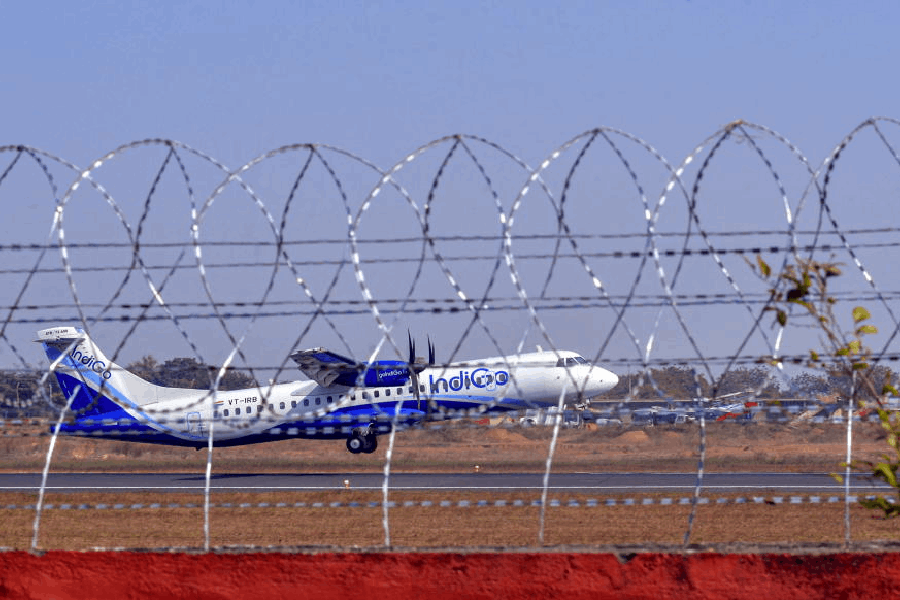
IndiGo now has 434 planes. Southwest is almost twice that size with around 810 planes.
He was instrumental in securing the landmark Airbus orders that gave IndiGo unbeatable cost advantages. His credibility in the global aviation industry was critical when IndiGo placed its first 100-aircraft order and later expansions.
These bulk deals ensured lower unit costs than rivals and underpinned IndiGo’s dominance for more than a decade.
He was also the steady hand on day-to-day operations. While Bhatia handled political and governmental relationships, Gangwal focused on running the airline. He oversaw everything from maintenance philosophy to crew scheduling logic, creating an operating template the company followed for years.
Even after he and Bhatia fell out, IndiGo continued to run on the systems Gangwal had built.
That is why many in the industry now ask whether IndiGo’s current troubles, fuelled by pilot shortages, scheduling and regulatory shocks, would have unfolded in the same way had Gangwal still been in the cockpit.
Some analysts argue that the present crisis is a direct consequence of the operational discipline weakening after his departure. IndiGo ran for years like a machine with predictable schedules, tight rosters and disciplined turnarounds.
Since Gangwal’s exit, insiders say some of that discipline has faded. The airline has faced bottlenecks such as pilot fatigue issues, rostering crunches and delays in scaling crew training capacity at the pace required to support new aircraft purchases.
Under Gangwal, fleet induction was always matched with expansion in manpower, training, maintenance and spare parts. Today, the airline is still growing rapidly but the systems needed to support that growth appear inadequate.
Adding 16 aircraft in a year, which Indigo has done this year, requires proportional scaling across simulators, pilots, cabin crew, engineers and schedulers. These are areas where IndiGo appears stretched. The result, analysts suggest, is a less resilient airline that struggles to withstand regulatory changes such as the DGCA’s new pilot rest rules.
Right now, IndiGo is buckling. Chief executive Pieter Elbers acknowledged that about 1,000 flights were cancelled on Friday, with hundreds more expected to be grounded Saturday.
IndiGo has been expanding at high speed for years. Each aircraft typically operates four flights a day, creating constant pressure to hire pilots and cabin crew. Every four daily flights require eight pilots and about 20 cabin crew, making the manpower pipeline extremely sensitive.
The DGCA’s revised rest requirements may have upset this delicate balance.
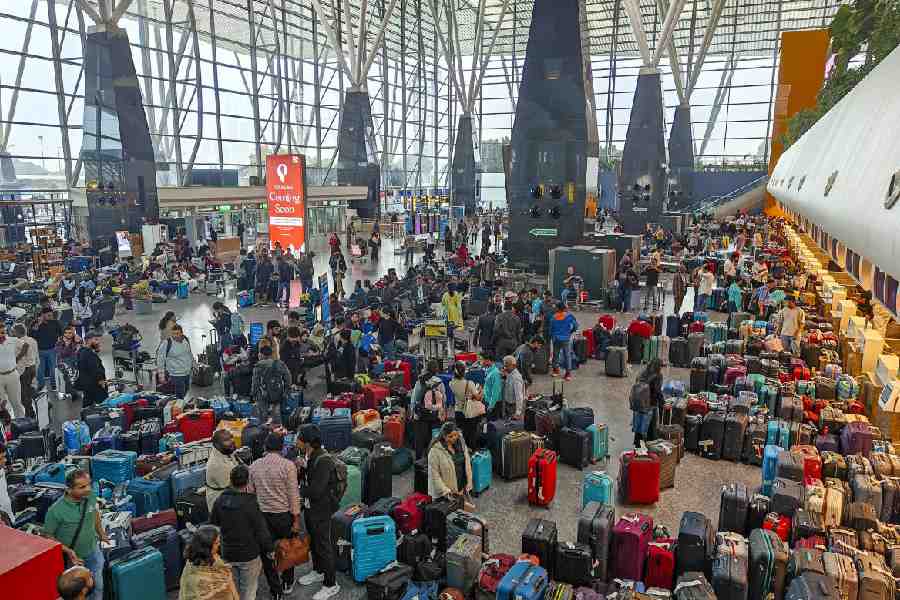
The question now is how the airline can restore the stability that once made it the envy of the region. The first task, aviation experts say, is to strengthen the pilot and cabin crew pipeline.
It needs to ensure growth is matched by investment in planning, systems, training and engineering. IndiGo has the world’s largest A320 family aircraft order book – almost 1,000 planes. IndiGo’s rapid expansion must be supported by equally rapid expansion of operational infrastructure.
The airline controls at least 55 per cent of the fast-growing passenger airline market. What it needs now is reliability. Whether IndiGo can rebuild its trademark operational discipline without the man who first instilled it will decide whether the airline can get back on track.