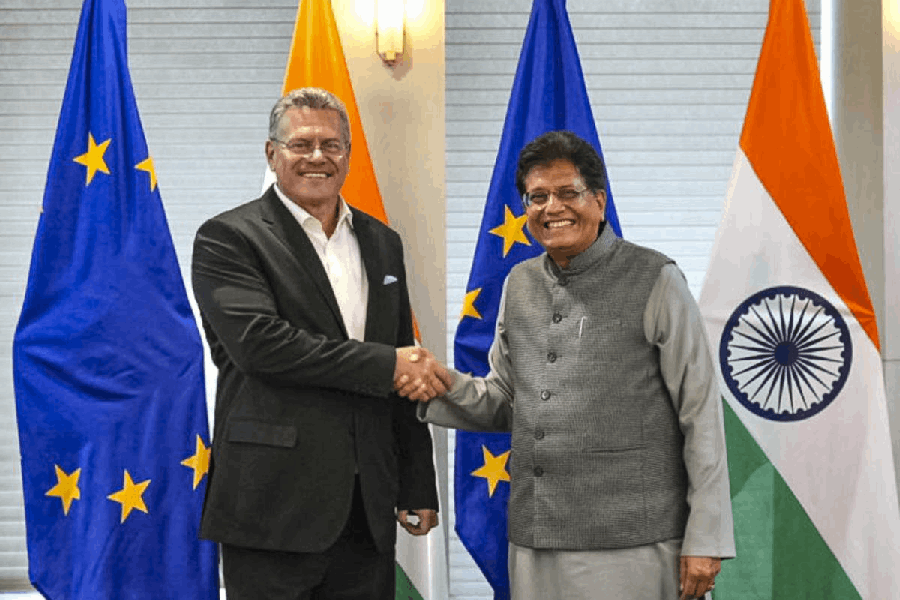
India and the European Union will hold ministerial-level discussions in Brussels on 8 and 9 January to bridge differences in the proposed free trade agreement and push for an early conclusion of negotiations, an official statement said on Tuesday.
Commerce and industry minister Piyush Goyal will hold talks with European Union Commissioner for Trade and Economic Security Maros Sefcovic during a two-day official visit.
The primary objective of the meetings is to provide strategic guidance to the negotiating teams, resolve pending issues and expedite the conclusion of a balanced and ambitious agreement, the commerce ministry said.
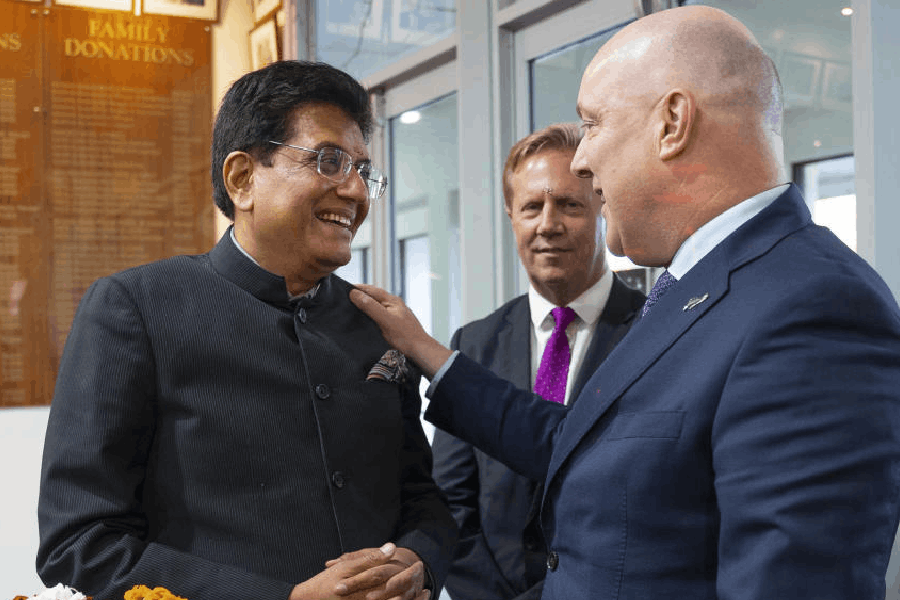
“The visit underscores the intensifying diplomatic and technical engagements between New Delhi and Brussels, signalling a decisive push toward concluding the India-EU Free Trade Agreement (FTA),” the statement said.
Leaders are expected to carry out detailed deliberations across key areas of the proposed agreement, aiming to narrow divergences and ensure clarity on outstanding matters.
The ministerial engagement follows a week of intensive deliberations in Brussels, building on the groundwork laid during high-level discussions held on 6 and 7 January between India’s commerce secretary Rajesh Agrawal and the Director-General for Trade of the European Commission, Sabine Weyand.
India is pushing for zero-duty access for its labour-intensive sectors such as textiles, leather, apparel, gems and jewellery, and handicrafts.
Issues that still need ironing out include steel, cars and the European Union’s carbon tax on products such as steel and cement.
The meetings between Goyal and Sefcovic are also significant as the India-EU Summit is expected to be held on 27 January in India.
The top European Union leadership will attend the Republic Day parade as chief guest on 26 January.
On 15 December, Agrawal had said that negotiations between India and the 27-nation EU bloc had entered the “most difficult” stage, with both sides engaged in efforts to bridge differences and close the talks soon.
The 16th round of negotiations between the two sides concluded earlier this month, from 3 to 9 December.
India and the EU resumed negotiations in June 2022 for a comprehensive free trade agreement, an investment protection agreement and a pact on geographical indications after a gap of more than nine years.
Talks had been stalled in 2013 due to differences over the level of market access.
India’s bilateral trade in goods with the EU stood at $136.53 billion in 2024-25, with exports worth $75.85 billion and imports at $60.68 billion, making the bloc India’s largest trading partner in goods.
The EU accounts for about 17 per cent of India’s total exports, while exports from the bloc to India make up 9 per cent of its total overseas shipments.
Besides seeking significant duty cuts in automobiles and medical devices, the EU has demanded tax reductions on products such as wine, spirits, meat and poultry, along with a strong intellectual property regime.
Indian exports to the EU including ready-made garments, pharmaceuticals, steel, petroleum products and electrical machinery could become more competitive if the agreement is concluded.
The India-EU trade pact negotiations cover 23 policy areas or chapters, including trade in goods, services and investment, trade remedies, rules of origin, customs and trade facilitation, competition, government procurement, dispute settlement, intellectual property rights, geographical indications and sustainable development.