
New Delhi, June 8: The introduction of dynamic pricing of petrol and diesel from June 16 by state-owned oil marketing companies could run into rough weather with petrol pump dealers saying they were not consulted on the issue and there were practical difficulties in its implementation.
"After its successful implementation, public sector OMCs have now decided to start daily revision in the retail selling prices of petrol and diesel in the entire country with effect from June 16, 2017," IOC and other state-owned retailers said in an identical release today.
The oil companies said the daily revisions would help the retail rates to reflect better the current market conditions, minimising the volatility in the prices. It will make the system more transparent and also enable smoother flow of products from the refineries/depots to the retail outlets.
The release said the companies were taking steps "to establish an appropriate mechanism for conveying the prices to consumers every day, including daily publishing of the prices in newspapers, prominent displays of prices at the retail outlets, sending of price-related data/SMS from centralised locations, mobile apps etc".
However, petrol pump dealers said they were caught unawares as the pilot project had teething problems which needed to be rectified before it was implemented nationwide.
"The pilot project had faced numerous problems that were raised by the dealers to the oil marketing companies. The prices had to be changed manually in 95 per cent of the retail outlets every night," Ajay Bansal, president of the All India Petrol Dealers Association, told The Telegraph. He said dynamic pricing should not be implemented till an automatic price revision system was in place.
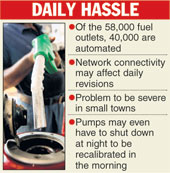
"It will not be possible to implement this pricing methodology manually. There are about 40,000 automated petrol and diesel retail outlets of the approximately 58,000 total outlets (in the country)," Bansal said.
Of the 40,000 automated outlets, network connectivity issues will be a hindrance in implementing the revisions, he said, adding that the problem would be more severe in small cities and towns.
To manually change the prices each day, the pump owners will have to close down the fuel station for an hour at night, which could cause inconvenience to those travelling on highways. Alternatively, they would have to shut down at night to be recalibrated in the morning before dispensing, he said.
Daily price revisions are likely to align the retail fuel market to international standards. The move will also allow private competitors, such as Essar Oil and Reliance Industries, which currently follow the price set by the state-owned companies, to shift to a dynamic model.