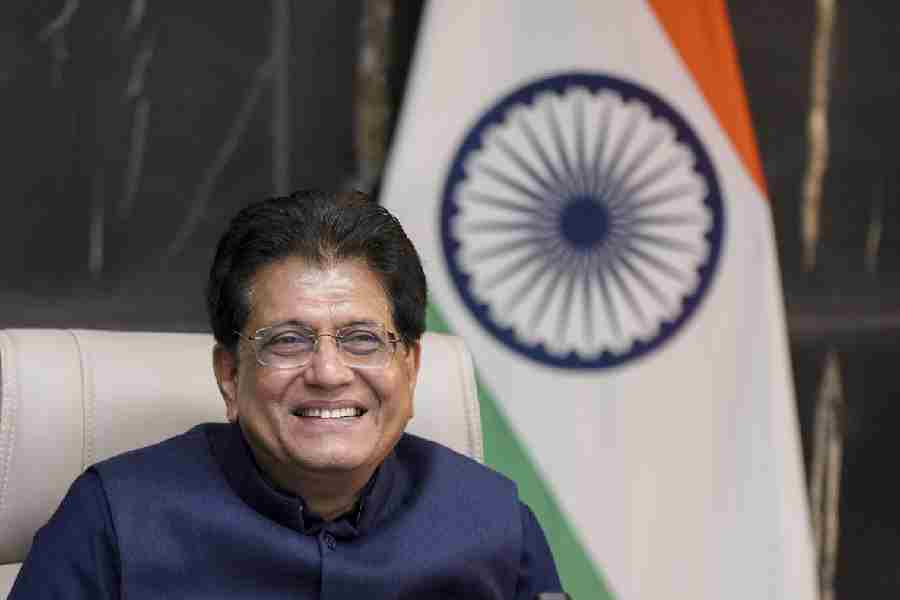
India will not open its dairy market for imports, industry and commerce minister Piyush Goyal said on Monday after New Delhi clinched a free trade agreement with New Zealand that offers no concessions on dairy access.
The Narendra Modi government, however, did agree to engage in consultations with New Zealand if India ever agreed to open up the dairy sector to any other comparable economy in future. However, Goyal stressed that such a situation would not arise.
The exclusion of dairy from the trade deal, India’s third FTA in 2025 after pacts with the UK and Oman, angered a partner in the ruling coalition in New Zealand, which described it as a "bad deal" and threatened to oppose the ratification of the agreement in the country’s parliament.
Goyal’s comments come at a time a trade deal with the US, much larger than the New Zealand FTA in scope and impact, has been hanging fire for months. One of the concessions Washington is seeking from New Delhi is access to India’s politically and economically sensitive farm and dairy sector.
Bilateral trade between India and New Zealand was worth $1.3 billion in 2024-25. In contrast, the India-US merchandise trade stood at around $132 billion during the same period.
Prime Minister Narendra Modi announced the New Zealand FTA on Monday morning after he had spoken to his counterpart Christopher Luxon over the phone. The negotiations took nine months.
During a media briefing after the formal announcement of the agreement — which aims to double bilateral trade by 2030 with zero-duty market access to 100 per cent of Indian exports, and commits to investment of $20 billion in 15 years and easier work visa access to New Zealand — Goyal was asked about the dairy sector.
Stressing that India had not opened up its dairy sector in any of its FTAs, the minister said: “They were concerned that if you open up dairy for some other comparable economy, where the per capita GDP is similar, the size of the economy, the level of dairy production is similar to NZ, then at least they should have an opportunity to discuss with us if we can extend similar benefits to them. India is never going to open up dairy, so the concern really doesn’t matter. Also, it is only a consultation and not commitment.”
Goyal added that New Zealand would consider sending raw materials to India and re-export the finished products to the world after processing them here, bringing investments and creating jobs.
Discordant note
While Luxon hailed the FTA, which reduces tariffs on 95 per cent of New Zealand’s exports to India and creates more “Kiwi jobs”, Winston Peters, the country’s foreign affairs minister, described the deal as “neither free nor fair”.
“New Zealand First is regrettably opposed to the India Free Trade Agreement announced today.... Regrettably, this is a bad deal for New Zealand. It gives too much away, especially on immigration, and does not get enough in return for New Zealanders, including on dairy,” Peters wrote in a social media post.
He said the India FTA would be New Zealand’s first trade deal to exclude his country’s major dairy products, including milk, cheese and butter.
“In the year to November 2025, New Zealand exports of these products were worth around $24 billion, or 30 per cent of our total goods exports,” the minister said.
Peters said the New Zealand First party, which he founded, would vote against enabling legislation if and when it was introduced in the country’s parliament.