Book: Prisoner of War: Testimonio of Suhasini Biswas
Author: Jayati Gupta
Published by: Orient BlackSwan
Price: Rs 550
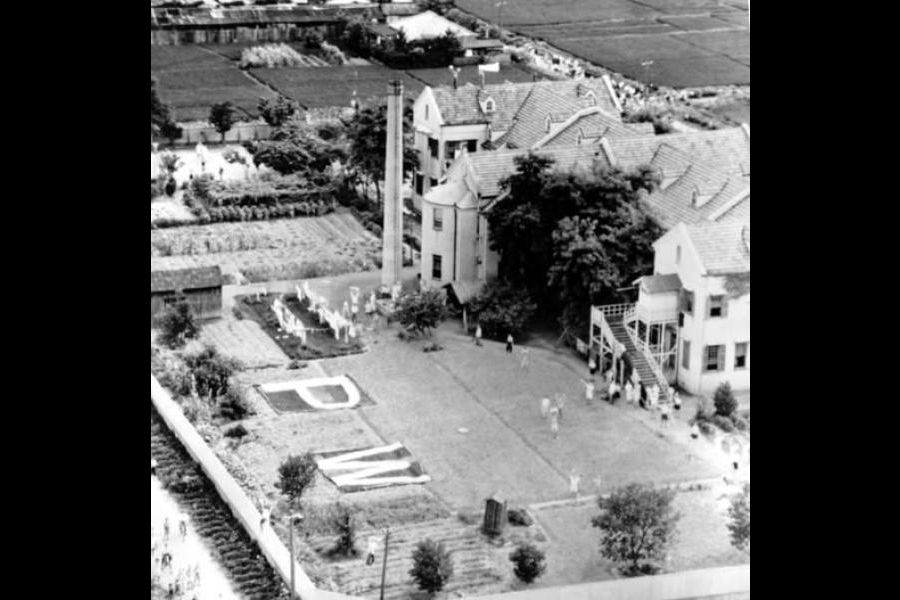
Jayati Gupta’s slim volume uncovers the hitherto unknown narrative of Suhasini Biswas’s experiences as a prisoner of war between 1942-1945 at the Fukushima PoW camp in Japan. Biswas, an employee of the Provincial Education Service in Bengal, hailed from an affluent Christian family from South Calcutta. She, along with her co-passengers, was imprisoned by the Germans while travelling back to India from Australia aboard the SS Nankin and was handed over to the Japanese authorities to be interned at the Fukushima camp for three years, a camp whose existence was unknown to the world almost till the end of their captivity.
Since Biswas did not leave any complete written record of her days as a PoW, her “testimonio”, as Gupta chooses to categorise the narrative, has been pieced together from her marginal notes — often undated — in her copy of Tagore’s Gitanjali, her sparse correspondence, and some more elaborate entries in her notebook. The account of the hardships, tortures, and neglect suffered by the 140 odd internees at the camp is supplemented by the written records and the reminiscences of fellow camp-residents. Biswas’s marginalia — often laconic — and the notebook entries reveal the spirit of resilience, faith, and kindness that sustained Biswas in her captivity. Her faith was bolstered by the spiritual sustenance she derived from the poems of Tagore: engaging with a conversation with the poems “[S]erved as an intersection of private and public domains… creating a narrative from which micro-histories emerge.”
Gupta’s reconstruction of Biswas’s time as a PoW foregrounds the intersection of macro and micro histories, documenting how the lives of civilians are forever transformed by their traumatic experiences during a conflict of the magnitude of the Second World War. The Preface and the first chapter of the book also highlight the problem of categorising such narratives that are pieced together from marginalia and fragmented entries. Gupta chooses to use the term, “testimonio”, as the form in which the experiences of Biswas have been presented in her monograph. These initial sections also go on to point out the difficulties of chronicling such narratives due to the lack of what may be termed an archival consciousness that seems all-pervasive in our culture.
Biswas’s silence after returning to India once the war was over is correctly interpreted as a suppression of traumatic memories. Gupta’s work, by uncovering the shape of everyday experiences in the camp, uncovers those memories. There is, in fact, an eerie resemblance between the occurrences at the Fukushima camp and the fictional depiction of a Soviet labour camp in Aleksandr Solzhenitsyn’s One Day in the Life of Ivan Denisovich.
Gupta’s work is a testament to her stupendous and painstaking archival work, scholarship, and a nuanced understanding of the cross-currents of global history. The book, which has been decades in the making, is not only a form of life-writing and memory studies but also a living example of how such historiographically challenging material may be organised using a kind of methodology that is appropriate to the material. It is a milestone achievement in several fields and a must read for scholars of memory/trauma studies.